



YOGYAKARTA - The blurred view of the eye can occur suddenly or slowly develop. These symptoms are often taken lightly, even though they can be an early sign of various eye health conditions and systemic problems.
If left unchecked, blurred vision not only interferes with daily activities, but also has the potential to cause serious complications. Launching Harvard Health Publishing, Wednesday, July 30, blurred views can be caused by various factors. Identify the following explanations about the general cause of blurred views, so you are more vigilant and know when to check with a doctor.
The most common cause of opaque views is refractional disorders, such as remote death, close opaque (hypermetropy), or cylindrical (astigmatism). This condition occurs when the shape of the eye does not allow light to be properly focused on the retina. As a result, objects can be seen blurred, both from close to and far away. This problem can usually be overcome with glasses, contact lenses, or a LASIK-like vision correction procedure (Laser-Assited in Situ Keratomileusis).
As you get older, your lens becomes less flexible so it is difficult to focus on close objects. This condition is called presbiopia, usually starting to feel it in your 40s. If you feel you have to keep your books or phone screen away to be able to see more clearly, this is most likely the cause. Read glasses or multifocal lenses can help fix them.
Dry eyes can cause uncomfortable sensations to blurred vision. Lack of tear production or poor tear quality makes the eye's surface not well protected. If you are often in an air-conditioned environment, exposed to digital screens, or autoimmune conditions such as Sjögren's syndrome can exacerbate this complaint. The use of eye drops or advanced care may be needed according to the conditions experienced.
Conditions such as conjunctivitis, uveitis, or keratitis can cause blurred vision due to inflammation or infection. Symptoms can be accompanied by pain, red eyes, and sensitivity to light. Treatment will be adjusted to the causes, ranging from antibiotics to anti-inflammatory drugs.
Escaped vision can also be a symptom of more serious eye disease. A person who has glaukuma, is caused by high pressure in an eyeball that damages optical nerve. Cataracts can also cause cloudy eye lenses that affect vision. For someone suffering from diabetes, it also risks retino diabetics. Namely retinal damage due to diabetes. All three require medical evaluation and special care. So identification of conditions from an early age is very important to prevent permanent blindness.
The blurred view can also be caused by systemic disorders such as high blood pressure or stroke. In cases like this, visual impairments appear suddenly and can involve only one side of sight. This condition is a medical emergency that must be treated immediately.
SEE ALSO:
-
 | INFO SEHAT
Apakah Mata Minus Sembuh Tanpa Kacamata? Pahami Pilihan Perawatan Anda
15 Juli 2025, 08:55 -
 | INFO SEHAT
Setiap Hari Kerja di Depan Layar? Ini Cara untuk Jaga Kesehatan Mata
30 Juni 2025, 21:25


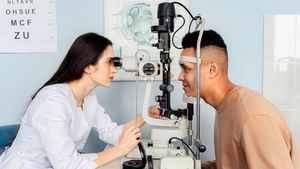
Referring to the explanation above, it is important to understand that blurred views are not just eye problems, but can be a sign of a wider variety of health conditions. If your vision changes suddenly or feels worse, don't hesitate to consult an eye specialist. Addressing the problem of changes in your eyes early on, can prevent long-term risks.
The English, Chinese, Japanese, Arabic, and French versions are automatically generated by the AI. So there may still be inaccuracies in translating, please always see Indonesian as our main language. (system supported by DigitalSiber.id)
Most Popular Tags
#Prabowo Subianto #donald trump #2026 World Cup #Febrie Adriansyah #8791Popular


