


JAKARTA The $100 billion investment plan (Rp1,638 trillion) by Taiwan Semiconductor Manufacturing Company (TSMC) to build semiconductor manufacturing facilities in the United States has sparked heated debate in Taiwan. Opposition politicians in the island nation are concerned that this move could undermine "silicon shield," a concept believed to protect Taiwan from potential Chinese attacks.
US President Donald Trump announced the major investment in an event at the White House on March 3, 2025. TSMC CEO CC Wei, accompanied by US Trade Minister Howard Lutnick and Trump's adviser to AI and crypto, David Sacks, were also present on the occasion.
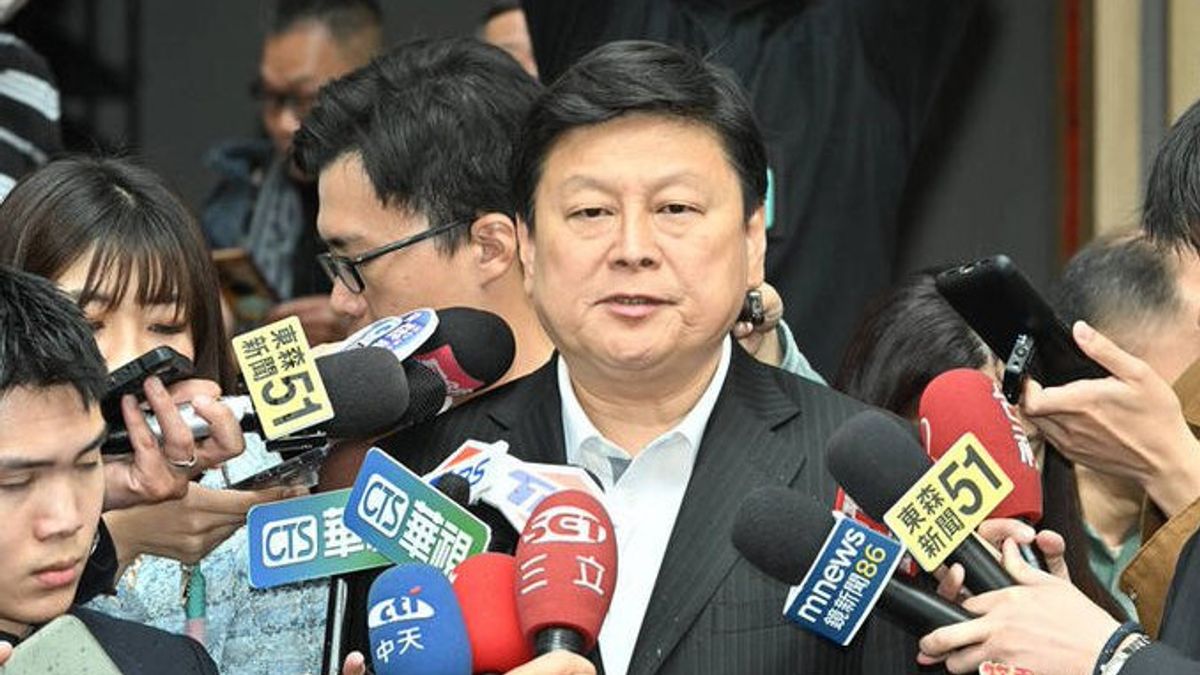
Opposition politician from the Kuomantang Party (KMT), Fu Kun-chi, expressed his concern, questioning the impact of this move on Taiwan's security. "If TSMC turns into the 'American Semiconductor Manufacturing Company,' where is Taiwan's security?" he said the day after the investment announcement.
Former Taiwanese President Ma Ying-jeou, also from KMT, accused President Lai Ching-te's administration of "selling" TSMC to Trump, calling it a "big national security crisis."
Meaning 'Silicon Shield'
The concept of "silicon shield" refers to Taiwan's role as the world's main supplier of semiconductors, which is believed to provide geopolitical protection for the island. Taiwan currently produces about 60% of global semiconductors, making it an important part of the supply chain for the US and Chinese economy. Therefore, both Washington and Beijing have an interest in avoiding conflicts that could disrupt this vital supply.
However, with TSMC's large investment in the US, there are concerns that Taiwan's dominance in the sector could be reduced, weakening the strategic shield.
Two days after the announcement in Washington, TSMC CEO, CC Wei, returned to Taipei and held a press conference with President Lai Ching-te. They insist that the most advanced semiconductor technology will still be produced in Taiwan.
However, this guarantee does not completely ease opposition concerns. KMT legislator Ko Ju-chun urged the government to be more transparent about negotiations behind the deal.
"We understand that this kind of negotiations are closed, but now that it has been announced, we ask the government to disclose the entire process leading to this decision," said Ko.
Between Investment and Tariff
Despite Trump's aggressive negotiating style, he is not the first US president to push for domestic semiconductor production. Both Trump and former President Joe Biden have stressed the importance of reducing US dependence on chip supplies from abroad, especially from Taiwan.
Darson Chiu, Director General of the Confederation of Asian-Pacific Chamber of Commerce and Industry, highlighted that the US wants to ensure the semiconductor supply chain remains stable and is not vulnerable to external threats, especially from China. However, for Taiwan, the challenge is to ensure that its strategic role in the global supply chain remains strong so that US defense support for the island remains maintained.
Production Challenges in the US
Chiu also noted that moving semiconductor operations from Taiwan to the US requires not only large investments but also other challenges. Factors such as stricter employment regulations and higher operational costs in the US could hamper TSMC's ability to maintain its production standards.
SEE ALSO:
-
 | TEKNOLOGI
Pakar Siber Ungkap Aplikasi Publik Jadi Target Utama Serangan Siber di 2024
17 Maret 2025, 10:35


TSMC has had difficulties adapting its management style to US employment practices at its facilities in Phoenix, Arizona. The absence of unions at TSMC facilities in Taiwan allows companies to impose long working hours and difficult weekend work systems in the US.
The Future Of 'Silicon Shield'
According to Chiu, for now, TSMC can still fulfill its commitment to the US without sacrificing its most advanced operations in Taiwan. However, the future of "silicon shield" will depend heavily on whether Trump is satisfied with this investment or will put pressure on it further.
"I think Chairman Wei is facing a big dilemma. On the one hand, he must meet the demands of the Trump administration, but on the other hand, he must convince the Taiwanese people that we remain safe," Chiu said.
Meanwhile, Sung Wen-ti, a political scientist at the Australian National University, believes that although Trump may be satisfied for now, Trump's foreign policy has always been full of uncertainty."
With geopolitical tensions continuing to rise, TSMC's move to expand its operations to the US will continue to be a heated debate in Taiwan, amid concerns about its impact on national security and the island's country's economic stability.
The English, Chinese, Japanese, Arabic, and French versions are automatically generated by the AI. So there may still be inaccuracies in translating, please always see Indonesian as our main language. (system supported by DigitalSiber.id)
Most Popular Tags
#Prabowo Subianto #donald trump #firearm #8791 #giias 2026Popular


