
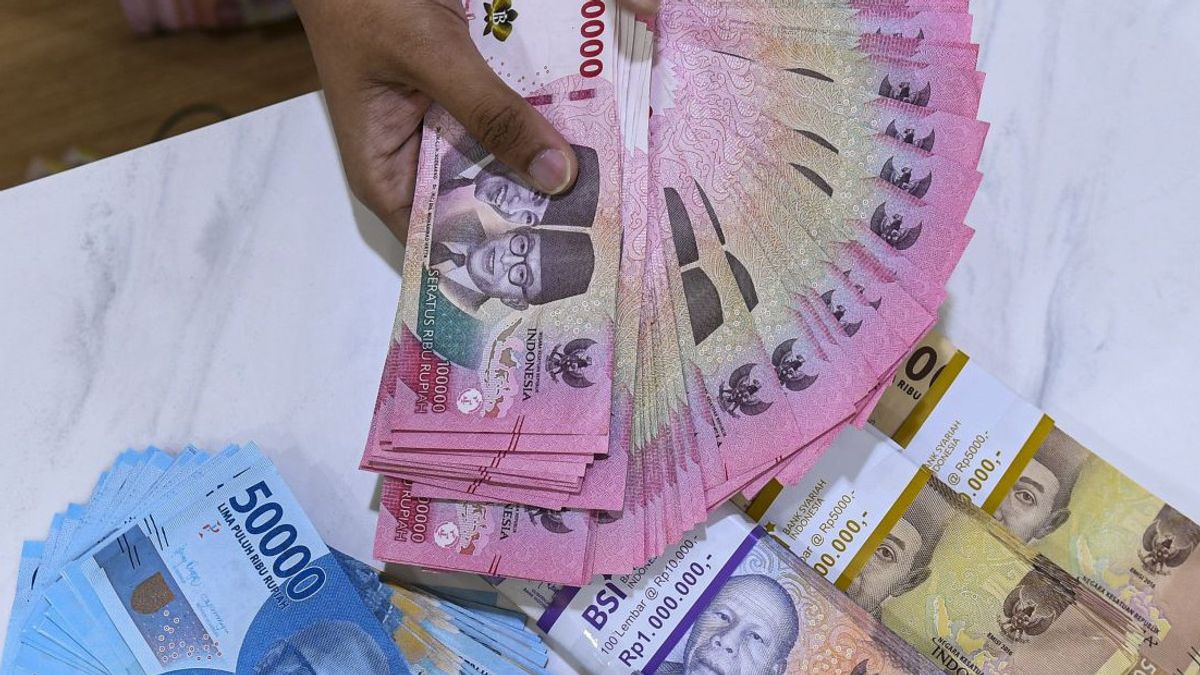


The Dean of the Faculty of Economics and Business, Mataram University, Ihsan Ro'is, assessed that the budget efficiency of ministries and institutions has the potential to slow down the pace of economic growth by 2025.
"The savings made make the money circulating in the community small. If the amount of money is circulating is small, the project and so on do not exist, this could slow economic growth," said Ihsan Ro'is in Mataram, West Nusa Tenggara, quoted by Antara, Friday, February 7.
Referring to data from the Central Statistics Agency (BPS), throughout 2024 the Indonesian economy grew by 5.03 percent. This number is somewhat slower than the achievement in 2023 which experienced growth of 5.05 percent.
Ihsan revealed that budget efficiency has the most impact on areas that depend on the MICE agenda related to meetings, conferences or exhibitions.
West Nusa Tenggara, one of the areas that is the purpose of the MICE agenda of several ministries and institutions. The budget savings policy can reduce visiting hotels, restaurants and tourist destinations. Even the accommodation industry that relies on guest arrivals can also slump.
"There are areas that are vulnerable and there are strong areas. We have to look with wise glasses," said Ihsan.
Nationally, regional dependence on central government transfer funds is still high, especially for regions located in eastern Indonesia.
Based on the Decree of the Minister of Finance Number 29 of 2025, the figure of cutting the transfer budget to the regions is IDR 50.59 trillion.
The cuts were carried out on six instruments, including underpayment of profit-sharing funds, general allocation funds, physical special allocation funds, special autonomy funds, special Yogyakarta Special Region (DIY) funds, and Village Funds.
SEE ALSO:
-
 | EKONOMI
Ini Penyebab Dolar Perkasa di Negara Berkembang tapi Lemah di Negara Maju
23 Juni 2023, 19:02 -
 | EKONOMI
Paris Summit 2023 Ungkap Belum Ada Investasi Ideal dalam Transisi Energi
23 Juni 2023, 17:19

The budget cuts policy is intended as a reserve to fund government priority needs.
Furthermore, Ihsan views that the budget is actually good for the fiscal condition of the state, which currently requires a lot of money to fund various development programs. Positive and negative impacts need serious attention.
"On the one hand, this cut is good because it makes our fiscal even better in the future, but it is a domino effect problem that needs to be considered in the regions. Government spending is very dominant to boost the regional economy," concluded Ihsan.
The English, Chinese, Japanese, Arabic, and French versions are automatically generated by the AI. So there may still be inaccuracies in translating, please always see Indonesian as our main language. (system supported by DigitalSiber.id)
Most Popular Tags
#Prabowo Subianto #donald trump #2026 World Cup #venezuela #konflik timur tengahPopular


