


JAKARTA - Bank Indonesia (BI) projects that Indonesia's economic growth in 2031 will only be in the range of 6.9 percent to 7.7 percent, lower than the government's target of targeting growth of 8 percent by 2029.
In the 2025 Bank Indonesia Annual Meeting Book (PTBI), BI compiled three scenarios of economic projection for 2031, namely in the baseline scenario, growth is estimated to reach 5.6 percent to 6.4 percent. This figure increased to 6.1 percent to 6.9 percent in optimistic scenarios, and was in the range of 6.9 percent to 7.7 percent in super optimistic scenarios.
The report states that price stability is expected to be maintained with inflation in the range of 2.5 percent plus minus 1 percent, and transactions remain low in the range of deficits of 0.4 percent to surplus 0.4 percent of GDP in 2031.
BI assesses that this internal and external stability can be achieved through an increase in the capacity of the supply side which is able to offset the increase in demand, thanks to the ongoing national economic transformation policy mix.
In terms of financing, bank credit is estimated to grow optimally in the range of 12 percent' 16 percent per year. Meanwhile, the fiscal deficit is believed to remain below 3 percent of GDP, in line with the credibility of Indonesia's fiscal policy.
BI also emphasizes that achieving growth is highly dependent on speed, accuracy, and effectiveness of policy implementation, in the baseline scenario, growth targets can be achieved through projects that are already running or have started development.
Meanwhile, optimistic scenarios require additional new projects at a lower cost and relatively fast financing, including from the state budget.
For a super optimistic scenario, growth is supported by large projects that have not yet run and require greater financing, many of which come from private and foreign investments.
This scenario requires more aggressive structural reforms, covering three main aspects, namely increasing productivity through accelerating infrastructure development, research and development, technology adoption, and market efficiency; increasing capital through improving the investment climate and increasing Foreign Investment (PMA) and Domestic Investment (PMDN); as well as improving labor quality through access to education and expansion of formal employment opportunities.
SEE ALSO:
-
 | BERITA
Jakarta Siap Kirim Tambahan Bantuan ke Sumatera, Rano Karno: Pascabencana Jauh Lebih Berat
30 November 2025, 14:33 -
 | BERITA
Trump Berduka 1 Tentara Garda Nasional Tewas Ditembak di Washington, Satu Lainnya Kritis
29 November 2025, 03:01 -
 | BERITA
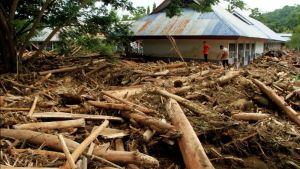
Gelondongan Kayu Terseret Banjir di Sumatera, Kemenhut Usut Sumbernya
28 November 2025, 18:31 -
 | BERITA
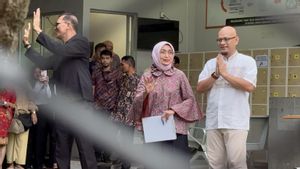
Bebas dari Tahanan, Ira Puspadewi dkk Lambaikan Tangan Usai Direhabilitasi Presiden Prabowo
28 November 2025, 17:46 -
 | BERITA
Komisi VIII DPR Duga Banjir Sumatera Akibat Ilegal Logging, Imbau Warga Tetap Sabar
28 November 2025, 18:04

BI said the three scenarios have the potential to increase economic growth, with differences in achievement rates depending on the effectiveness of project implementation and government and private programs. These projects are expected to be able to encourage growth in terms of consumption, investment, and increase national economic capacity.
If a super optimistic scenario is achieved in 2031, national economic efficiency is expected to increase significantly, as can be seen from the sharper reduction in the Capital-Output Ratio (ICOR) ratio than other scenarios.
Meanwhile, the decline in ICOR shows that the economy is able to grow higher with smaller investment needs.
Furthermore, the increase in productivity (Total Factor Productivity/TFP) and the decrease in ICOR as a result of the implementation of national economic transformation are expected to support stronger and more sustainable growth, while maintaining macroeconomic stability.
The English, Chinese, Japanese, Arabic, and French versions are automatically generated by the AI. So there may still be inaccuracies in translating, please always see Indonesian as our main language. (system supported by DigitalSiber.id)
Most Popular Tags
#Prabowo Subianto #donald trump #Febrie Adriansyah #8791 #giias 2026Popular


