

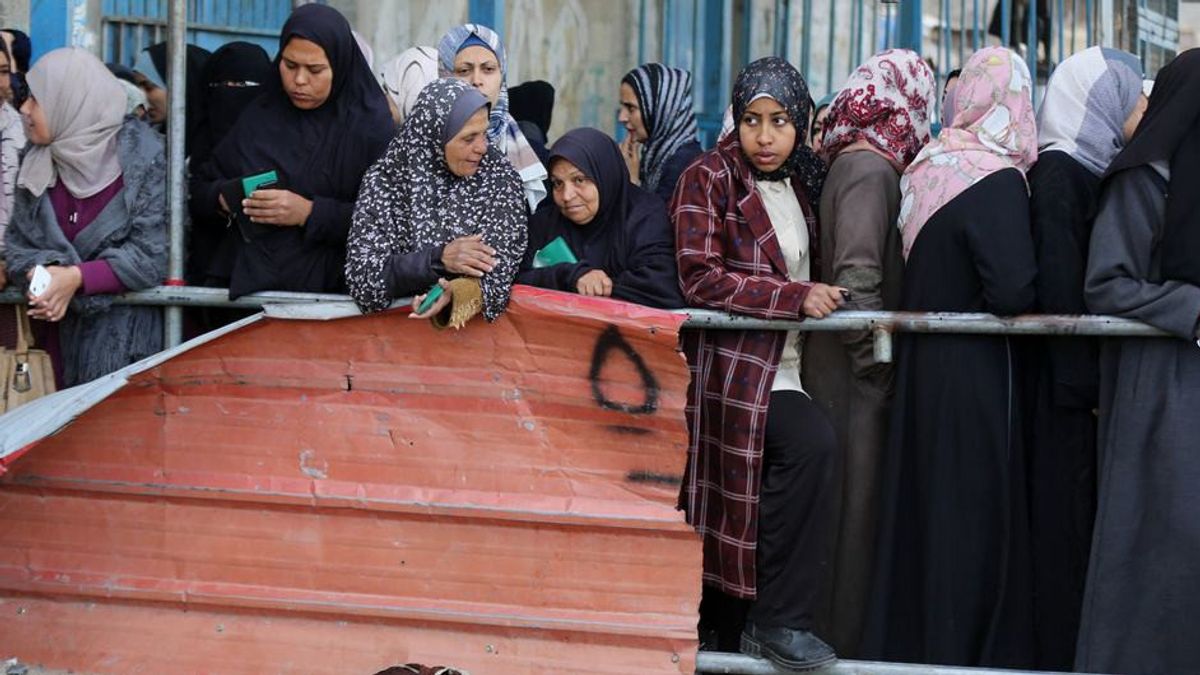


JAKARTA - The World Health Organization (WHO) on Friday (17/1) is targeting to deploy 500-600 aid trucks into Gaza every day after the ceasefire is imposed.
"The main process starts on Sunday, and the United Nations together with us (WHO) are very planning to prioritize as much as possible," said Richard Peeperkorn, WHO's representative for the West Bank and Gaza.
"The target is to enter between 500 and 600 trucks per day in the coming weeks ... that will be a big increase compared to the 40-50 trucks we've seen over the past month," Peeperkorn added.
Calling the upgrade would be "very big," Peeperkorn stressed WHO would make maximum efforts to get priority items "as soon as possible."
He voiced hope that the shipping route would be expanded so that aid could reach northern and southern Gaza with the opening of border points that had been closed so far.
Peeperkorn also expressed concern over the security situation in the trapped Gaza region, saying the matter must be addressed immediately.
"It is important that significant security and political barriers to aid deliveries across Gaza are removed. We need fast, unobstructed, and safe access as well as an inward and throughout Gaza-accelerated flow of aid," he said.
"The main priorities are food, water, medical supplies, fuel, and spare parts to repair generators in hospitals," he added.
"There are so many needs that can never be fully addressed, but are currently being prioritized... and hopefully it will be realized," he said.
However, he also said aid agencies must be careful in raising excessive expectations.
SEE ALSO:
-
 | BERITA
Uni Eropa Godok Rencana Hidupkan Lagi Misi Sipil Perbatasan Rafah Gaza
17 Januari 2025, 21:00





Answering further questions about whether there have been changes in the WHO's aid and mission flow since the announcement of the ceasefire deal, he replied the situation was "still the same."
"Currently, aid entering Gaza is still slow," he said, urging that it "certain" change in the coming weeks.
On Wednesday (15/1), Qatar's Prime Minister and Foreign Minister, Sheikh Mohammed bin Abdulrahman Al Thani, announced the success of the mediators in reaching a ceasefire agreement in the Gaza Strip, with implementations scheduled for Sunday (19/1).
Peeperkorn also highlighted severe damage to the health system in Gaza, urging collaborative efforts to meet existing needs.
Recovering the health system is a collective effort that must be guided and implemented through close collaboration with the Ministry of Health, health workers, and related partners. We need a solution that is led by Palestine that is appropriate for Gaza," he said.
We urge donors and the global community to provide flexible funding, enabling a quick and effective response to urgent and long-term needs.
"It takes more than 10 billion US dollars (around Rp163.58 trillion) to meet the recovery needs of the health system," he said.
"A conducive environment is needed to achieve the humanitarian goals outlined in the ceasefire agreement," he added.
He also stressed the need for guarantees of free, unobstructed, and safe access to deliver essential supplies through all channels and borders.
Peeperkorn also warned of the need for free, safe, and unconditional movement for Gazans as well as humanitarian workers, active protection of health facilities and civilians, as well as increased flow of aid.
In addition, he mentioned the need to accelerate visa issuance for all international humanitarian staff with a much longer duration, and accelerated medical evacuations for more than 12,000 patients and their companions.
Peeperkorn also mentioned the need for removing restrictions, as well as simplifying the approval process for the entry of essential items needed to improve vital infrastructure, improve health facilities, repair roads, clean up debris, and handle unexploded ammunition.
The English, Chinese, Japanese, Arabic, and French versions are automatically generated by the AI. So there may still be inaccuracies in translating, please always see Indonesian as our main language. (system supported by DigitalSiber.id)


