

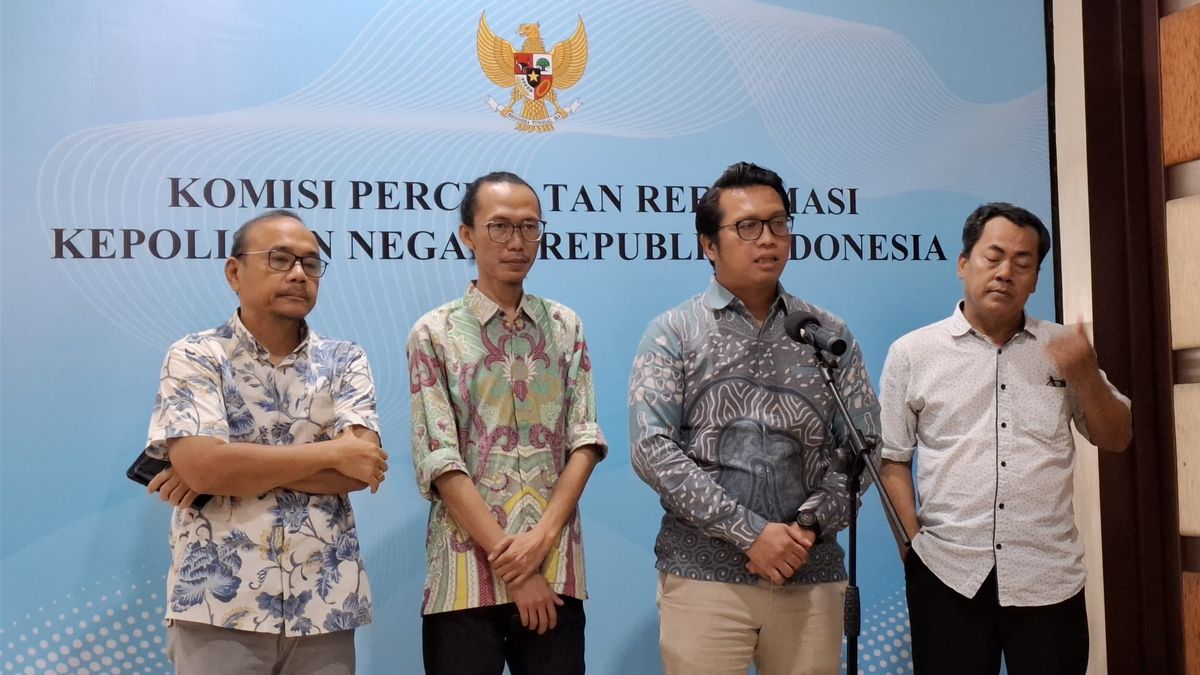


JAKARTA - Environmental activists from ICEL, Walhi, Greenpeace Indonesia, and the Alliance of Indigenous Peoples of the Archipelago held an audience with the Commission for the Acceleration of Police Reform, Wednesday, November 26.
The head of Greenpeace Indonesia, Leonard Simanjuntak, highlighted the issue of conflicts of interest within the National Police, including the placement of high-ranking officers in various agencies and the involvement of retired officers in the corporate structure.
He assessed that the presence of retired National Police officers in companies, including those suspected of damaging the environment, became the root of the emergence of inappropriate support or protection.
"Regarding the many retired National Police officers who are part of the corporation. And this is certainly the root of the problem of protection or backing that is not appropriate for environmentally destroying corporations," Leonard said at the Ministry of State Secretariat Office, Central Jakarta, Wednesday, November 26.
Leonard said the phenomenon affected the independence of the police at the regional level. The hierarchical police structure makes the voices of retired high-ranking officers continue to have an influence in decision making.
"It happened in many places in this republic, even in corporations that clearly violate the law," he said.
SEE ALSO:
-
 | BERITA
KPK Geledah Kantor Kontraktor Proyek Monumen Reog dan Museum Peradaban Kabupaten Ponorogo
26 November 2025, 18:00 -
 | BERITA
KPK Gelar Lelang di Momen Hakordia 2025, Lexus hingga Emas Antam Bisa Ditawar
26 November 2025, 17:43 -
 | BERITA
Jampidum Beberkan Instrumen Baru KUHP: Pidana Kerja Sosial Sebagai Upaya Terakhir
26 November 2025, 17:26 -
 | BERITA
Komisi X DPR Tanya Urgensi Pembelajaran Bahasa Portugis, Mendikdasmen Akui Masih Mengkaji
26 November 2025, 16:11 -
 | BERITA
Pemprov DKI Baru Bentuk Tim Penataan Kota Tua, Rano Karno: Ternyata Tak Semudah Dibayangkan
26 November 2025, 15:40 -
 | BERITA
Andi Arief Desak Panglima TNI-Kapolri-Menhub Jelaskan Dugaan Bandara Ilegal di Morowali
26 November 2025, 14:32 -
 | BERITA
Berlogo Halal Palsu, 22.700 Produk Kacang Tanah Disita Aparat Malaysia
26 November 2025, 14:09

SEE ALSO:
-
| BERITA
KPK Geledah Kantor Kontraktor Proyek Monumen Reog dan Museum Peradaban Kabupaten Ponorogo
26 November 2025, 18:00 -
| BERITA
KPK Gelar Lelang di Momen Hakordia 2025, Lexus hingga Emas Antam Bisa Ditawar
26 November 2025, 17:43 -
| BERITA
Jampidum Beberkan Instrumen Baru KUHP: Pidana Kerja Sosial Sebagai Upaya Terakhir
26 November 2025, 17:26 -
| BERITA
Komisi X DPR Tanya Urgensi Pembelajaran Bahasa Portugis, Mendikdasmen Akui Masih Mengkaji
26 November 2025, 16:11 -
| BERITA
Pemprov DKI Baru Bentuk Tim Penataan Kota Tua, Rano Karno: Ternyata Tak Semudah Dibayangkan
26 November 2025, 15:40 -
| BERITA
Andi Arief Desak Panglima TNI-Kapolri-Menhub Jelaskan Dugaan Bandara Ilegal di Morowali
26 November 2025, 14:32 -
| BERITA
Berlogo Halal Palsu, 22.700 Produk Kacang Tanah Disita Aparat Malaysia
26 November 2025, 14:09
National WALHI Legal and Defense Manager, Teo Reffelsen, requested a thorough evaluation of the assignment of Polri personnel to secure the company.
"We also ask the police reform team today so that there is a policy then that evaluates and conducts a moratorium on all police unit activities that carry out security in the company," said Teo.
He assessed that the involvement of police units in securing the company often caused the parties, including the use of excessive force in handling agrarian conflicts and residents' protests.
Meanwhile, the Head of the AMAN Case Handling Division, Sinung Karto, highlighted the imbalance in the response of the National Police in handling reports between the public and corporations.
"We also said earlier that it has actually become a common knowledge of how the police take sides in dealing with agrarian conflicts," said Sinung.
Sinung assessed that reports from the public often run slowly, while reports from companies moved much faster. Therefore, AMAN requested strengthening the monitoring mechanism, including involving external parties who are free from intimidation.
"Then we ask that the monitoring mechanism be strengthened," he added.
The English, Chinese, Japanese, Arabic, and French versions are automatically generated by the AI. So there may still be inaccuracies in translating, please always see Indonesian as our main language. (system supported by DigitalSiber.id)


