
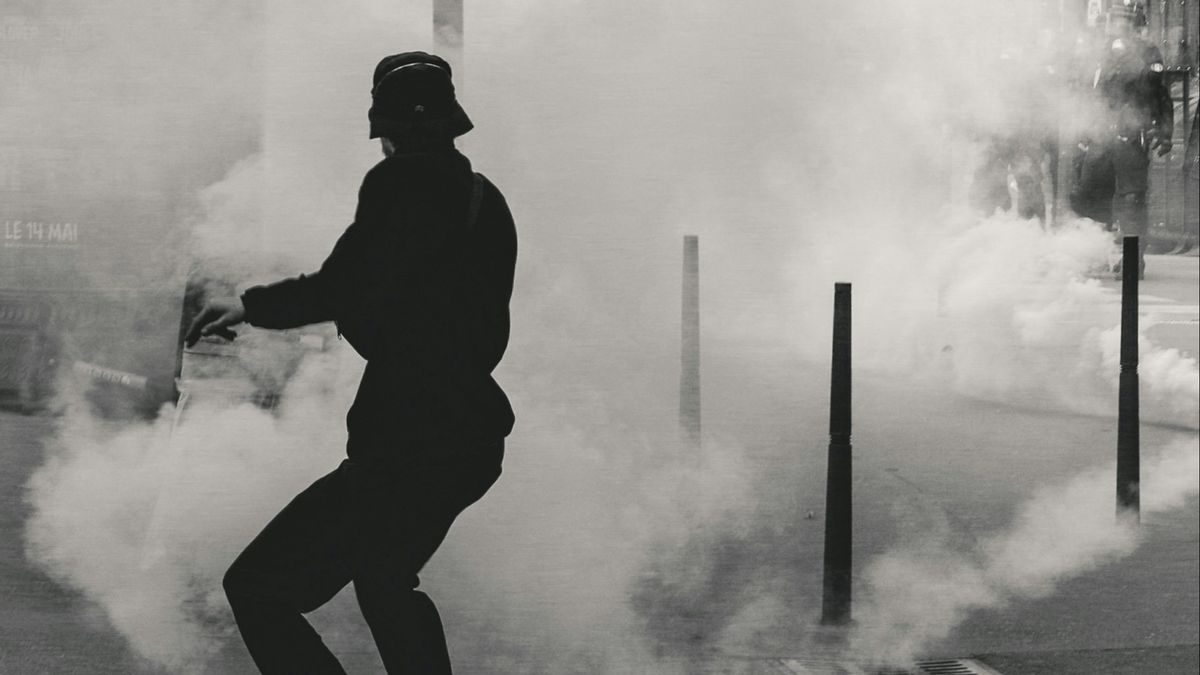


JAKARTA - At least 19 people died in two cities on Monday in the worst riots in Nepal in decades, authorities said, while police in the capital fired tear gas and rubber bullets at protesters trying to storm parliament in anger at the closure of social media and corruption.
Some protesters, mostly young, forced their way into the parliamentary complex in Kathmandu by breaking through barricades, a local official said, set fire to ambulances and threw objects into the riot police line guarding the legislative building.
"The police have shot indiscriminately," a protester told the ANI news agency, as reported by Reuters on September 9.
"(They) fired a bullet that missed me but hit a friend standing behind me. He was hit in the hand," he added.
More than 100 people, including 28 police personnel, received medical treatment for their injuries, police officerrap Khanal told Reuters. Protesters took the injured to the hospital on a motorbike.
Last week's government's decision to block access to several social media platforms, including Facebook, sparked outrage among young people. About 90 percent of Nepal's 30 million people use the internet.
Officials said the ban was carried out because the platform failed to register with the authorities in an attempt to take action against abuse, including fake social media accounts used to spread hate speech and fake news, as well as commit fraud.
Two of 19 people died during protests in the city of Itahari in the eastern region turned violent, police said.
Interior Minister Ramesh Lekhakak resigned from the government after taking "moral responsibility" for the violence, another government minister, who asked for anonymity for not being authorized to speak to the media, told Reuters.
Meanwhile, KP Prime Minister Sharma Oli held an emergency cabinet meeting to discuss the riots, which erupted after thousands of young people, including many wearing school or campus uniforms, took to the streets on Monday morning.
Many carried flags and placards bearing slogans such as "Close corruption, not social media," "Cancel social media blocking," and "young opponents of corruption" as they lined up in Kathmandu.
Protesters, who spread to other cities in the Himalayan country, called it "demonstration by Gen Z." They said the protests reflected widespread frustration among young people against the government's lack of action to eradicate corruption and increase economic opportunities.
"This is a protest by a new generation in Nepal," another protester told ANI.
Police were ordered to use water cannons, batons, and rubber bullets to control the crowd, while troops were deployed in parliamentary areas to strengthen law enforcement officers, Mukiram Rijal, spokesman for the district office of Kathmandu, told Reuters.
The violence subsided in the evening, although the protesters were still in areas outside the parliament building.
Police said similar protests also took place in Biratnagar and Bharatpur in the south, as well as in Pokhara in western Nepal.
SEE ALSO:
-
 | BERITA
Israel Peringatkan 'Badai Dahsyat' di Gaza jika Hamas Tidak Menyerah
09 September 2025, 11:00 -
 | BERITA
Korsel Ingin Pekerjanya yang Terkena Penggerebekan Pekan Lalu Bisa Kembali Masuk ke AS
09 September 2025, 09:00 -
 | BERITA
Korban Tewas Akibat Agresi Israel dan Kelaparan di Jalur Gaza Terus Bertambah
09 September 2025, 08:00 -
 | BERITA
Kepala HAM PBB Sebut Masyarakat Internasional Gagal Lindungi Warga Gaza
09 September 2025, 07:00
Many people in Nepal consider corruption rampant. PM Oli's government has been criticized by its opponents for failing to fulfill its promise to eradicate corruption or make progress in overcoming the longstanding economic problems.
PM Oli's government said the economy was recovering thanks to the improvement measures that had been taken.
Nepal has experienced political instability since removing the monarchy that turned 239 in 2008. There have been 14 governments since 2008, and none have succeeded in completing a full five-year term. PM Oli (73) was sworn in for his fourth term last year.
Critics say many of these measures pose a risk of curbing freedom of expression, but regulators say stricter controls are needed to protect users and maintain social order.
The English, Chinese, Japanese, Arabic, and French versions are automatically generated by the AI. So there may still be inaccuracies in translating, please always see Indonesian as our main language. (system supported by DigitalSiber.id)
Most Popular Tags
#Prabowo Subianto #donald trump #Febrie Adriansyah #8791 #giias 2026Popular


