
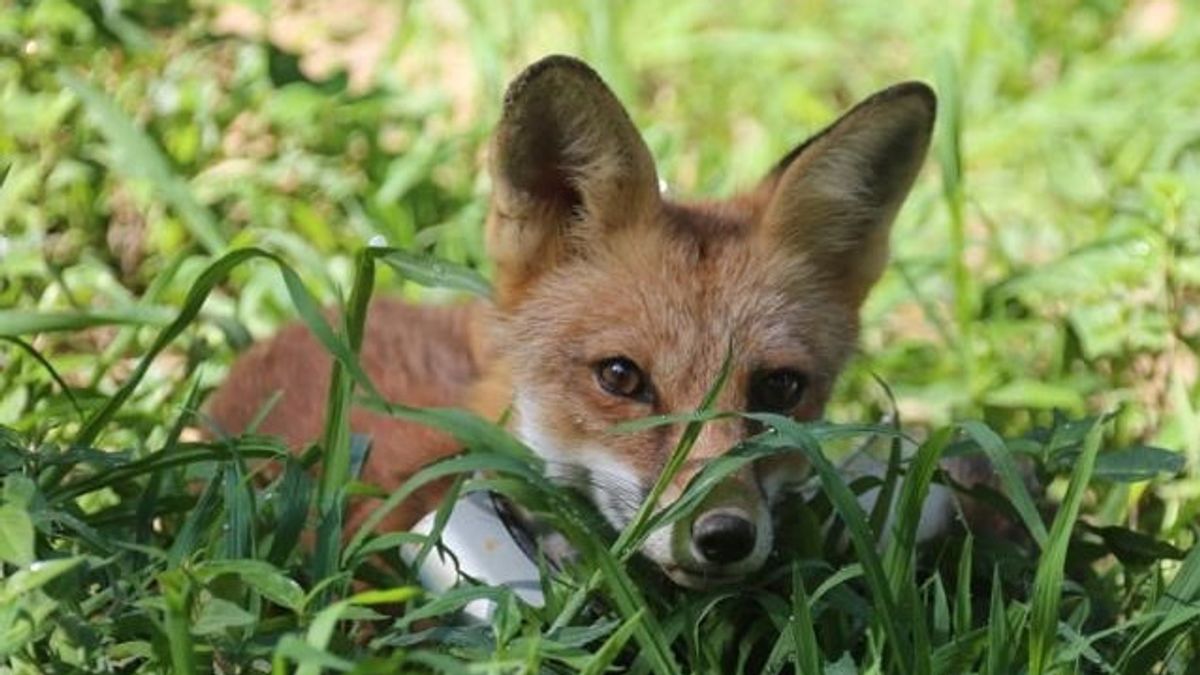


JAKARTA - The Korean National Parks Service (KNPS) on Thursday announced the release of 30 redhashers to the Gunung Sobaek region as part of a long-term restoration project for the endangered species.
Redpheries used to be common across Korea, but their population plummeted in the 1970s due to widespread poisoning during the campaign to culling nationalautics.
Since 2012, the KNPS has been trying to restore and stabilize the redxlomp population in Gunung Sobaek National Park.
Of the 30uadals released this week, 90 percent are 1 year old and born last year. The release process involves gradually opening the gates of the aclimatization facility to minimize stress and allow the animals to adapt to their own environment.
It is estimated that it will take about 10 days for all of them to get out completely of the facility.
"We will continue to reduce threats and improve habitat conditions to help redminton return to the wild successfully," said KNPS Director Ju Dae-young, as reported by The Korea Times on August 8.
"We also ask for community cooperation in encouraging coexistence with wildlife," he added.
Red dogs are medium-level predators who roam long distances and usually inhabit low mountain areas. They help maintain the balance of the ecosystem by eating small animals such as mice, birds, frog, and snakes.
Although their maximum lifespan in the wild is estimated to be nine years, few survive more than six years due to threats such as vehicle traffic, illegal traps, pesticides and disease.
During previous restoration efforts, about 28 percent ofUCHovals released died due to these causes. According to the KNPS, the death rate could reach 80 percent in the first year, especially shortly after being released into the wild.
Currently, it is estimated that around 70 red forwards are active in the Gunung Sobaek area. Including in other areas, the national population is estimated to be around 110.
SEE ALSO:
-
 | BERITA
Belarus Siap Jadi Tuan Rumah Perundingan Trilateral Putin-Trump-Zelensky
09 Agustus 2025, 05:00 -
 | BERITA
Turki Desak Tekanan Internasional untuk Hentikan Rencana Israel di Gaza
09 Agustus 2025, 04:00 -
 | BERITA
Pertemuan Presiden Putin dan Trump Kemungkinan Digelar di Negara Arab
08 Agustus 2025, 20:10

KNPS stated, after years of testing, they have improved the success of breeding by providing independent living space, identifying suitable married couples, and encouraging natural reproduction.
Since 2019, an average of 30 cubs are born every year, showing stable progress in breeding programs.
In 2027, the Ministry of Environment and KNPS aims to increase the number of redmintons on Mount Sobaek to at least 100, building five or more small subpopulations with confirmed third-generation reproduction.
The English, Chinese, Japanese, Arabic, and French versions are automatically generated by the AI. So there may still be inaccuracies in translating, please always see Indonesian as our main language. (system supported by DigitalSiber.id)
Most Popular Tags
#Prabowo Subianto #donald trump #firearm #8791 #giias 2026Popular


