
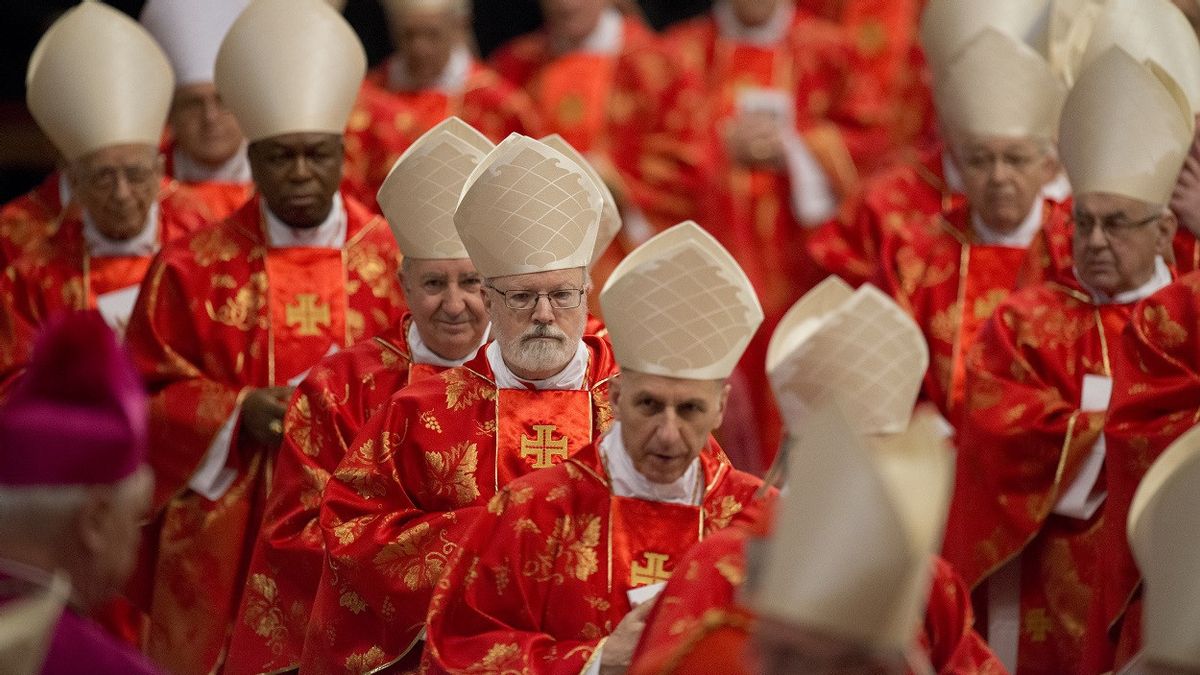


JAKARTA - The Conclave to elect the Pope, the next leader of the World Catholic Church as Pope Francis dies will be held on May 7, reports the Holy See press service.
The date is set at the General Congregation (meeting) of the Cardinal Council, quoted from TASS April 29.
The determination was made on Monday morning by about 180 cardinals who attended (more than a hundred of whom were electors) who gathered for the fifth General Congregation at the Vatican, as reported by Vatican News.
The bodies consisting of all cardinals of the Catholic Church consisted of 252 members, but only 135 were eligible to choose the next Pope.
Only those under the age of 80 can take part in secret voting, and each of them can be considered potential candidates to replace the late Pope Francis.
The konclaf will take place at the Vatican Sistina Chapel, with four voters held daily. The majority of the two-thirds are needed to choose new whales.
The election was traditionally announced with white smoke from themascop, which was clearly seen in St. Peter's Square.
The Director of the Holy See Press Office, Matteo Bruni, said that Konklaf would be preceded by Misa Nazar (Misa Nazar Pro Eligendo Papa, which was attended by electoral cardinals) which was held on the morning of May 7.
In the afternoon, the electoral cardinals will gather in the Sistina Chapel. There is no guarantee that the vote will take place on the first day of conclave, as it all depends on the time of taking the oath by the electoral cardinals, the Holy See press office explains.
During the election process, the electoral cardinals must refrain from sending letters or engaging in conversations, including phone calls, except in very urgent cases.
They are not allowed to send or receive messages in any form, receive newspapers or magazines of any kind, or follow radio or television broadcasts.
How many votes is it necessary to choose a Pope?
To legally select a new Pope, it takes a majority of two-thirds of the electorals present.
If the total number of electors is not divided into three, additional votes are needed.
If the vote starts in the afternoon of the first day, there will only be one ballot. In the following days, two votings were held in the morning and two in the afternoon.
After the vote count, all the ballots were burned. If the voting is inconclusive, the opposing stationed above the Sistina Chapel emits black smoke. If a Pope is elected, white smoke will billow out of theap.
If voters fail to reach an agreement on a candidate after three days of inconclusive voting, pauses for up to one day are allowed to pray, free discussions among voters, and brief spiritual advice by Cardinal Proto-Diakon (Kardinal Dominique Mamberti).
After the cardinals elected a new Pope, Cardinal Diakon last summoned the Secretary of the Cardinal's Council and the Leader of the Spouse Liturgy Celebration to the Sistina Chapel.
The Dean of Kolese, Cardinal Giovanni Battista Re, speaking on behalf of all voters, asked for the approval of the elected candidate in the following words: "Do you accept your canonical election as the Highest Whale?"
After receiving the approval, he then asked: "What name do you want to call?"
The notary function, with two Ceremony Officials as witnesses, was carried out by the Leader of the Kepasan Liturgy Celebration, who compiled the acceptance document and recorded the name chosen.
Since now, the newly elected Pope has gained full authority and is the highest over the universal Church. The conflict ends soon at this point.
SEE ALSO:
-
 | BERITA
AS Jajaki Kemungkinan Penempatan Permanen Jet Tempur Siluman F-35A di Korsel
29 April 2025, 04:00

The voters then paid their respects and promised to obey the new Pope, and gratitude was given to God.
Cardinal Proto-Diakon then announced to the faithful the election and the name of the new Pope with the famous sentence: "Anntio vobis gaudium magnum; Habemus Papam."
Soon after, the new Pope gave Blessing to the Urbi et Orbi Apostolic of Loggia Basilika St. Peter.
It is known, as the Vatican prepares to host the conclave, the Sistina Chapel, which is famous for its painting on its walls by fire and is included in the planned journey of the Vatican Museum, is now closed to the public.
The English, Chinese, Japanese, Arabic, and French versions are automatically generated by the AI. So there may still be inaccuracies in translating, please always see Indonesian as our main language. (system supported by DigitalSiber.id)


