

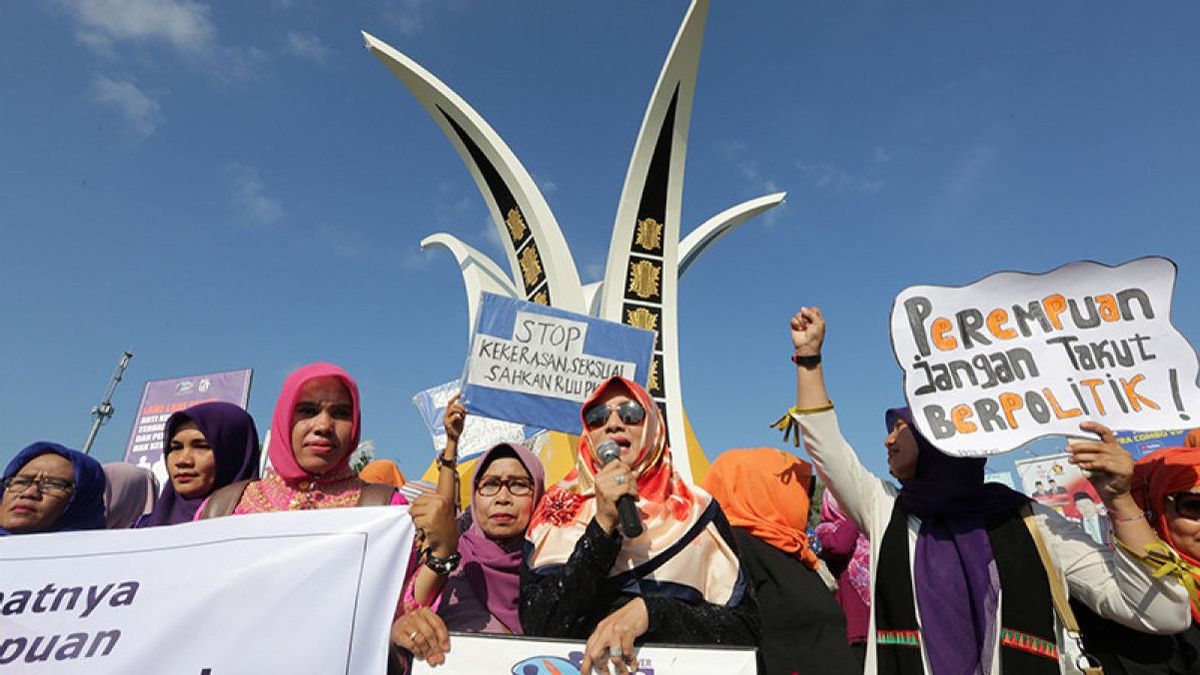


JAKARTA History today, five years ago, September 7, 2020, Chairman of the Indonesian Ulema Council (MUI) Sukoharjo, Abdullah Faisol emphasized that he should not bring religion to political affairs. This condition is because the matter of choosing a candidate for leader in the 2020 Pilkada must be glimpsed from the vision and mission, not because of gender.
Previously, the phenomenon of bringing religion to practical politics began to be seen in the context of the 2020 Pilkada. This condition is detrimental to many parties, especially women. Female politicians are considered not to lead because Islam only heeds the men who lead.
Preparations for the 2020 Pilkada are full of dynamics. Political contestation has many challenges. The first challenge that must be faced is that the Pilkada will take place in the atmosphere of the COVID-19 pandemic.
Another challenge is the matter of women's representation in the political contestation of regional heads. The presence of women is still considered minimal. This condition makes the government continue to encourage women's representation to become regional heads.
A move that asserts that women are able to lead. However, women's steps in election contestation sometimes are not easy. They are often attacked from here and there. Instead of just having problems with the leadership style, most people see weaknesses because they were born women.
This condition is often used by political opponents who are mostly men. They started using religious issues. The issue of men who are more worthy of leadership in Islam is echoed everywhere. Women are forbidden to be leaders.
This condition is exacerbated by the stigma of the community towards female leaders which is still low. Women are considered only good at household matters. This condition causes potential women to suffer major losses.
"As a result, their time to be able to meet with the public is limited. Women are also seen as having to prioritize family affairs rather than outside the home," said Director of Cakra Wikara Indonesia, Anna Margret as quoted by the Kompas Daily newspaper, March 19, 2019.
Religious narratives are increasingly being used in the 2020 Pilkada. This condition makes it difficult for prospective female leaders to win the hearts of the people. Many people are affected and think women are not worthy of leadership.
Religious problems are used in practical politics and then reach MUI Sukoharjo. The chairman of MUI Sukoharjo, Abdullah Faisol, emphasized that the 2020 Pilkada participants should not bring religion to political affairs on September 7, 2020.
SEE ALSO:
-
 | MEMORI
Jokowi Resmikan Pabrik Mobil Esemka di Boyolali dalam Sejarah Hari Ini, 6 September 2019
06 September 2025, 21:35 -
 | MEMORI
Jero Wacik Mengundurkan Diri dari Jabatan Menteri ESDM dalam Sejarah Hari Ini, 5 September 2014
05 September 2025, 14:30 -
 | MEMORI
Perjuangan Soekemi Sosrodihardjo: Guru Melarat yang Membesarkan Bung Karno
05 September 2025, 06:30 -
 | MEMORI
Jelang Soeharto Lengser: Mesir Jadi Kunjungan Kenegaraan Terakhir Jenderal Murah Senyum
04 September 2025, 06:30

He emphasized that modern times no longer contain women who are forbidden to enter politics or become leaders. This condition is because people should understand the matter of choosing a leader. The most important narrative of finding a leader is to find a figure who is able to lead and has a vision and mission. Leaders who can make an area better, don't care if he is a man or a woman.
"The issue in this Pilkada uses religion in practical politics. Moreover, in Sukoharjo there are candidates for female regents, and the term women are forbidden to become leaders."
"There have been many regional heads who are women, but this issue has been raised again to attract sympathy. "Islamic people are already smart, so what is seen is no longer religious issues, but what is important is how the program and vision and mission are," Abdullah said as quoted by the website. Ribunaws, September 7, 2020.
The English, Chinese, Japanese, Arabic, and French versions are automatically generated by the AI. So there may still be inaccuracies in translating, please always see Indonesian as our main language. (system supported by DigitalSiber.id)
Most Popular Tags
#Prabowo Subianto #donald trump #Febrie Adriansyah #8791 #giias 2026Popular


