

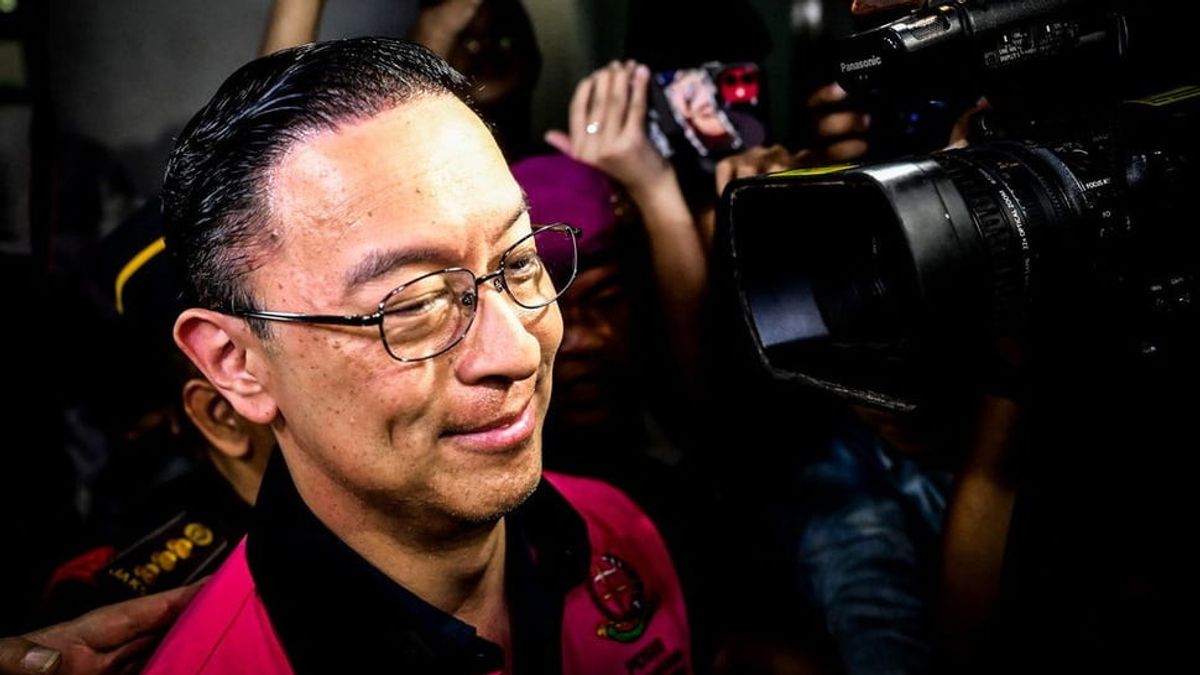


JAKARTA History today, 10 years ago, July 23, 2015, Vice President Jusuf Kalla (JK) emphasized that an official's policy or discretion cannot be punished. Criminal efforts against a policy are considered to be able to prevent officials from daring to make new policies.
Previously, policy-making matters were not easy. Moreover, policies that can increase people's lives. This condition is because policies taken sometimes can harm the state. However, the loss is considered reasonable and should not be punished.
The real law must support national development. This narrative continues to be echoed by President Joko Widodo (Jokowi) at every opportunity throughout 2014. Jokowi wants law enforcers to be able to distinguish between state losses from policies and from corruption.
Jokowi then appealed to law enforcers not to criminalize policy makers. Policy making affairs are not easy. Many of the policies made contain the desire for the Indonesian people's interests to be raised.
Cases of state losses due to policies do not matter. If the government insists that officials will be punished because of its policies, chaos will emerge. Government officials are afraid to innovate. That fear will bring big problems because national development does not grow.
SEE ALSO:
-
 | MEMORI
Kasus Kriminalisasi Guru Supriyani: Pendidik yang Dituduh Aniaya Anak Polisi
21 Juli 2025, 21:50


Jokowi's message was responded positively to by law enforcement. The National Police Chief, Badroddin Haiti revealed that they are ready to work extra. He considered the police to be able to see a case, which one is a criminal policy and which one is a criminal.
Attorney General, HM Prasetya also revealed that policy matters could be studied further. He considers that policies can be looked at from his intentions. If the policy is close to malicious intent, corruption must be dealt with. However, if for the good of the people, there is no need for corruption to be dealt with. Even if it brings losses to the state.
The narratives echoed by the government are clearly not smooth. The government's desire so that policies are not punished has received criticism from various circles. Policy-making officials who are detrimental to the state and the people should be punished.
"The problem is that our law does not actually consider the wrong policy as a crime, and cannot be punished. In fact, clearly the wrong, corrupt, and detrimental policies of the nation and state are a form of crime. If from the start the policy was indeed corrupt, why not take action?" said the criminal law expert, Yenti Garnasih as quoted on the standsnews.com page, February 13, 2014.
Criticism that expresses the government's desire is not criminal, the policies of officials get JK's attention. The vice president is determined to consider a policy that cannot be punished on July 23, 2015. JK considers it a mandate from Law Number 30 of 2014 concerning Government Administration.
This means that a state official can make policies or discretion. The policy case brings losses later, then it is not a criminal act. The narrative is not a form of impunity of officials. However, if there is corruption in it, then the relevant officials can only be dealt with.
"Policies must not be tried. In this economic field, there are many policies that must be taken. So, if it is a policy that has not been considered wrong, later no one will dare to take policies so that it disturbs the economy".
"That's the meaning, everyone is afraid. Yes, if you steal the law, it's legal corruption. But don't take policies, we build roads or make irrigation policies and then it's considered wrong, don't," said JK as quoted by the COMPASS.com page, July 23, 2015.
The English, Chinese, Japanese, Arabic, and French versions are automatically generated by the AI. So there may still be inaccuracies in translating, please always see Indonesian as our main language. (system supported by DigitalSiber.id)
Most Popular Tags
#Prabowo Subianto #donald trump #Febrie Adriansyah #8791 #giias 2026Popular


