
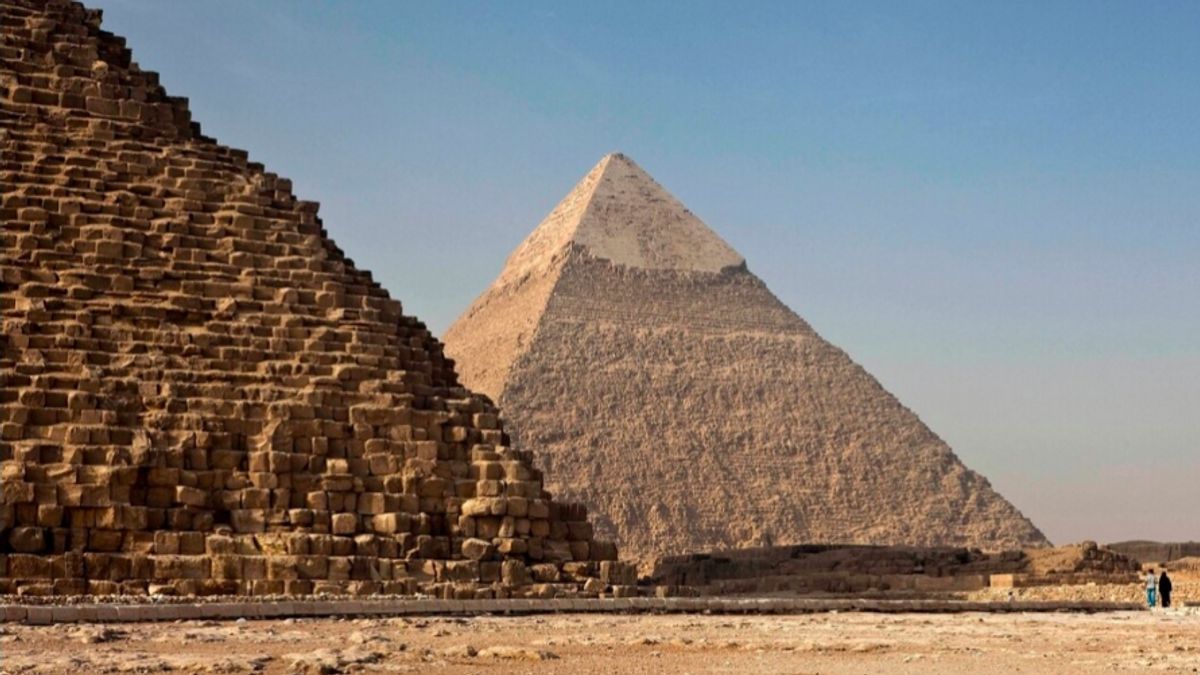


JAKARTA - When they heard the word pyramid, most people immediately remembered Egypt. Though the pyramid is not only found in Egypt. From Mesoamerika to North Africa, the shape of this triangular building had become an architectural trend in various ancient civilizations. Interestingly, the country with the largest number of pyramids in the world is not Egypt, but Sudan.
Reporting from the IFL Science page, Sudan has about 220 to 255 pyramids in its territory. This figure far exceeds the number of pyramids in Egypt which is estimated to amount to around 118. Although its size tends to be smaller than the Egyptian pyramid, the pyramids in Sudan have a no less important history.
The Piramides were built by the rulers of the Kingdom of Kush, a great kingdom that developed in the Nubia region (area that now extends from Aswan in Egypt to Khartoum in Sudan). In the 8th century before AD, the Kingdom of Kush once controlled Egypt and ruled as the 25th Dynasty. These Kush kings are known as Black Pharaohs.
The first king of this dynasty was Piye, who succeeded in conquering Egypt around 770 BC and ruled from Napata, the capital Kush at that time. Inspired by the magnificent tombs of the previous firauns, Piye chose to be buried in a pyramid in the ancient cemetery complex of El-Kurru, Sudan. This is the beginning of the tradition of pyramid building in the Kush kingdom.
After Kush's power over Egypt ended, they returned to the Nubia region and built a new capital in Mero totaling it. This is where most of Sudan's pyramid stands. About 200 pyramids were erected in the cemetery area of Mero totaling since the 3rd century BC, including the tomb of 41 members of the Kush royal family.
SEE ALSO:
-
 | LIFESTYLE
Kopi di Dubai Ini Pecahkan Rekor Dunia, Harganya Capai Rp11 Juta per Cangkir
22 Oktober 2025, 23:25 -
 | LIFESTYLE
Tambahkan Garam Sedikit Bisa Bikin Kopi Lebih Nikmat? Ini Penjelasan Ahli
21 Oktober 2025, 18:55



The Kush Kingdom grew rapidly until the 4th century AD, before finally collapsing due to conflicts with the Roman Empire and the Aksum Kingdom. This grand civilization later disappeared from the world's attention for centuries, until archaeologists finally rediscovered it in the 1830s.
Unfortunately, this discovery process did not go well. A treasure hunter named Giuseppe Ferlini damaged many pyramids on Mero totaling gold. This damage makes many Nubia pyramid no longer intact and only part of it has been successfully restored.
The condition is getting worse because Sudan has experienced various conflicts and civil war since mid-20th century, so tourism and funding for the restoration of historical sites have become very limited. Unlike the Egyptian pyramid which is protected and becomes a world tourist destination, the pyramid in Sudan is often neglected and less well known.
Whereas the Kush pyramid is proof that Africa has more than one great civilization ever triumphed. This legacy is important, not only for Sudan, but also for the history of the world.
The English, Chinese, Japanese, Arabic, and French versions are automatically generated by the AI. So there may still be inaccuracies in translating, please always see Indonesian as our main language. (system supported by DigitalSiber.id)


