


YOGYAKARTA - The lumps in the ears often make people worry. Although rare, lumps that appear in the ears can cause discomfort. In some people, this condition is harmless and can be lost by itself. However, in other cases, lumps can feel pain that cause more serious health problems if not handled properly.
Many people think lumps in the ears are just common skin problems such as acne. In fact, the causes can be more diverse, ranging from cysts, infections, to serious inflammation that risk disrupting the function of hearing. Therefore, recognizing the cause of the lump in the ear is very important so that the treatment is in accordance with the cause.
The lumps in the ear can be triggered by several factors. Some are mild and can be treated with simple care at home, some require medical treatment to surgery. Reporting from various sources, here are some of the causes of the bump in the ear.
Acne not only appears on the face or back, but can also grow around the ears. This condition usually occurs when follicles are blocked by excess oil and dead skin cells. As a result, small bumps arise that can feel pain, especially if infected with bacteria.
To overcome this, you can do a warm compress so that the punah can more easily get out by itself. After that, the ear area must be cleaned properly to prevent further infection. Products containing benzoil peroxide can also help. However, if the acne in the ear is inflamed badly, the doctor may prescribe antibiotics.
2. Bisul
Bisul or abscess is a skin infection that is often caused by bacteria. This condition can appear in various areas of the body, including the ears. Bisul in the ear usually looks like a lump filled with pus, feels warm when touched, and causes annoying pain.
In many cases, boils can heal on their own. But if the size gets bigger or causes excessive pain, doctors may give antibiotics or even perform small surgery to remove the pus.
3. Keloid
Keloids are excessive scar tissue that forms after the skin has a wound, for example from piercings or burns. These lumps usually do not cause pain, but can feel itching, harder, and appear to stand out so that they interfere with appearance.
SEE ALSO:

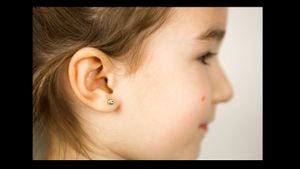
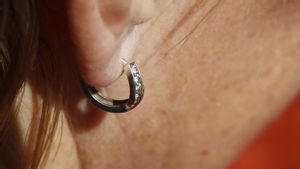

Handling keloids can be done by giving corticosteroid injections to reduce swelling. In some cases, doctors also recommend removing surgery or a cryotherARY procedure, which is to freeze the Keloid tissue so that it shrinks and does not grow again.
4. Kista Sebaceous
Cyst sebaceous is a non-cancer lump that appears under the skin due to clogged oil glands. Although more often it appears on the neck or chest, this cyst can also develop in the ear area. Grots usually contain fluids or fats and sometimes cause discomfort.
If the size grows or causes pain, medical action in the form of liquid suction or removal surgery can be a solution to eliminate it.
5. Mastoiditis
Mastoiditis is a serious infection that attacks the bone of the mastoid, which is a bone located behind the ear. This condition often arises as a complication of media autometry or infection with the middle ear that is not handled properly.
Symptoms can be in the form of lumps containing pus behind the ears, fever, discharge of fluid from the ears, and hearing loss. Doctors will usually give antibiotics directly through blood vessels, even patients need to be opnamed for several days to ensure effective treatment.
6. Lipoma
Lipoma is a tame fat lump that grows under the skin. Lipoma can grow quite large and cause discomfort, especially when it appears behind the ears. Some people just realized the existence of lipoma after its size grew.
If the size continues to grow or is increasingly worrying, the removal operation is one way to remove the lump. Consulting with the THT doctor is highly recommended for a more appropriate diagnosis.
Based on the explanation above, some conditions can recover with simple treatment at home, but some need medical treatment. Therefore, don't take it lightly if the lump on the ear feels pain, gets bigger, or doesn't disappear.
The best step is to immediately consult an THT specialist to get a diagnosis and treatment according to the cause. With proper treatment, you can avoid complications while maintaining optimal ear health.
The English, Chinese, Japanese, Arabic, and French versions are automatically generated by the AI. So there may still be inaccuracies in translating, please always see Indonesian as our main language. (system supported by DigitalSiber.id)
Most Popular Tags
#Prabowo Subianto #donald trump #Febrie Adriansyah #8791 #giias 2026Popular


