


JAKARTA - The regular habit of eating chicken, which is about four servings per week, can double the risk of death from 11 types of digestive tract cancer, including intestinal and stomach cancer. This is according to the findings of a recent study.
So far, red and processed meat has long been associated with an increased risk of colon cancer. In contrast, chicken meat is often considered a safer source of protein. However, new research from Italian scientists revealed surprising findings.
In the study, the researchers analyzed diet and health data for nearly 5,000 people with the majority in their 50s. The analysis was carried out for nearly two decades.
The results show those who consume more than 300 grams of chicken per week, equivalent to about four servings, have twice the risk of death from digestive tract cancer compared to those eating less than one serving of chicken per week.
In addition, chicken consumption of more than four servings a week is also associated with an increased risk of death from any cause by 27 percent. The researchers note that this impact appears stronger on men.
Reporting from the Daily Mail page, in the journal Nutrients, a team of writers from the Italian National Institute of Gastroenterology explained they could not confirm why this increased risk occurred, but there are a number of theories that may be the cause.
SEE ALSO:
-
 | LIFESTYLE
Viral Hidangan Ayam Rebus Dijual Rp1 Juta per Porsi, Apa Istimewanya?
26 Maret 2025, 16:25 -
 | LIFESTYLE
Benarkah Ayam Tidak Perlu Dicuci Sebelum Dimasak? Ini Penjelasan Ahli
04 Maret 2025, 13:55

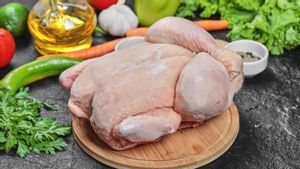
They suspect that proteins in chicken cooked at high temperatures can produce chemical compounds harmful to human cells. Then, this triggers cellular changes that can develop into cancer. In addition, animal feed, hormones, or drugs used in the hen magnification process are also referred to as potential factors.
"The reason why men seem more vulnerable to this risk is still a mystery that needs to be investigated further," the researchers wrote.
They suspect the hormonal differences between men and women can play a role. In addition, men tend to eat in larger portions than women, which means they are theoretically more exposed.
However, this study also notes that chicken consumption does not increase the risk of death from all types of cancer. Increased risk is found only in 11 types of digestive tract cancer, including stomach cancer, large intestines, bile ducts, anus, bile bags, liver, pancreas, rectum, fine intestines, and soft tissue in the stomach.
In comparison, the consumption of red meat is more than 350 grams per week, the equivalent of about two pieces of steak. It is also found to increase the risk of all types of cancer.
However, the researchers acknowledged that there were some limitations in this study. One of them is the absence of data on how to cook and present chickens consumed by participants. This makes scientists unable to distinguish whether the effect is different between fast food chicken and cooked chicken at home.
In addition, although factors such as smoking status and weight have been calculated, data regarding the level of participant physical activity is not available.
"This is a fairly serious limitation," the authors said.
According to Cancer Research UK, about 21 percent of colon cancer cases and 3 percent of all cancers in the UK are caused by consumption of red or processed meat.
Scientists suspect this is related to certain chemicals naturally found in the meat, added during the processing process, or formed when cooked at high temperatures.
Meanwhile, the NHS (British National Health Service) states that meat, if consumed as part of a balanced diet, provides protein that is important for building and repairing muscles, and helps produce hormones and enzymes. Meat is also rich in vitamin B12, which plays an important role in maintaining the health of the nervous system.
However, NHS also recommends that people who usually consume about 90 grams of red meat per day, equivalent to three thin slices of roast meat, reduce their portion to around 70 grams per day.
The English, Chinese, Japanese, Arabic, and French versions are automatically generated by the AI. So there may still be inaccuracies in translating, please always see Indonesian as our main language. (system supported by DigitalSiber.id)
Most Popular Tags
#Prabowo Subianto #donald trump #2026 World Cup #Febrie Adriansyah #8791Popular


