
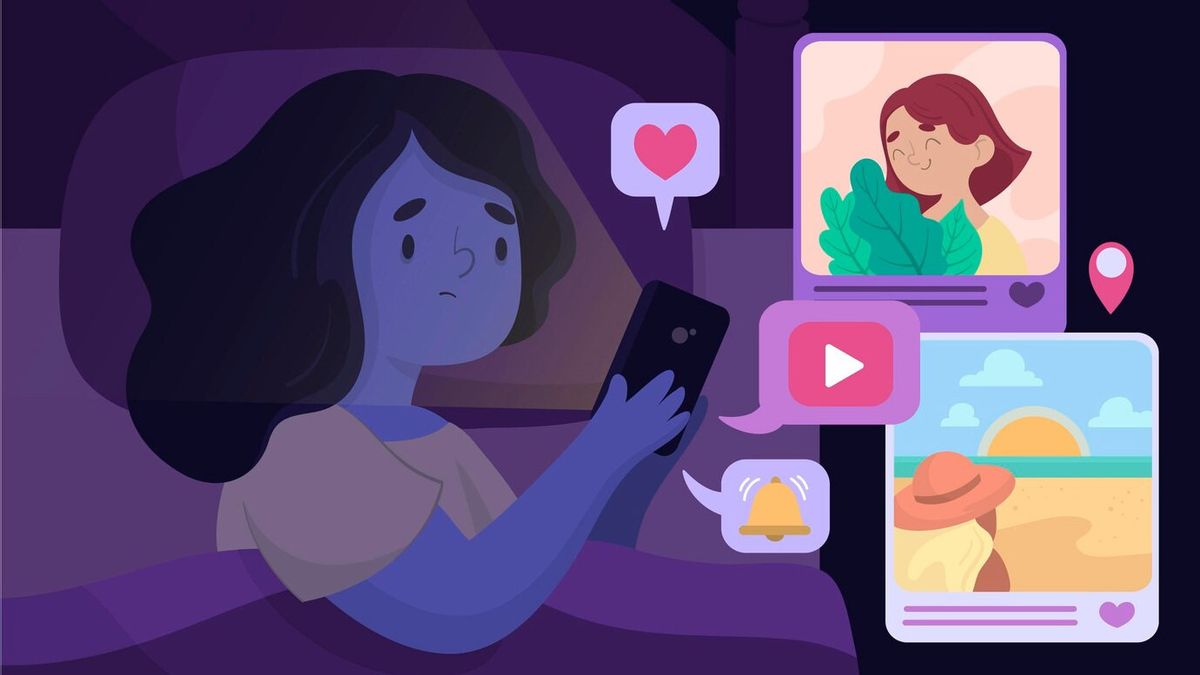


YOGYAKARTA - In this digital era, mobile phones are an integral part of everyday life. However, behind the ease of hidden potential negative impacts that should be watched out for, especially the duration of screen time that is dangerous on mobile phones.
Recent research has grown that the time spent staring at the HP screen turns out to have significant correlations with physical and mental health. This then opens up important discussions about the balance between the benefits of technology and the risks of lurking health.
Recent research published in the National Library of Medicine Journal, shows that reducing HP playing time can actually have a positive impact on our mental health.
The researchers involved a group of healthy students and divided them into two groups. The first group was asked to reduce their cell phone usage time to a maximum of 2 hours a day for 3 weeks. The second group continues to use HP as usual.
After 3 weeks, the results are quite interesting. Groups that reduce HP playing time feel more prosperous, not easily stressed, sleep quality is better, and the symptoms of depression are also reduced compared to groups that do not reduce the use of cellphones.
Also read the article that discusses Is Possessive Including Mental Disorders? This Is The Complete Explanation
Even so, after the research was completed and everyone returned to using their cellphones as usual, this positive effect slowly disappeared. This research means that reducing time to play HP consistently is important to maintain mental health.
It can be concluded that this study provides strong clues that the habit of playing cellphones every day can actually affect our mental health. By reducing the time to look at your cellphone screen, you can feel better mentally. So, let's start to pay attention to how long we use our cellphones every day.
Of course, the following is the translation of the text into Indonesian:
Research published on the stosford.edu page, found that increasing screen usage in adults could endanger learning, memory, and mental health, as well as potentially increasing the risk of early neurodegeneracy.
Studies show that in adults aged 18 25 years, excessive screen time causes cerebral cortex thinning, the brain's outermost layer responsible for processing cognitive memory and functions, such as decision making and problem solving.
Other studies have found that adults who watch television for five hours or more per day have increased the risk of contracting brain-related diseases such as dementia, stroke, or Parkinson's.
This study found that excessive screen time can inhibit sleep, especially when you see the screen late at night. Light from the screen can delay the release of melatonin from the brain's domestic glands, thus affecting the body's natural cirkadian rhythm and causing trouble sleeping.
Additional research found that adults who spent excessive screen time or were diagnosed with smartphone addiction had lower volume of gray matter.
Gray matter is a brain tissue that is important for human daily functions and is responsible for everything from movement to memory to emotion.
The volume of gray matter naturally decreases with age, so in addition to reducing screen time, doing activities that maintain the volume of our gray matter and improve brain health, such as exercise and movement, restoring sleep, social interaction, and stress management, are very important.
SEE ALSO:
-
 | INFO SEHAT
10 Tips Ilmiah Menyimpan Bahan Makanan agar Tetap Segar Lebih Lama
17 Februari 2025, 16:46 -
 | INFO SEHAT
Diduga Penyebab Kematian Kim Sae Ron, Kenali Gejala Henti Jantung
17 Februari 2025, 15:25 -
 | INFO SEHAT
Dokter Tirta Beri Penjelasan soal Air Mineral Ada Manisnya, Bisa Bikin Diabetes?
17 Februari 2025, 13:25


In addition to the duration of screen time, follow other interesting articles too. Want to know other interesting information? Don't miss it, keep an eye on the updated news from VOI and follow all of its social media accounts!
The English, Chinese, Japanese, Arabic, and French versions are automatically generated by the AI. So there may still be inaccuracies in translating, please always see Indonesian as our main language. (system supported by DigitalSiber.id)
Most Popular Tags
#Prabowo Subianto #donald trump #2026 World Cup #Febrie Adriansyah #8791Popular


