

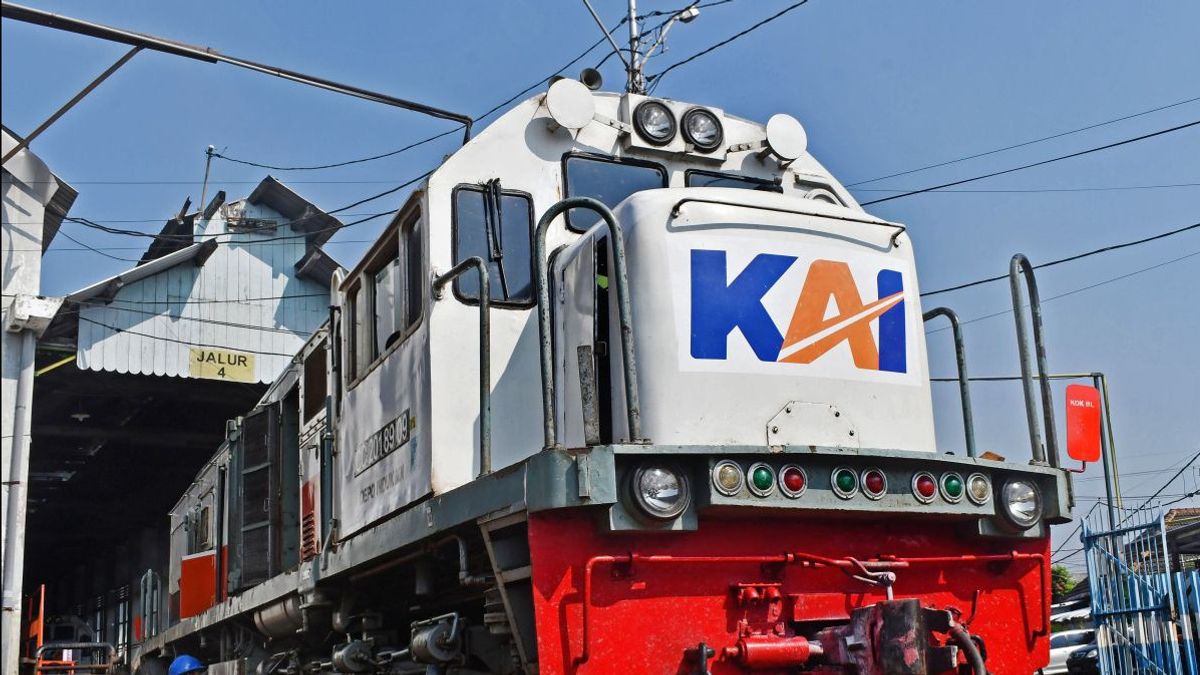


JAKARTA - KAI Group ensures that all emergency handling systems and procedures in various service modes ranging from Long-distance Trains, Jabodebek LRT, Grabish High Speed Trains, Airport Trains, to Commuter Line are prepared based on national and international safety standards.
KAI Vice President Public Relations Anne Purba explained that emergency handling procedures were designed with the main aim of ensuring that each customer survived until the evacuation process was complete.
Furthermore, Anne said all steps were designed to adjust the conditions of the traffic, technical specifications of the facilities, and the electrical system in each mode.
"Every country has the same system and procedures in dealing with emergencies. The goal is to keep customers safe until the entire evacuation process is complete," Anne said in an official statement, Friday, October 31.
For example, continued Anne, the Jabodebek LRT has been equipped with a Screen Door Platform (PSD) at all stations, Guiding block for people with disabilities, as well as strict evacuation procedures that refer to the third rail system as an electricity supplier.
In an emergency condition, Anne continued, the electricity was first confirmed to be completely extinguished before the evacuation process was carried out via a walkway that was connected to the nearest station.
We don't lower passengers down the track because the area below the flyover has a lot of high-voltage cables and high-risk vital infrastructure. Evacuation above the track is safer and more controlled," explained Anne.
Anne said the approach was also applied in various developed countries such as Singapore, Japan, and Hong Kong, which have similar safety systems through the use of Screen Door Platforms, security sensors, and above-walkway evacuation procedures.
"The system and procedure are in line, because wherever they are, the goal remains the same, namely to ensure every customer is safe until they arrive in a safe place," he said.
At the Jabodetabek Commuter Line service, continued Anne, the evacuation procedure is adjusted to the type of series. The series made by JR (Japan Railways) is equipped with evacuation benches to safely move customers to other trains, while the CRRC series has evacuation stairs to help passengers down to safe areas if the traffic conditions allow.
"All processes are carried out under the supervision of officers who have received intensive training so that rescue steps remain under control," he explained.
For high-speed fast train operations, continued Anne, it has a priority safety system. In an emergency, officers are ready to guide passengers out through a special evacuation route on the rail side which is equipped with emergency lighting, direct communication intercoms to the driver, and access stairs to the safe area.
"This standard follows the High-Speed Rail Safety Standard which is also implemented in Japan and China," he said.
KAI Group also pays attention to the needs of customers with special needs, the elderly and disabilities. At the Jabodebek LRT, there are evacuation areas for wheelchair users, while on KRL there are ramps and wheelchair areas so that mobility is easier during the rescue process.
Inyangsh, continued Anne, wheelchair facilities and accessible lanes have been prepared in each carriage to ensure all customers receive the same protection under any circumstances.
SEE ALSO:
-
 | EKONOMI
Jalur Semarang Tawang-Alastua Bisa Dilintasi KA dengan Kecepatan 20 KM per Jam
30 Oktober 2025, 17:45
"Security is the right of all customers, without exception," said Anne.
In addition to the readiness of facilities and officers, KAI also provides every series with international standard safety equipment, such as the Passenger Emergency Call to contact officers, emergency brakes, SOS buttons, and glass solvers that can be used during critical conditions.
"We encourage customers to recognize the location of the safety tools before leaving, because the sense of security starts from our common awareness," said Anne.
In any situation, continued Anne, customers are advised to remain calm, not panic and always follow the instructions of officers in the field.
Especially for long-distance and local trains managed by KAI. KAI also alerts 24-hour information services through Contact Center 121, WhatsApp 0811-222-33-121, email [email protected], and official account @KAI121 on Instagram, X, and Facebook.
"We are committed to providing fast, safe, and safety-oriented services. Every decision taken in the field always aims to make all customers safe to their destination," concluded Anne.
The English, Chinese, Japanese, Arabic, and French versions are automatically generated by the AI. So there may still be inaccuracies in translating, please always see Indonesian as our main language. (system supported by DigitalSiber.id)
Most Popular Tags
#Prabowo Subianto #donald trump #Febrie Adriansyah #8791 #giias 2026Popular


