


JAKARTA Allocating around 44.2 percent of the education budget for the free nutritious eating program (MBG) is considered to have hit the constitution, because there is no obligation to provide free food in the 1945 Constitution.
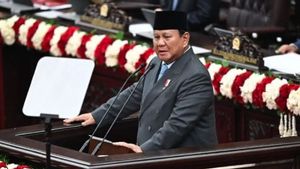
In a speech on the 2026 State Revenue and Expenditure Budget Draft (RAPBN), President Prabowo Subianto stated his commitment to fulfill the education budget of 20 percent of the APBN or IDR 757.8 trillion. The 2026 education budget increased by around IDR 33.5 trillion compared to this year's IDR 724.3 trillion.
This figure, Prabowo claimed, is the largest in history. On the same occasion, the budget will be allocated to improve the quality of teachers, strengthen vocational education, and harmonize curriculum with the needs of the world of work. Not only that, the budget is also prepared for scholarship programs, improving school facilities, and campuses.
However, the attention of many groups, amounting to 44.2 percent or IDR 335 trillion of the total education budget, was allocated to the MBG program. This amount is up from 2025 which is only IDR 71 trillion. The money will be used for a meal menu of 82.9 million beneficiaries and 30 thousand kitchens or the Nutrition Fulfillment Service Unit (SPPG). This was revealed by the Minister of Finance Sri Mulyani when detailing the allocation of the education budget at the 2026 RAPBN.
The plan to use educational funds to finance the MBG program immediately raises concerns among education observers. This plan is considered not in accordance with the state's obligation to allocate education funds of 20 percent of the state budget.
The large allocation of the education budget for the MBG program received sharp criticism from the Indonesian Education Monitoring Network (JPPI). According to the National Coordinator of JPPI Ubaid Matraji, the allocation of the education budget mentioned in the 2026 RAPBN has hit the constitution. Instead of carrying out a constitutional obligation, namely providing free-cost education, the government has instead diverted almost half of the budget for the MBG program.
In fact, the Constitutional Court (MK) has decided that the state must make basic education free nine years from elementary to junior high school, including private schools. This order has been confirmed twice, in case decision number 3/PUU-XXIII/2024 (27/5/2025) and reiterated in case decision number 111/PUU-XXIII/2025 (15/8/2025).
This repeated affirmation should be an important and urgent signal, but the government actually chooses to prioritize the MBG program which is not even mandated in the constitution.
"There is no free meal order in our constitution. But why is this MBG so prioritized, even the amount of funds has increased many times?" Ubaid Matraji told VOI.
"In fact, Article 31 of the 1945 Constitution clearly mandates that every citizen has the right to education and the government is obliged to pay for basic education. Our constitution emphasizes financing for education, not for free meals," he added.
The same thing was conveyed by the Education and Teacher Association (P2G). Although they appreciate the increase in the education budget at the 2026 RAPBN, they regret it because the fantastic budget is used for the MBG program of 44.2 percent.
P2G National Coordinator, Satriwan Salim, said that this budget posture was not on target, even though there were still many basic problems of education and teachers that had to be addressed and financed by the government.
If you look at the posture of the 2025 State Budget, actually the allocation for primary and secondary education does not get a proportional allocation.
"P2G regrets that the 20 percent education budget as a moderately justru mandate is more allocated to other ministries that do not manage education, especially primary and secondary education. Even though the main issue of Indonesian education is still struggling with basic and secondary education, including PAUD levels," continued Satriwan.
P2G assessed that the Prabowo-Gibran government has not focused on improving basic and secondary education, including PAUD. The proof is that the Ministry of Education only gets an allocation of 33.5 trillion or only about 4.6 percent of the 2025 State Budget for education. This, said Satriwan, is in contrast to the jumbo MBG budget.
"The MBG budget should not be able to take 20 percent of the education budget, considering that the MBG budget is not directly or explicitly ordered by the constitution, in contrast to the education budget and the rights of citizens to receive education which is called explicit in Article 31 paragraph 1-5 of the 1945 Constitution," Satriwan emphasized.
On the same occasion, Ubaid Matraji also criticized the government for not being transparent in budgeting education funds. According to him, the 20 percent education budget of the APBN should be focused on basic education.
He also questioned the government's move to include official education which was again inserted into the 2026 education budget. According to Ubaid, official education should be included in the budget for each agency, not the allocation of education funds.
"This clearly violates the National Education System Law Article 49 which mandates that the allocation of the education budget must be prioritized for the fulfillment of primary to secondary education. Meanwhile, official schools organized by ministries or non-ministerial government institutions should have separate budget posts, not from the 20 percent education allocation," he said.
Separately, P2G also hopes that the government will refocus on the distribution of education from ministries outside the education ministry. According to P2G records, there are around 23 ministries or institutions that also take up an allocation of 20 percent of the education budget. Such as the implementation of official and school bond education under ministries such as the Ministry of Finance, Ministry of Home Affairs, Ministry of Agriculture, Ministry of Agriculture, Ministry of Defense, and others.
SEE ALSO:
-
 | BERNAS
Dari Jumbo ke Merah Putih: One for All Merusak Ekspektasi Pecinta Film Animasi Indonesia
18 Agustus 2025, 08:00 -
 | BERNAS
Pengunduran Diri Dirut Agrinas Tunjukkan Karut Marut Tata Kelola BUMN
15 Agustus 2025, 20:05

"The budget for official bond schools managed by the non-ministerial ministry of education is more than Rp. 100 trillion, it should then be reallocated to ministries that take care of education only to make it more just, proportional, and right on target according to the constitutional order," said Satriwan asserted.
Therefore, JPPI urges the government to review the allocation of the education budget at the 2025 RAPBN. The government is asked to place priorities in accordance with the constitutional mandate, namely providing free and quality education for all children, especially in primary education, both public and private schools.
"It's time for the government to realize and understand: which constitutional obligations must take precedence to be fulfilled, which campaign promises are fulfilled later," Ubaid concluded.
The English, Chinese, Japanese, Arabic, and French versions are automatically generated by the AI. So there may still be inaccuracies in translating, please always see Indonesian as our main language. (system supported by DigitalSiber.id)
Most Popular Tags
#Prabowo Subianto #donald trump #firearm #8791 #giias 2026Popular


