
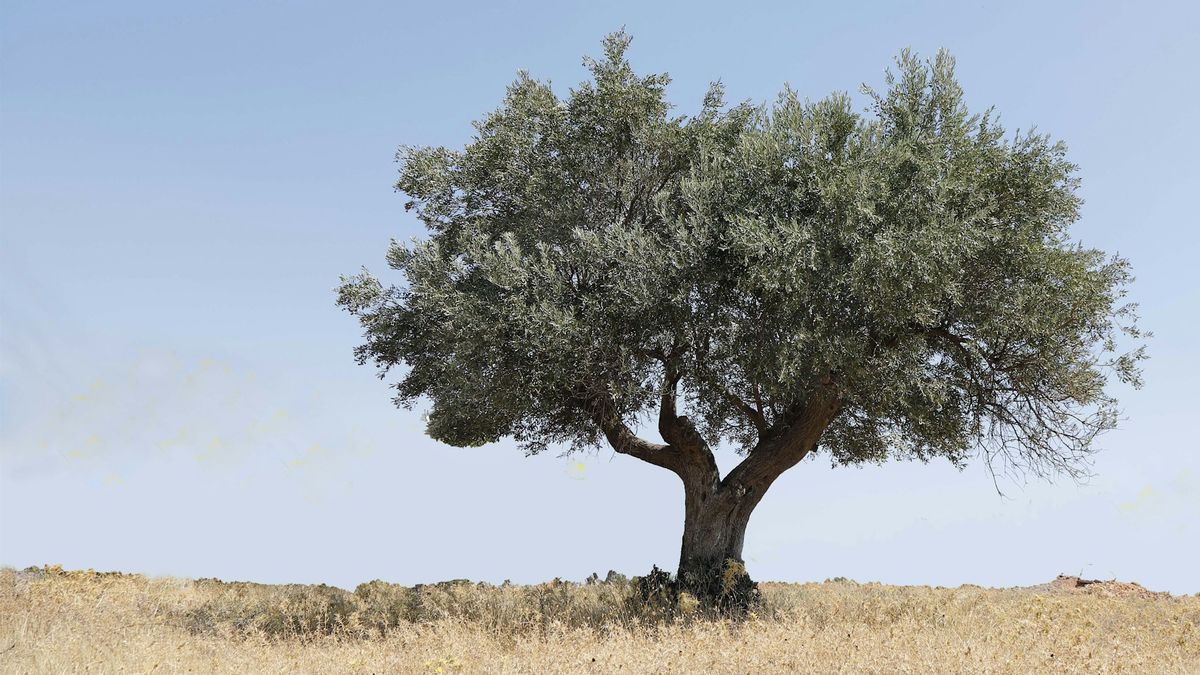


JAKARTA - As the oldest olive treekeeper in the West Bank, Salah Abu Ali is diligent in caring for cutting his branches to harvest his fruit. It was even done in the midst of violence that hit the Palestinian territories during this year's harvest.
"This is not an ordinary tree. We talk about history, about civilization, about a symbol," said Abu Ali, smiling behind his thick beard in Al-Walajah Village, south of Jerusalem, West Bank, quoted from AFP.
Furthermore, the 52-year-old man proudly said experts expect the olive tree to be between 3,000 and 5,500 years old. The tree has survived for thousands of years facing drought and war in the arid land hit by the conflict.
Around a large tree trunk and dozens of branches, some were named after their family members, Abu Ali had created a small quiet oasis.
Several steps from there, the dividing wall was crowned with barbed wire built by Israel to isolate the West Bank standing five meters high.
More than half of the land native to Al-Walajah is now located on the furthest side of the Israel security wall.
But so far, Abu Ali-inhabited villages have avoided Israeli illegal settlers' attacks that often damaged this year's olive harvests, prompting many Palestinians in the occupied West Bank to be injured.
Israel has occupied the West Bank since 1967. About 500,000 illegal Israeli settlers live in the Palestinian territories. They have been attacking farmers for almost every day throughout 2025 as well as their olive trees since the season began in mid-October 2025.
The Palestinian Authority Wall Colonial and Resistance Commission, headquartered in Ramallah, documented 2,350 such attacks in the West Bank only in October 2025.
However, almost no perpetrator has been held accountable by the Israeli authorities regarding the attack on the Palestinian civilian farmer.
Israeli forces have often dispersed Palestinians who are casually sitting with tear gas or blocking farmers' access to their own lands, as AFP journalists have watched on several occasions.
But in Al-Walajah for now, Abu Ali is free to care for the olive tree. In a good year, he said, the tree could produce 500 to 600 kilograms (1,100 to 1,300 pounds) of olives.
This year, low rainfall has caused harvest yields in the West Bank to decline.
This tree has become a symbol of Palestinian resilience. The olive tree represents the Palestinian people themselves, which have been rooted in this land for thousands of years, said Al-Walajah Mayor Khader Al-Araj.
The Palestinian Ministry of Agriculture even recognized the tree as a Palestinian natural landmark and appointed Abu Ali as its official board.
Most olive trees are known to reach a height of about three meters as they grow. This one of the olive trees tower above other trees, the main stem is nearly two meters wide, flanked by dozens of branches that are the same size as ordinary olive trees.
"Green Gold"
Abu Ali said the oil produced by the olive tree has many benefits. He said the value was also profitable.
The oil from this tree is extraordinary. The older the tree, the richer the oil," said Abu Ali.
He noted that it was a valuable resource. He calls it 'green gold' because the price is 4-5 times more expensive than ordinary oil.
In the past, tourists flocked to see the oldest olive tree in the West Bank being cared for by Abu Ali. However, the number has continued to decrease since Israel carried out a land invasion in Gaza in October 2023. Including, said Abu Ali, the tighter the checkpoints guarded by Israeli troops in the West Bank.
Al-Walajah Village is actually not completely immune to the problems that Palestinians often face in the West Bank.
In 1949, after the formation of Israel, most of the village land in the West Bank was seized, and many Palestinian families had to leave their homes to settle across the lines of the ceasefire.
After Israel occupied 1967, 66 percent of the territory in the West Bank was designated Area C under full control of Israel. This is based on the 1993 Oslo Agreement, which is intended to realize peace between Palestine and Israel.
However, the stipulation caused many Palestinian homes in the West Bank to be demolished on the orders of the Israeli military on the pretext of not having a permit, which is clear evidence of colonialism because Israel made rules on land for other countries.
"Currently, Al-Walajah has realized almost every Israeli policy in the West Bank: settlements, walls, demolition of houses, land confiscation, and closures," Mayor Al-Araj told AFP.
For now, Abu Ali continues to care for the olive tree. He planted corn and fruit trees in the vicinity. He also prepared a guest book containing messages from visitors in dozens of languages near the olive tree.
"I've been a part of this tree. I can't live without it," he said.
SEE ALSO:
-
 | BERITA
Zohran Mamdani, "Musuh" Trump Sekaligus Imigran Keenam yang Jadi Walkot New York
05 November 2025, 14:58 -
 | BERITA
Dibantah India, Trump Tetap Klaim Selesaikan 8 Perang dalam 9 Bulan Memimpin AS
06 November 2025, 12:57 -
 | BERITA
Dick Cheney, Eks Wapres AS Pendorong Perang Irak Meninggal di Usia 84 Tahun
04 November 2025, 19:51 -
 | BERITA
Jelang KTT G20, PBB: Sejak Pandemi COVID-19 Banyak Negara Tidak Siap Hadapi Pandemi Lagi
04 November 2025, 13:11
The English, Chinese, Japanese, Arabic, and French versions are automatically generated by the AI. So there may still be inaccuracies in translating, please always see Indonesian as our main language. (system supported by DigitalSiber.id)
Most Popular Tags
#Prabowo Subianto #donald trump #Febrie Adriansyah #8791 #giias 2026Popular


