

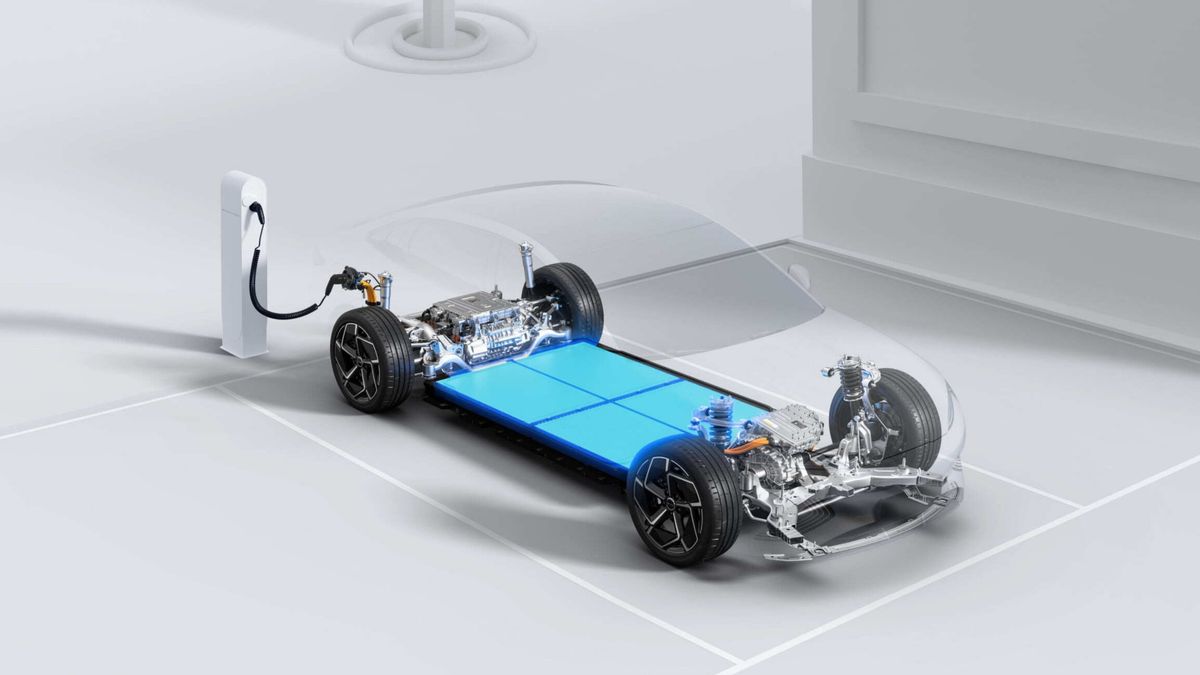


JAKARTA - The Chinese government through the Ministry of Industry and Information Technology together with the Federation of Marketing and Supply Cooperatives of China released a new policy that focuses on standardizing the recycling process of lithium-ion batteries. This step also expands the regulatory framework which now covers the entire life cycle of electric vehicle batteries in the country.
Launching from IT Home, Monday, April 6, the government detailed a number of strategies, ranging from strengthening the collection infrastructure to developing a digital-based monitoring system. In addition, large recycling companies are also encouraged to take a more dominant role in this ecosystem, in line with the latest policy trends in the electric vehicle sector.
Local authorities are also urging manufacturers of electric bicycles and lithium batteries to collaborate with recycling companies. This cooperation aims to build a collection network and temporary storage facilities, to ensure that the management of used batteries is more structured.
This approach reflects the direction of electric vehicle industry policy in China, where automotive manufacturers and battery suppliers are now required to take responsibility for battery management at the end of life. This includes providing special services and channels for the recycling process.
The policy also highlights the importance of the role of large companies such as China Recycling Group in increasing lithium battery processing capacity. This company is expected to be able to implement a flexible recycling model and adapt to the characteristics of each region.
On the other hand, the government encourages the use of digital platforms to record the origin, volume, and final destination of batteries in each stage of recycling. This effort is strengthened by the launch of the national battery tracking platform on April 1, which requires all industry players to upload data from production to recycling processes.
Through this system, each battery will have a unique digital identity, so that its entire life cycle can be thoroughly monitored in a centralized database. This platform includes battery manufacturers, manufacturers of new energy vehicles, maintenance companies, to recycling companies, forming a closed-loop monitoring system.
This latest policy also complements the system by strengthening physical infrastructure, including expanding the collection network and standardizing the recycling distribution line. Local governments are also asked to implement uniform technical guidelines and develop models that can be widely implemented.
Overall, this policy emphasizes the importance of synergy between regulators and industry players in the supply chain, in line with the increasingly comprehensive regulatory approach in the Chinese electric vehicle sector.
As part of its long-term measures, China has also prepared stricter regulations starting in 2026. These rules require vehicle and battery manufacturers to take full responsibility for used batteries, while expanding the recycling service network and increasing supervision, as the volume of battery waste increases in the future.
The English, Chinese, Japanese, Arabic, and French versions are automatically generated by the AI. So there may still be inaccuracies in translating, please always see Indonesian as our main language. (system supported by DigitalSiber.id)
Most Popular Tags
#Prabowo Subianto #donald trump #firearm #8791 #giias 2026Popular


