
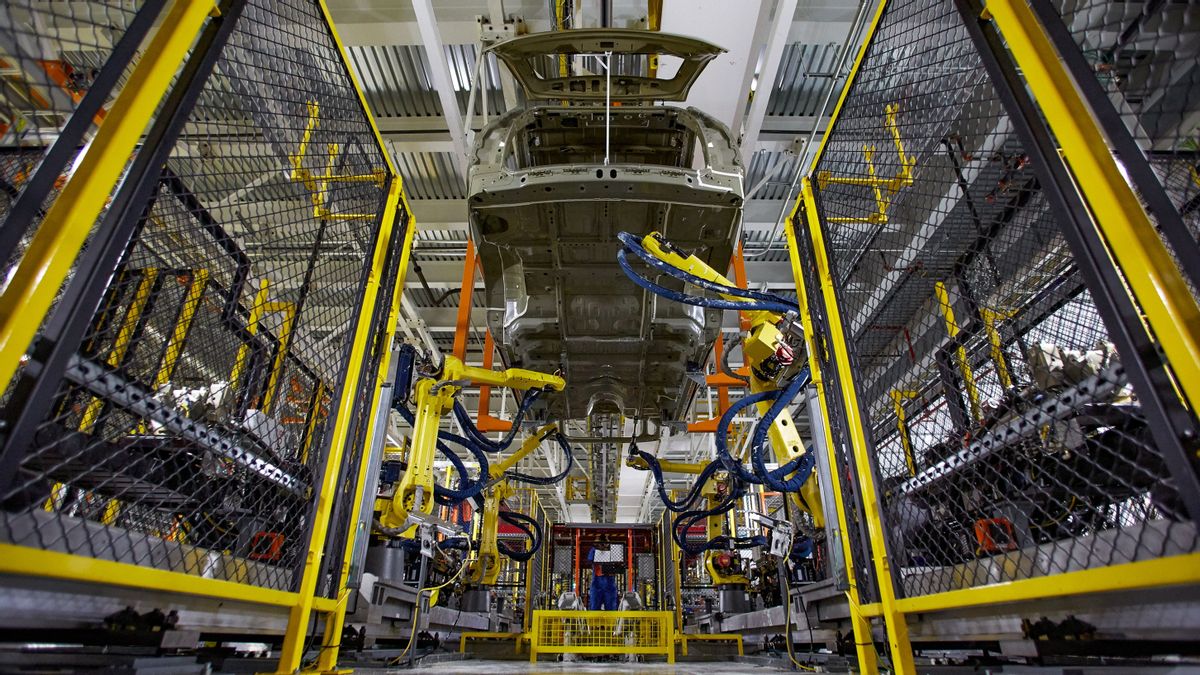


JAKARTA President of the United States (US) Donald Trump, Wednesday (December 3), proposed a massive cuts in fuel efficiency standards imposed in the Joe Biden era. This policy paved the way for automotive manufacturers to more freely sell gasoline-engined cars and cancel one of the main pillars of Biden's climate agenda.
"People want gasoline cars," Trump said, quoted by Reuters on Thursday, December 4.
The proposal proposed by the National Highway Traffic Safety Administration (NHTSA) reduced fuel efficiency obligations for the 2022 2031 model year. The average standard was set at 34.5 miles per gallon (14.6 km/liter) in 2031, compared to the target of 50.4 miles per gallon (21.4 km/liter) prepared by the Biden administration. Biden's previous rules required an increase in efficiency of 810 percent each year and encouraged automakers to produce more electric vehicles to comply with the rules, but would not force a direct termination of gasoline-powered vehicles.
Trump's standard cuts are expected to save huge costs for automakers. The NHTSA document says the potential savings is up to US$35 billion to 2031, including more than US$5 billion for Ford and Stellantis, as well as US$8.7 billion for General Motors. The initial cost of vehicles is expected to drop by around US$930. Ford CEO Jim Farley called this move a "win for common sense and affordability."
SEE ALSO:
-
 | OTOINFO
BMW Indonesia Gelar Kompetisi Teknisi dengan Ratusan Peserta, Ini Pemenangnya
04 Desember 2025, 09:15 -
 | MOTOR
Ducati Monster Generasi Kelima Sudah Diproduksi, Intip Spesifikasi Lengkapnya
04 Desember 2025, 08:46 -
 | OTOINFO
Honda Hadirkan Program Servis Khusus Wilayah Bencana dari Aceh hingga Padang
03 Desember 2025, 21:23
On the other hand, fuel consumption is estimated to increase by 100 billion gallons by 2050. As a result, US people have the potential to spend an additional USD 185 billion on gasoline, while carbon emissions are projected to rise by about 5 percent. California Governor Gavin Newsom criticized the proposal, calling it making residents pay billions more at gas stations while poisoning the air.
NHTSA also proposed major changes to credit schemes, including the termination of interfabricated credit trading from 2028. This mechanism has for years benefited EV manufacturers such as Tesla and Rivian who sell credit to companies with gasoline-based product lines.
This proposal clarifies Trump's push to reverse its predecessor's climate policy, including plans to remove EV tax incentives and efforts to prevent California from implementing a ban on selling gasoline cars from 2035. NHTSA estimates an increase in vehicle emissions by 2035 as a result of this new rule being equivalent to an annual emission of 7.7 million cars.
The English, Chinese, Japanese, Arabic, and French versions are automatically generated by the AI. So there may still be inaccuracies in translating, please always see Indonesian as our main language. (system supported by DigitalSiber.id)
Most Popular Tags
#Prabowo Subianto #donald trump #2026 World Cup #Febrie Adriansyah #8791Popular


