


JAKARTA - Waste management has become a big challenge for many coastal areas, including in Lampung Province. In the midst of increasing household waste volume and limited capacity of Final Disposal Sites (TPA), waste banks are one of the important innovations that can be driven by the community.
Sulastri, as the Head of the Karang City Garbage Bank Group (Baskora), explained that the waste bank he manages with his colleagues is not only a place to save inorganic waste, but also a room to learn together about how waste can be managed responsibly and has economic value.
Sulastri also explained that since the beginning of the formation of Baskora, accompanied by Mitra Bentala, an environmental organization that has long worked with coastal communities to strengthen community capacity in managing natural resources and mitigating environmental risks.
According to him, the assistance includes institutional strengthening, waste sorting training, administrative governance, and education about the circular economy. The presence of Mitra Bentala made Baskora not only an ordinary waste bank, but as a model for environmental-based community empowerment.
"As a newly formed waste bank, we would like to thank Mitra Bentala and all those who have accompanied this process. In the future, we hope that more and more residents will join the movement to sort out and save garbage at Baskora. We understand that plastic waste is a serious threat to the coastal ecosystem, so that through this waste bank we want to be part of a joint solution. ," said Sulastri, in a statement received, Wednesday, November 19.
SEE ALSO:
-
 | BERITA
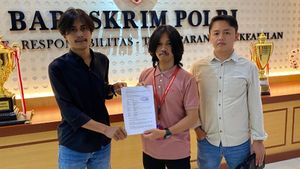
Ribka Tjiptaning Dilaporkan ke Bareskrim Usai Menyebut Soeharto "Pembunuh Jutaan Rakyat"
12 November 2025, 16:14 -
 | BERITA
Komite Percepatan Reformasi Polri Lakukan Pertemuan dengan Kapolri Siang Ini
10 November 2025, 13:33 -
 | BERITA
Khotbah Jumat di Masjid SMAN 72 Kelapa Gading Diwarnai Ledakan, 1 Orang Diamankan
07 November 2025, 14:29 -
 | BERITA
22 Saksi Kasus Kematian Terapis SPA Diperiksa, Termasuk Rekan Seprofesi
03 November 2025, 12:01 -
 | BERITA
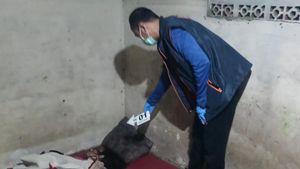
Polisi Ungkap Kronologi Siswi SD Ditemukan Tewas Usai Diperkosa Tetangganya
14 Oktober 2025, 16:38

Sulastri also said that Baskora's contribution did not stop at the household level. In a broader context, waste banks are strategic solutions at the community level to support an integrated waste management system, including the Waste Processing program into Electricity (PSEL) in the regions.
PSEL needs sorted and stable waste raw materials, and this is where the role of the waste bank becomes very important. With sorting from the source, the volume of waste entering the PSEL facility will be more homogeneous, reduce cross-contamination, and increase the efficiency of the process of converting waste into energy.
Rizani, as Executive Director of Mitra Bentala, said that the operation of the waste bank that has been running so far allows to support the implementation of PSEL, which is currently a priority program for the government.
"However, this must also be supported by transformation of innovation in terms of technology to utilize waste. Waste banks are formed as solutions at the community level, maybe at the regional level there will be transformations in electrical energy such as recycling companies or the like", said Rizani.
If the local government wants to accelerate the implementation of PSEL, continued Rizani, then the transformation at the upstream level must be a priority. Support for the waste bank ecosystem, starting from strengthening regulations, expanding waste bank networks, providing simple technology, to incentive schemes for the management group will be strategic steps.
Rizani said, PSEL cannot run optimally if it only relies on downstream processes, a neat, separate and sustainable waste supply chain is needed.
"By strengthening community initiatives such as Baskora, the region does not only move towards a cleaner environment, but also contributes to accelerating the implementation of waste-based renewable energy," concluded Rizani.
The English, Chinese, Japanese, Arabic, and French versions are automatically generated by the AI. So there may still be inaccuracies in translating, please always see Indonesian as our main language. (system supported by DigitalSiber.id)
Most Popular Tags
#Prabowo Subianto #donald trump #Febrie Adriansyah #8791 #giias 2026Popular


