

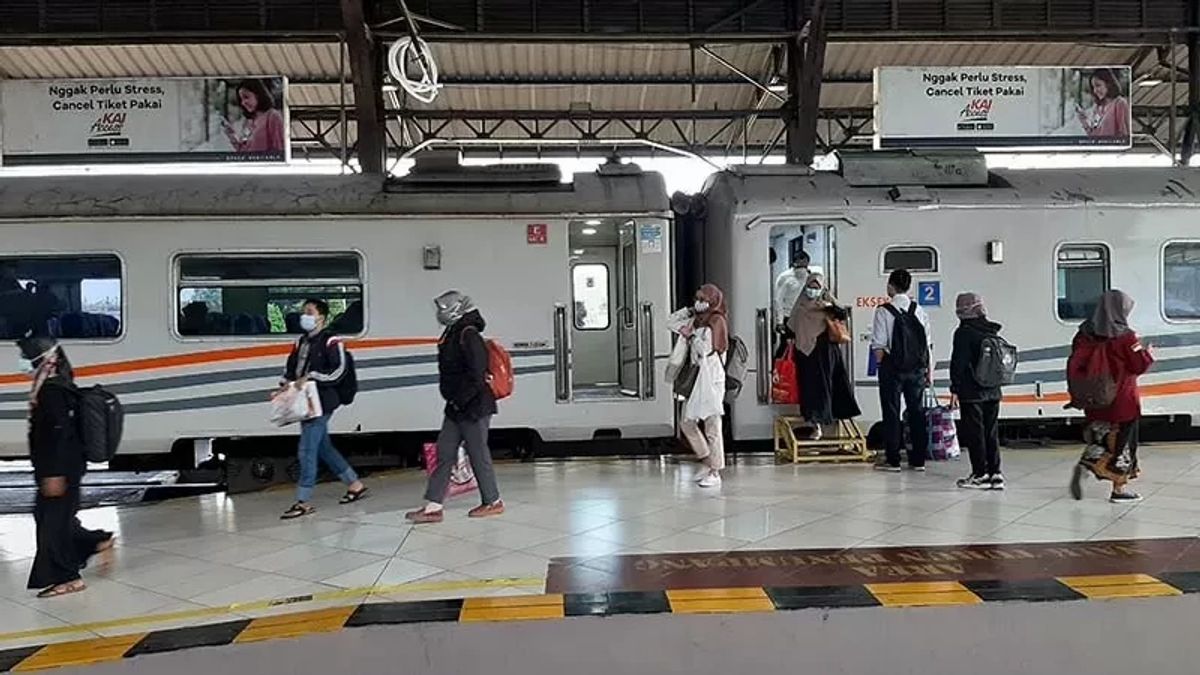


JAKARTA - There was a vandalism of throwing stones at the railroad frame (KA) 88F Sancaka Yogyakarta - Surabaya Gubeng connection, when the train passed between Klaten Station and Srowot Station, Sunday, July 6.
The throwing of the stone caused the glass to break and the debris hit and injured the passengers. This incident is included in the victim's video footage which happened to be making content for his journey on the train.
KAI Daop 6 Yogyakarta Public Relations Manager Feni Novida Saragih apologized and criticized the actions of the vandalism perpetrator.
"KAI will not tolerate any form of vandalism against trains. Apart from endangering train travel, vandalism is also detrimental to countries and people who depend on public transportation," said Fani in his statement, Monday, July 7.
Fani revealed that his party was hunting down the perpetrators of throwing the glass and handing it over to the authorities for processing according to the applicable law.
"Strict action is needed to provide a deterrent effect and prevent similar incidents from happening again," he said.
The criminal penalties for throwing the train have been regulated in the Criminal Code (KUHP) Chapter VII concerning Crimes that endanger Public Security for People or Goods Article 194 paragraph 1.
The article states that anyone who deliberately causes harm to public traffic, which is driven by steam or other engine power on train or tram roads, is threatened with a maximum imprisonment of 15 years.
Then, Article 194 paragraph 2 states a dangerous act that results in the death of the person, so the perpetrator is threatened with life imprisonment or imprisonment for a certain period of up to 20 years.
"We ask the public not to throw trains for whatever reason. Because the impact will be very dangerous for train travel and people on the train," said Fani.
For passengers who were injured by the broken glass, KAI immediately took treatment and referred the two passengers to Triharso Hospital. They also received insurance and continued health care at the hospital in Surabaya.
SEE ALSO:
-
 | BERITA
Balas Serangan ke 3 Pelabuhan di Yaman, Houthi Tembakkan Rudal ke Israel
07 Juli 2025, 13:57



The English, Chinese, Japanese, Arabic, and French versions are automatically generated by the AI. So there may still be inaccuracies in translating, please always see Indonesian as our main language. (system supported by DigitalSiber.id)


