
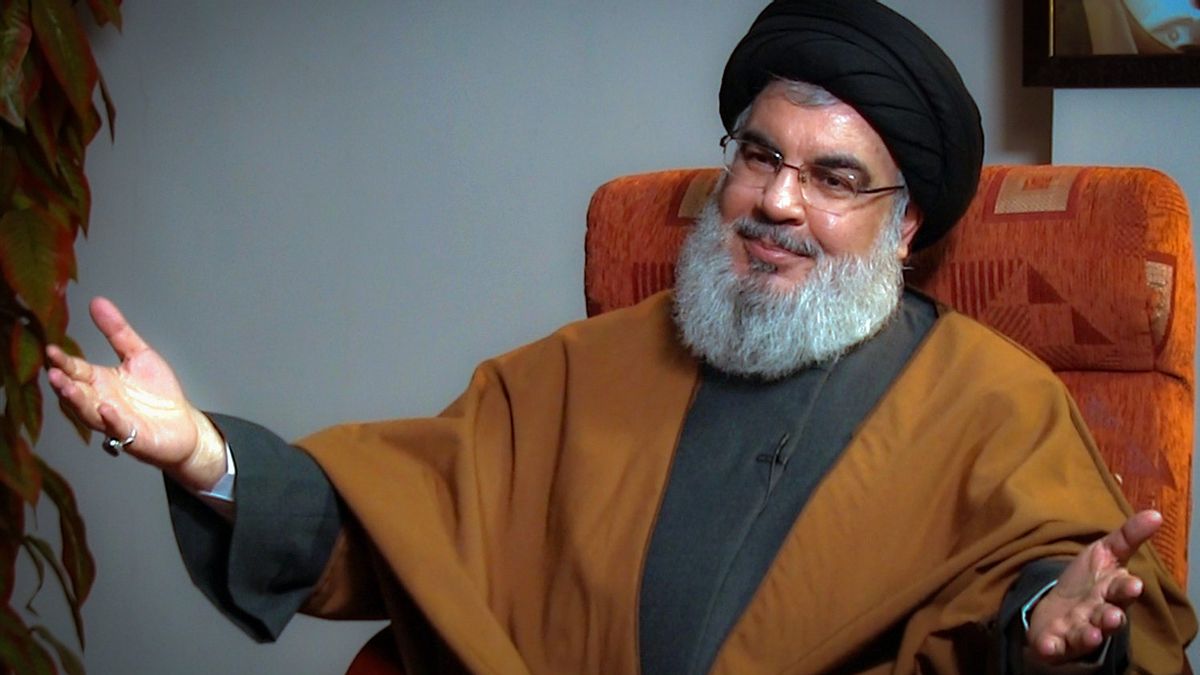


JAKARTA - Iran has confirmed it will send a high-level delegation to the funeral of the late leader of the militant group Hezbollah this weekend, despite the ban on Iranian passenger planes flying to Lebanon.
Foreign Ministry spokesman Esmail Baghaei told a news conference Monday that Nasrallah's funeral would be very important, so Iran would participate in the highest level, quoted from IRNA February 17.
However, Baghaei did not provide further details about who Tehran officials would come at the funeral which was held on February 23.
When asked about a recent dispute with the Lebanese government in which Beirut did not allow Iranian passenger planes to fly to Lebanon, and a telephone conversation between Foreign Minister Abbas Aragghchi and his Lebanese counterpart Baghaei said Foreign Minister Araghchi had stressed that third parties should not be allowed to influence decision-making.
"Talks continue, and we look forward to achieving rational solutions that will meet the interests of the Iranian and Lebanese people," he said.
As previously reported, the body of the late leader Hezbollah Hassan Nasollah will be buried after a 60-day initial ceasefire with Israel ended, a senior official Hezbollah said while visiting the place where Nasrallah was killed.
Speaking to reporters in the Shia Dahiyeh camp, Beirut's southern suburbs last month, Wafiq Safa said preparations for Nasrallah's funeral and his successor, Hashem Safieddine, were underway.
It is known that Israel and Hezbollah agreed to a ceasefire on 27 November. The 60-day ceasefire brokered by the United States ordered a gradual withdrawal of the Israeli military after more than a year of war, in accordance with UN Security Council resolutions in 2006 that ended their last major conflict.
Under the agreement, Hezbollah fighters had to leave position in southern Lebanon and move north of the Litani River, which flows about 20 miles (30 km) north of the border with Israel, along with a full withdrawal of Israeli troops from the south.
It is known that Israel and Hezbollah agreed to a ceasefire on 27 November. The 60-day ceasefire brokered by the United States ordered a gradual withdrawal of the Israeli military after more than a year of war, in accordance with UN Security Council resolutions in 2006 that ended their last major conflict.
The deadline was later extended to February 18, but the Israeli military requested that its troops remain at five posts in southern Lebanon, sources told Reuters last week.
Lebanese authorities banned the flight from landing until February 18, after Israel's accusations that Tehran was using civilian aircraft to smuggle cash into Beirut to arm Hezbollah.
Nasllah was killed in Israeli airstrikes targeting Hezbollah's stronghold in Dahiyeh, south of Beirut on September 27. Israeli warplanes dropped more than 100 bombs weighing more than 80 tons of bunker-destroying bombs, destroying six buildings and Hezbollah headquarters.
Nasllah was killed, along with other Hezbollah commanders including Ali Karaki, Hezbollah's military chief who was then appointed commander of the south front.
SEE ALSO:
-
 | BERITA
Kementerian Luar Negeri Sebut Iran Tidak Ragu Mempertahankan Program Nuklir Damainya
17 Februari 2025, 19:00 -
 | BERITA
Ziarah ke Istana Matahari Kumsusan, Kim Jong-un Siap Abdikan Dirinya untuk Perjuangan Suci
17 Februari 2025, 17:15 -
 | BERITA
Rumah Sakit di Gaza Hadapi Krisis Kekurangan Oksigen di Tengah Serangan Israel
17 Februari 2025, 16:30 -
 | BERITA
PM Starmer Siap Kirim Tentara Inggris ke Ukraina Sebagai Pasukan Penjaga Perdamaian
17 Februari 2025, 15:45
On October 3, the next Israeli attack targeted an underground bunker in Dahye, killing Safieddine, a figure previously said to be replacing Nasrallah, with reports indicating that more than 70 tonnes of bombs were being used.
In October, sources close to Hezbollah said Nasrallah had been temporarily buried in a secret location for fear Israel would target a massive funeral.
"Hassan Nasllah has been buried for a while, until the situation allows for public cemeteries," the source said, quoted from The Hindu.
The English, Chinese, Japanese, Arabic, and French versions are automatically generated by the AI. So there may still be inaccuracies in translating, please always see Indonesian as our main language. (system supported by DigitalSiber.id)
Most Popular Tags
#Prabowo Subianto #donald trump #firearm #8791 #giias 2026Popular


