
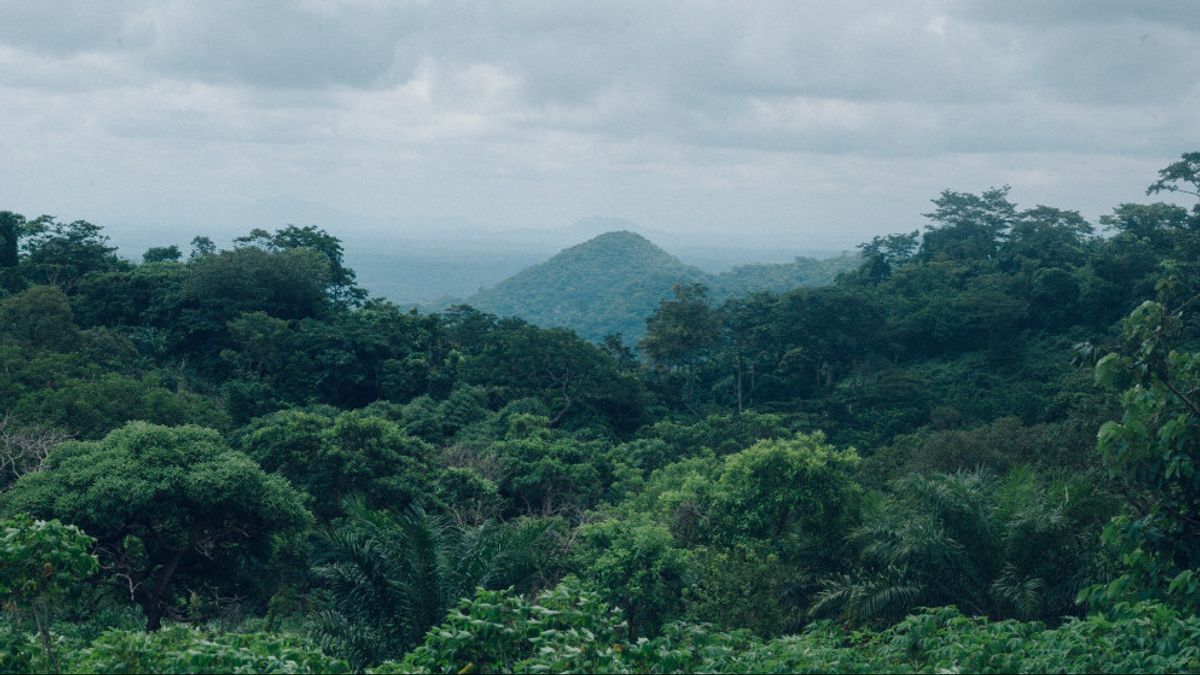


YOGYAKARTA - Tropical rainforest cinema holds an extraordinary secret that many rarely know. This ecosystem hosts more than 50% of the world's species, although it only covers 6% of Earth's surface.
Its existence regulates the global climate and produces 20% of the oxygen we store every day. But unfortunately, every minute an area of 40 football fields disappears from the face of Earth.
Behind its ferocity, tropical rainforests hold astonishing facts that will change your perspective on the importance of keeping this ecosystem for human survival.
Reported by VOI from The Earth Observatory NASA and Let's Talk Science, here are some things you need to know about tropical rainforests:
Tropical rainforest cinema is a large area of land classified by plant and animal life in it. This cinema is located in the equatorial zone, covering Central America, South America, Africa, Asia, Indonesia, and Australia.
Tropical rainforests have a warm temperature and high humidity throughout the year. Rainfall reaches 1.5 to 4 meters per year, creating an ideal habitat for biodiversity.
This cinema is composed of many interacting ecosystems. The characteristics are determined by climate, especially temperature and rainfall, which makes it one of the most diverse biomes on Earth.
Tropical rainforests have characteristics in the form of constant warm temperatures and very high humidity. Rainfall reaches 1.5-4 meters per year, creating wet conditions all the time.
In addition, vegetation grows very heavy and is tightly packed with layered structures. The top layer or canopy is formed by giant trees as high as 75 meters whose branches and leaves overlap with each other.
This canopy blocks sunlight so that only 2% of the light reaches the forest floor. The middle layer (understory) consists of plants that propagate, small trees, ferns, and palms.
Then there are forest floors covered with wet and phrased leaves that decay quickly. Even though the soil is malnourished, the vegetation remains fertile because the decomposition quickly returns nutrients to the ground.
Flora, a tropical rainforest, is very diverse. Large trees form a tight canopy, while propagating plants climb upwards looking for sunlight.
Then the middle layer of the forest will be overgrown with popular ferns, palms, and ornamental plants that have adapted to minimal light. The forest floor has few plants due to the lack of sunlight.
Fauna in tropical rainforests is also very diverse, with half the terrestrial species of Earth living in this bioma.terrencies dominate, such as blue morpho butterflys that live in Latin American forests.
SEE ALSO:
-
 | LIFESTYLE
Budaya Kerja Sehat yang Bikin Karyawan Betah dan Semakin Produktif
28 Agustus 2025, 19:35



In addition, there are also many amphibious and bright-colored insects that indicate they are toxic because they absorb toxine from plants, such as blue poison arrow frog.
Mamalias such as jaguars, tigers, and wild boars hunt on forest floors with patterned hairy camouflage. Monkeys, lemurs, and slow lorises live in the canopy to avoid predators, eat fruit, flowers, tree skin, and sap.
Tropical rainforests serve as important carbon sink absorbers that slow climate change.
Through photosynthesis, plants absorb carbon dioxide and release oxygen into the atmosphere. This cinema is also an important source of medicine, including cancer, as well as ingredients for beauty and food products.
Because of the biodiversity of tropical rainforests, it makes it a crucial habitat for half the terrestrial species in the world. Its ecological function is vital for global climate balance and provides natural resources that have not been fully explored for human benefit.
Deforestation is the biggest threat to tropical rainforests. The felling of trees for wood and burning land for agriculture permanently damages the ecosystem.
The 2022 report shows 13.2% of Amazon's forests have disappeared, approaching a 25% critical point that could turn them into dry habitats.
Also read the article that discusses Let's Find Out What Deforestation Is, Positive Or Negative Impact?
In Malaysia, thousands of hectares of forest were cut to oil palm plantations producing palm oil, threatening orangutans and other species. Conservation efforts include government protection, development of sustainable agricultural methods, and reclamation by replanting trees in open areas.
In addition, soil damage to tropical rainforest bioma often makes it difficult for forests to grow again, causing the loss of biodiversity forever.
The English, Chinese, Japanese, Arabic, and French versions are automatically generated by the AI. So there may still be inaccuracies in translating, please always see Indonesian as our main language. (system supported by DigitalSiber.id)


