
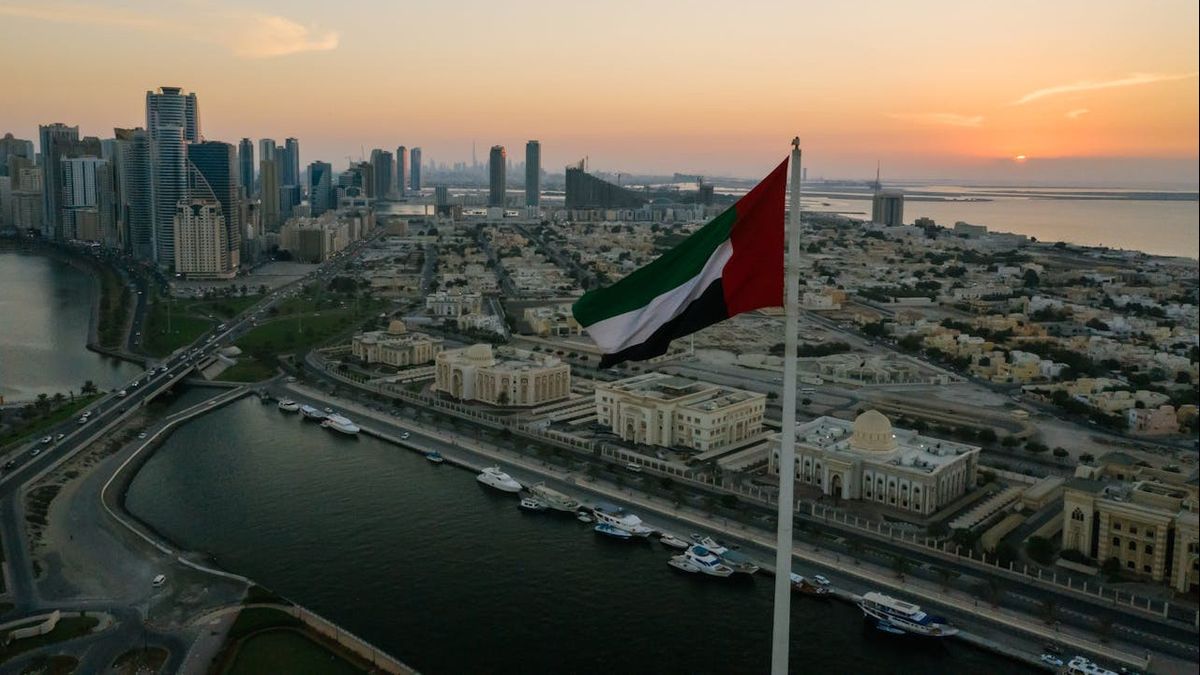


JAKARTA - The United Arab Emirates (UAE) will leave the Organization of Petroleum Exporting Countries (OPEC) on Friday, May 1.
Citing CNN International on Tuesday, April 28, this information is based on a report from the UAE state news agency, WAM.
The UAE's decision also applies to OPEC+, a group of oil producers with more members such as Russia.
The decision was taken after reviewing "the current and future capacity of the UAE and is based on our national interests and our commitment to contribute effectively to meeting urgent market needs," WAM reported.
OPEC is the world's largest group of oil exporters that coordinates production to influence global supplies and prices.
By deciding to exit, it allows the UAE - one of OPEC's top three producers - to break free from production limits imposed by the OPEC group.
"In its policy, OPEC has set a limit on the UAE's energy production of up to 3.2 million barrels per day, even though the UAE actually has a production capacity of close to 5 million barrels per day," said Robin Mills, CEO of Dubai-based consulting firm QamarEnergy.
However, the direct consequences of the increase in UAE oil production for the global energy market are likely to be limited in the short term, given that the Strait of Hormuz is still largely closed.
Most of the oil and natural gas exported by the Gulf states, including the UAE, passes through the Strait of Hormuz.
"But this suggests that global supplies will be higher than they would have been after the Strait of Hormuz reopened," David Oxley, head of climate and commodity economics at consultancy firm Capital Economics, said in a note.
"The bigger picture is that the UAE is very keen to increase oil production," after investing heavily in expanding production capacity in recent years, he added.
The English, Chinese, Japanese, Arabic, and French versions are automatically generated by the AI. So there may still be inaccuracies in translating, please always see Indonesian as our main language. (system supported by DigitalSiber.id)
Most Popular Tags
#Prabowo Subianto #donald trump #2026 World Cup #Febrie Adriansyah #8791Popular


