
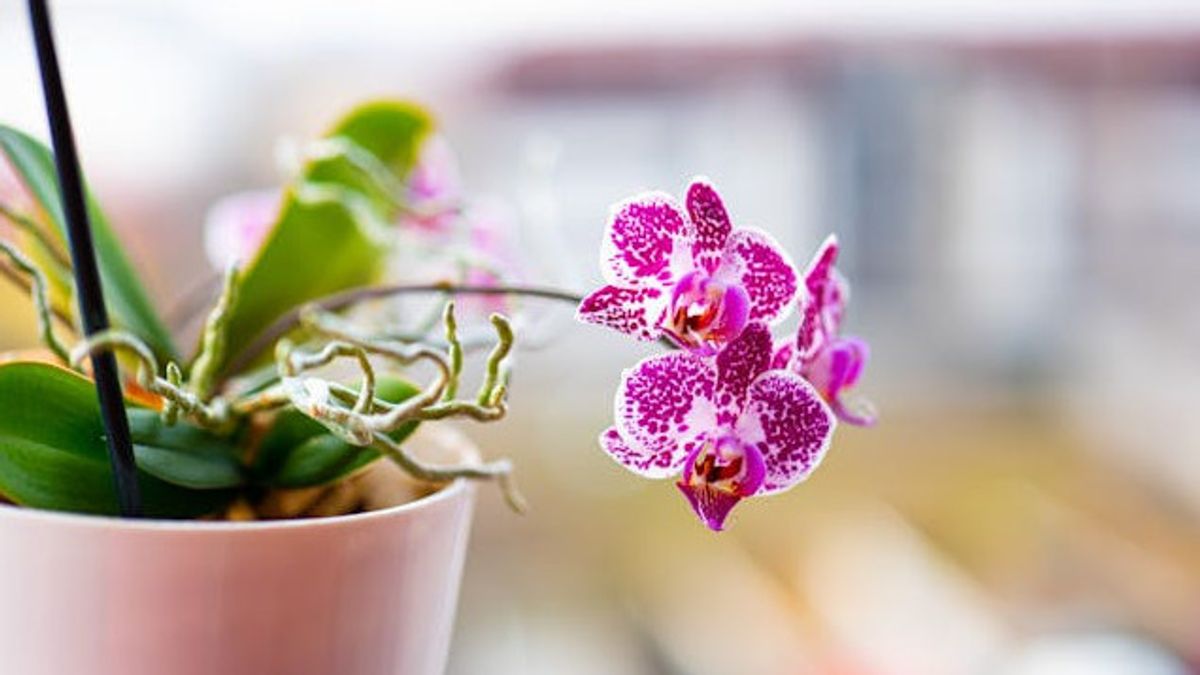


JAKARTA - Orchids are popular ornamental plants of all time. Not only flowers that are the attraction of orchid plants, green leaves also often steal the attention of plant lovers. If you have just covered the orchid world and found the leaves split, don't panic. Although it looks unpleasant to see, it's not always a sign that orchids are dying or unhealthy.
Read the information that VOI summarized from The Spruce, Tuesday, May 20, in knowing the reasons why orchid leaves are split, when to worry, and how to fix them.
Orchids like conditions that are drier than too wet. So, too much water or irregular water habit can cause the leaves to split along the middle vein (weakest part of the leaves).
How To Fix It
The key when watering orchids is to wait until the moss or other media are completely dry (but don't let it dry too long), then wet the media completely but don't get checked.
To revive orchids whose leaves are wrinkled, place the plants in a bowl filled with water, let the plants absorb as much water as their roots need for about 20 minutes. However, don't let the plants be submerged in water longer, because it can cause the roots to rot.
split orchid leaves are a common consequence of mishandling. This type of split leaf is often horizontal, not vertically split along the middle vein of the plant as it is due to inconsistent watering.
Mechanized splits can occur due to tangled leaves becoming warped when plants are stored too close, on the way from nursery to a large shop, or on the way to the house. This can also happen if children, dogs, or cats drop plants.
How To Fix It
Check orchids carefully to see signs of damage before buying them. Carefully transport and place it somewhere in a house that is unlikely to fall.
Orchids like humidity levels between 40 and 70 percent. If the air in the house is very dry, it can cause the leaves to crack, especially if you let the plant roots dry for too long. Extreme humidity fluctuations can also cause leaf cells to expand and shrink excessively, which causes the leaves to split.
How To Fix It
Put the orchid in a windy place so that it is unlikely to fluctuate in temperature and humidity is a good first step. Grouping plants and using an appropriate sized moisturizer will help increase water vapor levels indoors.
Too much direct and hot sunlight can cause orchid leaves to burn and eventually split when the surface drys. Sometimes too little light can cause the leaves to bend towards the sun, which can also cause cracks.
How To Fix It
Orchids prefer bright but indirect light, so look for a place at home that offers this condition. If you see orchid leaves yellowing or leaves facing windows starting with white, brown, or black spots, it can be a sign that the leaves receive too much light and need to be repositioned. Or, place a thin curtain in the window to filter the light.
SEE ALSO:
-
 | LIFESTYLE
Berapa Lama Tanaman Anggrek Bisa Hidup? Kenali dan Ketahui Cara Memaksimalkan Umurnya
22 Februari 2024, 18:49 -
 | LIFESTYLE
Tips Membeli Tanaman Anggrek, Pilih yang Memiliki 5 Kriteria Berikut
15 September 2021, 13:58 -
 | LIFESTYLE
Punya Keunggulan Mudah Dirawat, Ini 5 Tanaman dalam Pot yang Cocok Untuk Hiasi Pekarangan
13 September 2021, 12:57


If you cultivate orchids, a formula that contains too much nitrogen and potassium (N and K in the NPK fertilizer ratio) can cause the leaves to split. This high levels of nutrients can cause calcium deficiency, thereby weakening the walls of leaf cells.
How To Fix It
Consider moving orchids to new pots to prevent your plants from absorbing the wrong levels of nutrients. Then, choose a special orchid fertilizer with the right NPK ratio to support strong growth.
The English, Chinese, Japanese, Arabic, and French versions are automatically generated by the AI. So there may still be inaccuracies in translating, please always see Indonesian as our main language. (system supported by DigitalSiber.id)


