
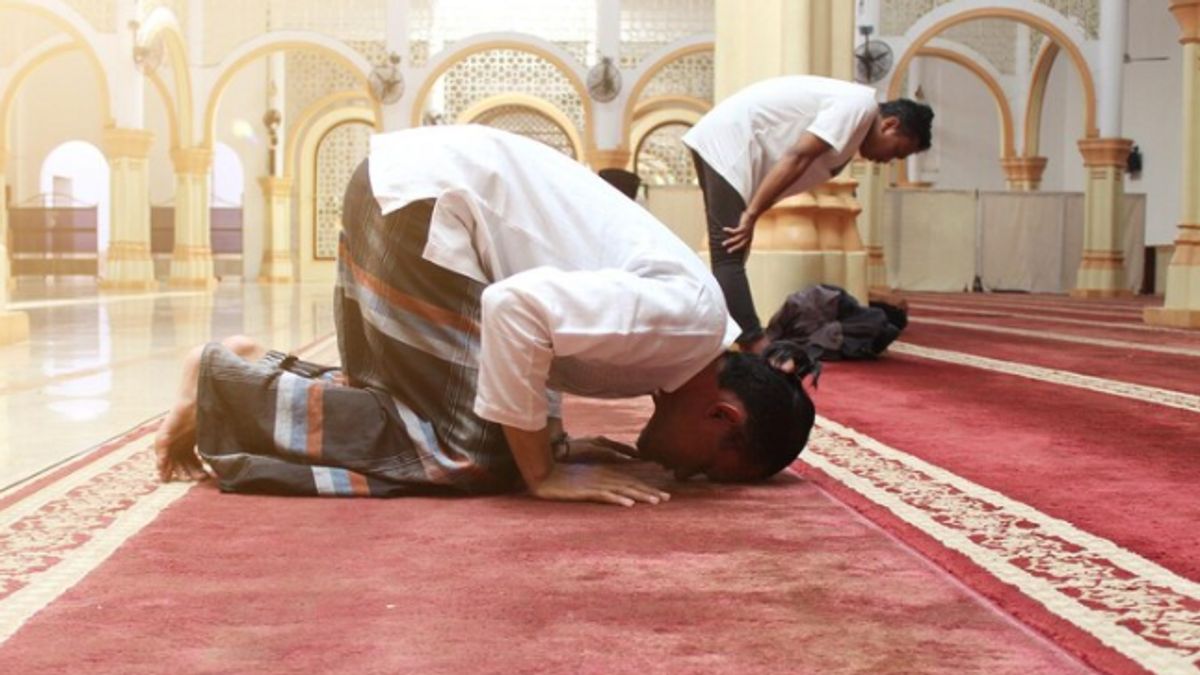


YOGYAKARTA - Sometimes Muslims are forced to leave the obligatory prayer because of some conditions. For example, when you are traveling long distances, in a new place where it is difficult to find a mosque, and so on. If you experience this condition, you can pray or change your prayers at other times. So how to change the prayers that are left behind?
Mengqadha prayer is an out-of-time prayer that has been determined as a substitute for the missed fardhu prayer. The scholars from various madzhabs agreed that praying is an obligation.
Regarding how to replace the prayers that are left behind, there are differences of opinion among the ulama. The majority argue that this obligation only applies if someone misses prayer for really urgent reasons.
Changing the fardhu prayer that was left behind was also mentioned by praying. Although some people allow it, Islam still teaches its people to keep performing prayers on time so that they don't forget it, let alone fall behind.
One of the views about being allowed to pray is found in the book al-Fiqh al-Manhaji ala Madzhabi Imam al-Syafii by Mustafa al-Khin and Musthafa al-Bugha
You can't help it, you can't help it, you can't help it, you can't help it, you can't help it, you can't help it, you can't help it, you can't help it, you can't help it, you can't help it, you can't help it, you can't help it, you can't help it, you can't help it, you can't help it, you can't.
Meaning: The qadha (in prayer) is to carry out prayers after the end of time, or after an insufficient time to complete one rakaat or more. The opposite condition is called adjutant'.
The fardhu prayer is a mandatory worship that must be performed by every Muslim every day. If a person is unable to perform the fardhu prayer for certain reasons, Allah SWT provides relief to replace it, which is known as praying.
Mengqadha prayer has the basis of several hadiths of the Prophet who also explain the procedures for its implementation.
You can't help yourself, you can't help yourself, you can't help yourself, you can't help yourself, you can't help yourself, you can't help yourself, you can't help yourself, you can't help yourself, you can't help yourself, you can't help yourself, you can't help yourself, you can't help yourself, you can't help yourself, you can't help me, you can't.
Meaning: From Anas bin Malik from Prophet SAW to pray, 'Who has forgotten to pray, then pray when he remembers and there is no ransom except to carry out the prayer and establish prayers to remember 'Ku.' (HR. Bukhari)
Hadith explained that if a Muslim forgets to perform mandatory prayers, he is ordered to replace it as soon as he remembers it.
In addition, there is another hadith that discusses the qadha prayer, namely the incident when the Prophet Muhammad SAW performed four prayers during the Khandaq War in the fifth year of the hijriyah. The prayers that were held in the incident included the Dzuhur, Ashar, Maghrib, and Isya prayers.
This hadith was narrated by At-Tirmidzi and An-Nasa'i, who mentioned that the musyriks had prevented the Prophet SAW from carrying out the four prayers until the evening arrived. Then, he ordered Bilal to sing the adhan and iqamah before performing the Dzuhur prayer, followed by Ashar, Maghrib, and Isya prayers sequentially.
Apart from being based on hadith, the obligation to perform prayer is also supported by jjma ulama. The ulama from various madzhabs, both Muslim and non-Muktamad, have agreed that praying is an obligation.
How to replace the prayers that are left behind need to read the intention first. The following is the intention of praying fardhu which you need to read when praying:
Usharillii farmash-Shubhi rak'ataini mustaqbilal qiblati qadha'an lillaahi ta'aalaa.
Meaning: I (intentioned) to perform the Fajr fardhu prayer as many as two rakaats by facing Qibla and qadha because of Allah Ta'ala.
Usallii fardhazh-Z friendri arba'a raka'aatin mustaqbilal qiblati qadha'an lilaahi ta'aalaa.
Meaning: I (intentioned) to pray for fardhu Dzuhur as many as four rakaats by facing Qibla and qadha because of Allah Ta'ala.
SEE ALSO:
-
 | INFO SEHAT
Pertolongan Pertama untuk Masalah Cedera Kaki, Jangan Asal Diurut!
17 Februari 2025, 18:02 -
 | INFO SEHAT
10 Tips Ilmiah Menyimpan Bahan Makanan agar Tetap Segar Lebih Lama
17 Februari 2025, 16:46 -
 | INFO SEHAT
Diduga Penyebab Kematian Kim Sae Ron, Kenali Gejala Henti Jantung
17 Februari 2025, 15:25 -
 | INFO SEHAT
Dokter Tirta Beri Penjelasan soal Air Mineral Ada Manisnya, Bisa Bikin Diabetes?
17 Februari 2025, 13:25

Usallii fardhal 'Ashri arba'a raka'aatin mustaqbilal qiblati qadha'an lilaahi ta'aalaa.
Meaning: I (intentioned) to perform the fardhu Ashar prayer as many as four rakaats by facing Qibla and qadha because of Allah Ta'ala.
Usallii fardhal Maghribi tsalaatsa raka'aatin mustaqbilal qiblati qadha'an lilaahi ta'aalaa.
Meaning: I (intentioned) to perform three rakaat fardhu Maghrib prayers by facing the Qibla, and qadha because of Allah Ta'ala.
Usallii fardhal Isyaa'i arba'a raka'aatin mustaqbilal qiblati qadha'an lilaahi ta'aalaa.
Meaning: I (intentioned) to pray fardhu Isha' as many as four rakaats by facing Qibla and qadha because of Allah Ta'ala.
After understanding his intention, the procedure for praying is basically not much different from the implementation of the prayers that are left behind.
For example, if someone misses the Dzuhur prayer for a reason then he must replace it with four rakaats, according to the number of real rakaats. The same applies to Fajr prayer When someone wakes up and remembers it, he must immediately carry out the prayer.
That's how to change the prayers that are left behind for Muslims. According to the views of several scholars, mengqadha is wrong is a mandatory action when someone misses prayers because of really urgent conditions. Also read the tayamum method in the car.
Stay up to date with the latest domestic and other overseas news on VOI. We present the latest and updated information nationally and internationally.
The English, Chinese, Japanese, Arabic, and French versions are automatically generated by the AI. So there may still be inaccuracies in translating, please always see Indonesian as our main language. (system supported by DigitalSiber.id)
Most Popular Tags
#Prabowo Subianto #donald trump #firearm #8791 #giias 2026Popular


