
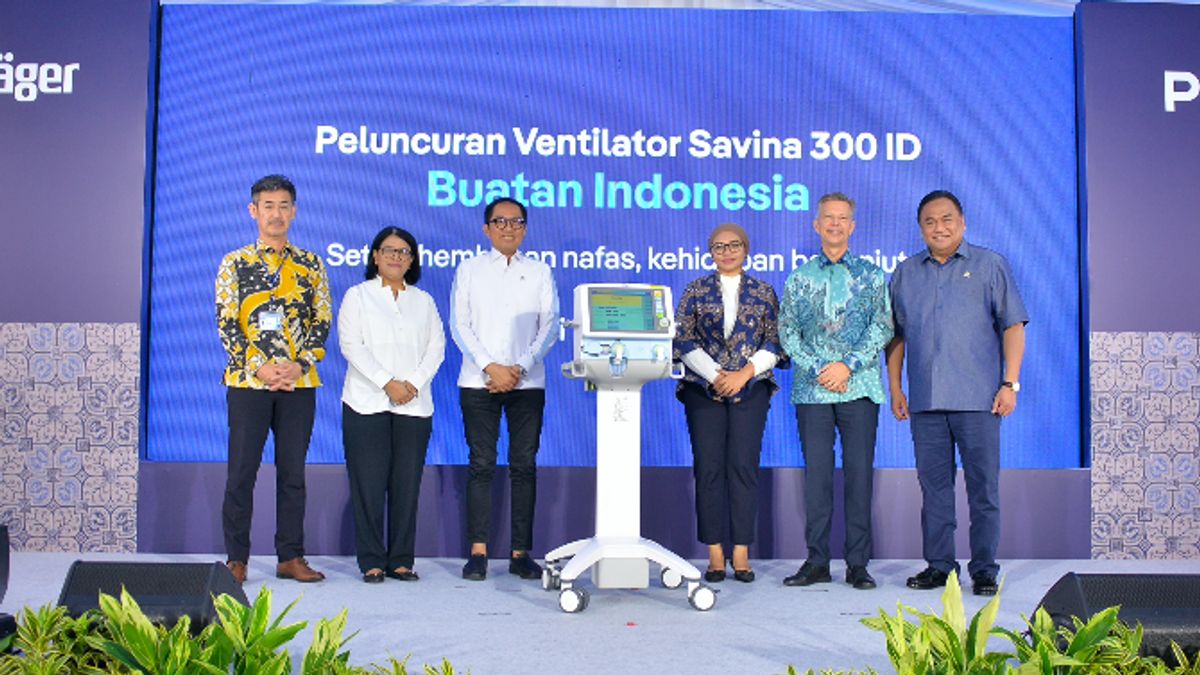


JAKARTA - The need for breathing apparatus or ventilators in Indonesia continues to increase along with increasingly complex health challenges.
In addition to handling emergency conditions such as acute respiratory problems and lung disease, ventilators are also vital devices in the intensive care room (ICU), including during the pandemic and in routine hospital services.
Unfortunately, most of the ventilator needs in Indonesia are still met from imported products. This creates vulnerability to global supply fluctuations and poses challenges in expanding access to quality medical devices (alkes) in all corners of the country.
As a concrete step towards the independence of national medical devices, a domestically produced ventilator is officially introduced to the public. The device, named Savina 300 ID, is assembled in Indonesia through a collaboration between Dr
The launch was carried out at the production facility of PT PHC Indonesia and was attended by representatives of the Ministry of Health and the Ministry of Industry.
In his remarks read by the Director General of Pharmacy and Medical Devices, Lucia Rizka Andalucia, the Indonesian Minister of Health emphasized the importance of cross-sectoral collaboration in developing domestic medical devices.
Efforts like this are expected to reduce dependence on imports while accelerating the distribution of medical technology to various regions.
Ventilator ini merupakan contoh nyata dari sinergi antara industri dan pemerintah dalam mendukung transformasi layanan kesehatan nasional. Ke depan, kita perlu memperlu memperluas inisiatif serupa agar inovasi lokal semakin tumbuh dan dimanfaatkan oleh masyarakat luas, ujarnya di Bekasi, Jawa Barat, baru-baru ini.
SEE ALSO:

Data from the Ministry of Industry shows that the import value of ventilators in 2024 reached US$68.4 million twice the previous year.
Meanwhile, the level of absorption of domestic medical devices has only reached around 48 percent. This figure indicates that there are still great opportunities to strengthen local production.
On the same occasion, Deputy Minister of Industry, Faisol Riza, stated that product development such as local ventilators is an important part of the national strategy in building a strong and independent medical device industry.
Ventilator masih termasuk dalam ten besar alat kesehatan dengan nilai impor tertinggi. Maka, hadirnya produksi lokal seperti Savina 300 ID akan sangat membantu dalam substitut impor dan pemciptakan lapangan kerja," katanya.
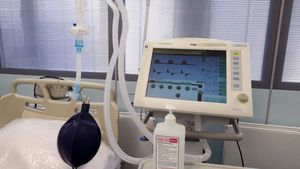
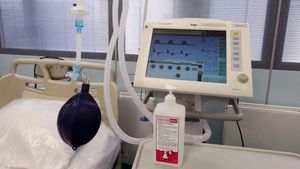
This locally made ventilator is designed to be flexible in use in various health facilities, including ICU, HCU, and PICU rooms, as well as hospitals that do not yet have a centralized gas system.
Some of its key features include invasive and non-invasive therapy capabilities, touchscreen-based operation with an Indonesian-language interface, as well as the use of internal and external battery power for mobility.
Dr!ger Indonesia also collaborates with Kolegium Anesthesiology and Intensive Therapy (KATI) to organize training for doctors and medical personnel who use this tool. The workshops held include the introduction of the basic ventilator machine to use training in the ICU.
Chairman of Gobel Group, Rachmat Gobel, said that the independence of medical devices is the main pillar in realizing a strong national health system.
"More than just technology, the most important thing is how this tool can reach and be utilized by as many health facilities as possible in Indonesia," he said.
Meanwhile, Managing Director of DrEMBER Indonesia, Ratna Kurniawati, emphasized that the production of this ventilator is not only a matter of tools, but also part of the health transformation ecosystem.
"We want this contribution to support the transformation of health human resources, expand service access, and strengthen domestic production capabilities," he said.
The launch of the Savina 300 ID ventilator marks a step forward in an effort to build the resilience of the Indonesian health system which prioritizes cross-sectoral cooperation, domestic medical technology innovation is now increasingly ready to become a mainstay in the midst of the dynamic needs of national health services.
The English, Chinese, Japanese, Arabic, and French versions are automatically generated by the AI. So there may still be inaccuracies in translating, please always see Indonesian as our main language. (system supported by DigitalSiber.id)
Most Popular Tags
#Prabowo Subianto #donald trump #Febrie Adriansyah #8791 #giias 2026Popular


