
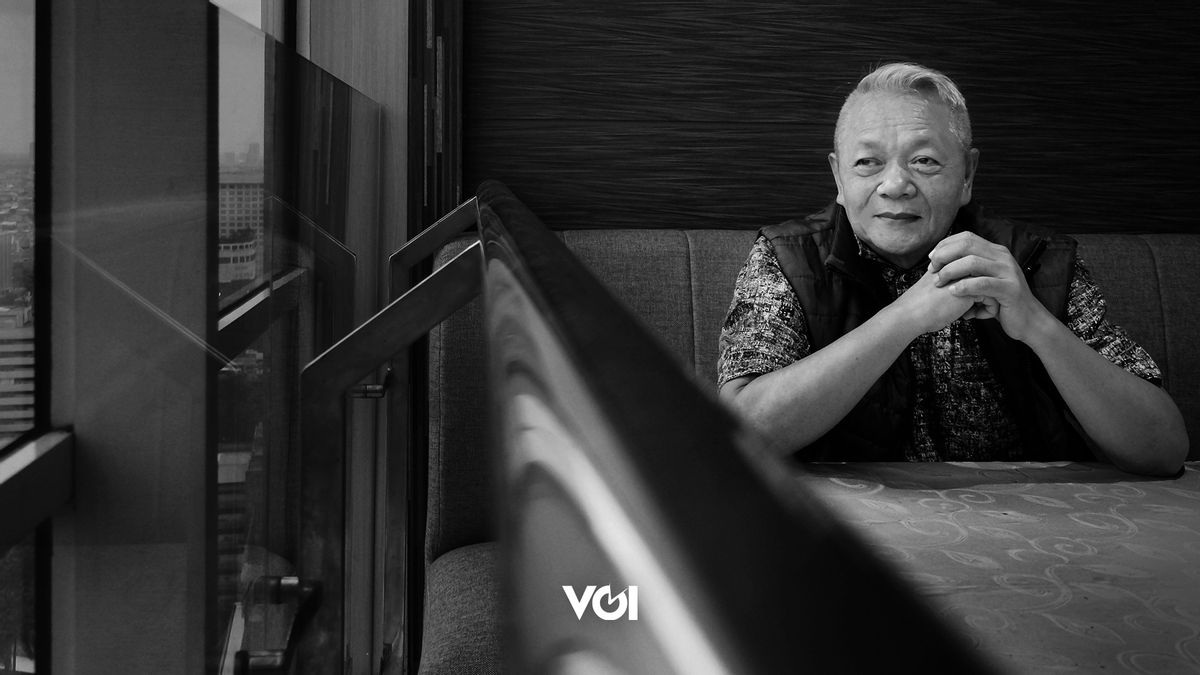


Films shown on OTT (Over the Top) platforms appear more daring than those shown in theaters and on television. According to Noorca M. Massardi, Deputy Chair of the Film Censorship Institute (LSF), OTT films are not obligated to censor their films. Therefore, they are indeed freer in terms of themes, ideas, titles, and visuals. Conversely, the LSF will not pursue them for censorship.
***
Film Law No. 33 of 2009 does not explicitly regulate OTT. There are only regulations regarding Information Technology Networks. "During COVID-19 in 2020, OTT and video streaming emerged, and films broadcast through these media sold well. Therefore, the LSF has no obligation to pursue them to censor their films. They also have no obligation to submit their films for censorship because they are not regulated," he said.
Currently, OTTs operating in Indonesia include Vidio, Netflix, Disney+ Hotstar, VIU, Vision+, Amazon Prime Video, Maxstream, WeTV, Mola, KlikFilm, and Bioskop Online. Some are based and legally incorporated in Indonesia, while others are incorporated in other countries. Because the nature of online broadcasts transcends national borders.
Therefore, amending Law No. 33 is absolutely necessary to incorporate or add new regulations to keep pace with current developments. Efforts to make such amendments have been underway for the past 10 years. "Even though it has been included in the National Legislation Program, it has not been discussed until this year," he said to Edy Suherli, Bambang Eros, and Irfan Meidianto from VOI who met him in the Grogol area, West Jakarta.

How do you see Indonesian cinema throughout 2025?
Regarding the number of film productions recorded throughout 2025 as of October, there were 226 national feature films censored by the LSF. By December, the number could reach 270 titles, while foreign films reached 275 titles. In terms of production, there is great enthusiasm. The LSF does not assess films qualitatively; we only assess based on legal provisions.
However, personally, I observe that most audiences choose horror films, even though statistically the number of productions is actually more drama. So, it seems as if our cinemas are dominated by horror films. Somewhat outside the mainstream (non-horror) is the film "Jumbo," which reached over 10 million viewers. Furthermore, what is surprising is the film "Sore," a teen drama that reached 4 million viewers. Reaching that number of viewers is indeed tough; reaching 3 million is very difficult, even reaching 1 million is challenging.
People say making a film is a "gamble." Horror films are currently the most popular, leading producers to compete to produce them. Why is that?
Previously, production houses (PH) were only run by 10–15 producers; their films sometimes suffered losses, sometimes even recovered their investment. In the past two years, the number of producers has increased rapidly; last year alone there were 100. Some produce one film and then stop, while others continue. If the first film is good, they will continue production. However, if the first film has a low audience, the chances of continuing are usually slim due to the losses incurred.
Indeed, for new producers, horror films are the primary choice. Reaching just 200,000 viewers is enough to recoup their investment. That 200,000 viewers is equivalent to approximately IDR 4 billion in revenue. Therefore, production costs must be below that to generate profit. Typically, in addition to production costs, promotional costs are also significant. If promotion is not optimal, it will be difficult to reach an audience. Promotion today is no longer in newspapers or magazines, but rather in the era of social media. The strategy depends on the market segment: for class A-B films, it is usually through Instagram, while for class C-D films, it is usually through TikTok.
To what extent does a movie star influence a film's success today?
Nowadays, star power isn't a major factor. Take the film Agak Laen, for example; the stars were average and the cast consisted of comedians, but the story was strong. The film Jumbo didn't even have any physical actors because it was animated—the voice cast only involved the stars and the theme song singers (Bunga Citra Lestari and Ariel NOAH).
Now, producers instead look at the number of followers on social media. Even if they've never acted in a film, an Instagram celebrity can be recruited if they have 10 million followers. The hope is that at least 10% of their followers will go to the cinema. Remember, the majority of our moviegoers are in the 15-25 age range (Gen Z). The rest rarely go to the cinema. Therefore, this segment must be taken seriously; the themes and jokes must suit Gen Z's tastes, otherwise the film will be abandoned.
As for comedians, they have their own appeal. How are they classified?
Nowadays, comedians are also divided. Some are "old school" with jokes that are no longer funny, and others are contemporary with up-to-date material that resonates with Gen Z. That's what attracts people. In Agak Laen 2, like its prequel, they're bringing back comedians. We'll see if the audience numbers are lower or higher than the first film.
The economic situation and the number of layoffs also affect moviegoing. In difficult times, people tend to economize, and moviegoing expenses are usually the first thing to be cut.
If the star factor isn't much of a factor, does that mean the strength of the story is the key?
In Pangku, Reza Rahadian doesn't act; he directs. Meanwhile, the main actors aren't yet well-known. However, the story is strong and the direction is good. Reza is aided by a quality crew. The storyline is slow, so we have to watch it patiently. Quality-wise, the film is well-done. That's why I agree that this film will receive the Citra Award at the 2025 Indonesian Film Festival.
However, commercial success is difficult, as films with this tempo are less popular with Gen Z. If more quality films like this were made, I believe they would establish the identity of Indonesian cinema in the eyes of the world: films made by Indonesians and addressing problematic stories typical of our society.

How do you view Jumbo, the most-watched animated film in history?
It's actually a children's film, but it's accessible to all ages. Its audience of over 10 million is both surprising and encouraging. There are many contributing factors: a compelling story, classy animation, and the holiday season when the film was released. Furthermore, it coincided with the end of the presidential election; when people were tired of politics and looking for entertainment at the cinema, Jumbo was there. One of the main factors contributing to the surge in audience numbers was children attending with their parents. The horror elements—though not particularly scary—in this film appealed to both parents and teenagers. So, Jumbo was a complete package with a perfect release timing.
Given the distribution of Indonesian film audiences, what proportion are children, teenagers, and adults?
I don't have detailed data on that. However, based on observations, the 15-25 age group still makes up the majority, reaching 50%. Meanwhile, college students or university students make up 20%. The remainder are parents and children. Therefore, films must cater to Gen Z's tastes if they want to sell. If the actors aren't Gen Z favorites or don't have a following among them, the audience tends to be small.
Now, with around 250 feature films produced annually, there's always a new film showing every Thursday; roughly five films per week. Gen Z, for example, has an allowance of Rp 100,000. With 5-6 films showing simultaneously, they'll choose just one; they're unlikely to see them all. A horror film can be watched twice if the story is interesting—they can rewatch it or invite friends. If a film is good, it will stay until the following Thursday; if not, it's off the screen. So, there's a kind of "cannibalism" among our national films because there are so many films, but the audience is the same. When mediocre films meet big hits like Jumbo, Agak Laen, or Sore, they inevitably lose the competition.
So, is it that our cinema screens aren't enough to accommodate all the films being produced?
In fact, this issue of screens is a frequent complaint. But I don't think that's the only factor. If the story is good and in demand, the film will stay in theaters. So, the number of screens isn't as significant if the film's quality is strong.
So, before making a film, thorough research is essential to ensure a high probability of being seen?
There's no surefire recipe for making a box office film. Even Hollywood and European film producers don't have a formula. Marvel films have flopped, as evidenced by this. Even a big-budget film isn't a guarantee of box office success. From the past to the present, audience tastes have been difficult to predict. That's why research before producing a film is crucial.
Regional language films are now becoming increasingly popular, and it turns out they've received a warm welcome in some regions. Therefore, during a working visit to the region, I suggested increasing the production of regional language films. For example, Makassar has a population of 5 million; if just 10% (500,000) watch a regional language film, and then distribute the film to other regions, there's a huge opportunity to increase the number of viewers.
To what extent are our filmmakers aware of the need to implement self-censorship?
In reality, not all producers and filmmakers are aware of the Film Law that addresses self-censorship. Even within the Film and Film Review Board (LSF), some still don't fully understand it. They usually only find out when their films are about to be censored for theatrical or television screenings. As mandated by Film Law No. 33, every film and advertisement intended for public viewing must obtain a Censorship Passing Mark (TLS) from the LSF.
Currently, the LSF no longer censors in the sense of "cutting" scenes unilaterally. We approve all films submitted to the LSF, but they still adhere to the following age classifications: SU (All Ages), 13+ (Teenagers 13 and over), 17+ (Adults 17 and over), and 21+ (Adults 21 and over). We classify films into one of these categories. If we categorize a film as 21+ but the film's owner wants it to be 17+, that's possible—but they must edit out any scenes that are inappropriate for ages 17+. We call our approach: informative, explicit, and exploitative. We refer all revision decisions to the film's owner based on LSF's notes.
Does the public understand the age classifications issued by the LSF?
We are collaborating with the Indonesian Cinema Entrepreneurs Association (GPBSI) to include age classifications on films shown in their cinemas. The public must pay attention to these signs. Underage viewers are not permitted to watch films that do not meet the appropriate age classification.
The key lies with ticket sellers and gatekeepers, who must conduct screening. However, if ticket holders are persistent, it can sometimes be difficult for gatekeepers to dissuade them. For example, a mother insists on bringing her child in to see a 17+ film. In such cases, the responsibility falls entirely on the parent. Another issue is online ticket sales; it is often impossible to determine the actual age of the ticket buyer.
Speaking of OTT (Over the Top) films, these films are relatively "bold." Do they also censor their films with the LSF?
The Film Law No. 33 of 2009 states that all films and advertisements to be shown to the public via television, cinemas, and information technology networks must obtain a Censorship Certificate (STLS) from the LSF. However, the 2009 law does not explicitly define what constitutes an "information technology network."
During the COVID-19 pandemic in 2020 (not 2000), the phenomenon of OTT and video streaming emerged, and films broadcast through these media were very popular. Because the regulations were not yet specific, the LSF was not obligated to pursue them to censor their films. They were also not obligated to submit their films for censorship because they were not yet explicitly regulated.
Films broadcast on OTT may not necessarily be eligible for theatrical release because they may be too vulgar or have themes that do not conform to norms. However, this did not become a major controversy because viewers had to pay, thus entering the private sphere. The problem was that access was via mobile phones, which are used by people of all ages. This is a concern for us at the LSF, as well as institutions like Komdigi and the Indonesian Broadcasting Commission (KPI). We recommend that Indonesian video streaming associations comply with applicable regulations and censor their films, even though it is not yet legally mandatory for foreign OTTs. Companies incorporated in Indonesia typically censor their films with the LSF, but those incorporated abroad generally do not.
It seems like Film Law No. 33 is worthy of revision. What do you think?
The discourse is already there. So, the definition of the Information Technology Network could be explained more thoroughly in the draft of the law to be revised. This revision of the Film Law has actually been included in the National Legislation Program (Prolegnas) for the past 10 years. Its priority order has continuously changed; it was once ranked 100th and then 27th. Hopefully, it will be discussed by the House of Representatives (DPR) soon.
Films are not just entertainment, but are also expected to be a source of guidance. Is this still relevant?
For a generation like mine, we still expect films to be not only entertainment but also guidance. However, for today's Gen Z, who doesn't want to be restricted, there will certainly be pros and cons. Ideally, entertainment should also be a source of guidance. The LSF carries out its guiding function by classifying age groups and issuing revision notes for films that violate norms.
People who have already spent money on tickets, popcorn, and drinks usually don't want to be lectured. However, the great thing about Hollywood filmmakers is that they always manage to insert a moral message, even if their films are action or horror. In Hollywood films, murderers or traitors are usually depicted facing the consequences; the message is very clear. In Indonesia, sometimes the message isn't as clear, but that seems to be what the public prefers. For the LSF, our main focus is on aspects of pornography, drugs, deviant sexual behavior, and dialogue that violates religious norms or has the potential to divide society. As long as these things are safe, go ahead, even if the devil wins in the end. It depends on the public; if they don't like it, the film won't sell.
What is your message or hope for filmmakers to produce works that are not only good but also meaningful?
It's important for filmmakers to be aware of making meaningful films, without being preachy. Films that are meaningful to the public can inspire children to strive and achieve, or instill noble values like respecting parents. So, films are not only meaningful for the creators, but also for the audience. When viewers come home from the cinema, they should get something, regardless of the genre: drama, horror, comedy, or action.
Noorca M. Massardi: Writing and the Benefits of Herbal Drinks

Despite her busy schedule, Noorca M. Massardi still finds time to write poetry and novels. (Photo: Bambang Eros VOI, DI: Raga Granada VOI)
Despite her busy schedule as Deputy Chair of the Film Censorship Institute (LSF), Noorca M. Massardi still finds time to write poetry and novels. To maintain her health, she exercises regularly, reduces her rice and meat intake, and regularly consumes herbal drinks.
In addition to his primary role of censoring incoming films, Noorca also carries out outreach and literacy activities with various communities and filmmakers across Indonesia. When he's bored with his routine, he usually writes poetry.
"Since my first term at the LSF and now my second term—and just past my first year—I've published two poetry collections and one novel. In this second term, I just finished a novel entitled "Pemacar Buah," said the man born in Subang, West Java, on February 28, 1954.
According to Noorca, his latest novel spans time, from the prehistoric era to the present, and into the future. "The story traverses time and eras. There's also a love story in the middle. The idea for this novel came to me five years ago, but I only finished it this year in six months," said the author of the novel "Simulakrum," co-written with his daughter, Cassandra Massardi.
He admits that writing novels and poetry amidst his routine is a challenge. "Well, what else can I do? It has to be done. The key is disciplined use of time. It's certainly different writing a novel when you're not busy, as you can focus better. However, that's where the challenge lies," he said.

As she ages, Noorca M. Massardi has begun to limit her rice and meat intake, even though her doctor has advised against it. (Photo: Bambang Eros VOI, DI: Raga Granada VOI)
Of the eight novels she has written and published, according to Noorca, only one has been adapted for the big screen. "The one that has been adapted for the big screen is my first novel, Sekuntum Duri (1978). I wrote it in Paris, France. Then I wrote the screenplay and it was filmed in 1979," she explained.
For Noorca M. Massardi, there is immense joy in having her work adapted into a film. "Novels are written, and every reader has their own imagination. When they are adapted into a film, which is a different medium, readers are bound to be surprised because it doesn't match their imagination. This is because the author's description is certainly different from the filmmaker's," she said.
Maintain health
To maintain her health, Noorca regularly walks for an hour a day. "I can do it around the house, at the office, or when visiting local areas. The main thing is to get some exercise. I do it with my wife, Rayni, except when I'm at the office or on assignments out of town," he said. He added that if he wakes up early before dawn, he adds stretching and weightlifting.
Regarding food, he admits to having no specific restrictions, but he has started to reduce his portion sizes. "What I've cut back on are rice and meat. When I stay at a hotel, my breakfast is usually coffee, bread, a soft-boiled or hard-boiled egg, and salad. For lunch, I eat karedok or gado-gado," he said.

Since the COVID-19 outbreak, Noorca M. Massardi and her family have been diligently drinking herbal drinks. (Photo: Bambang Eros VOI, DI: Raga Granada VOI)
Meanwhile, Noorca no longer eats heavy meals at night. "Actually, seven o'clock is the last time to eat, but sometimes I break that with snacks," said the 80 kg and 172 cm tall man. "Even though I've reduced my rice intake, I'm still overweight," he continued with a laugh.
He is very grateful that the results of his last medical check-up showed good results. "Thank God, everything is still fine, including my lungs, heart, and other organs. My vision is also normal, I don't need glasses," he added.
Since the pandemic hit, Noorca has been diligently consuming herbal remedies. "I make them myself at home, using about 20 types of ingredients: roots, tubers, leaves, and others. I boil them until they're cooked, and it becomes a healthy drink that I consume every day. I make 20 liters at a time, then store them in the refrigerator. When I'm finished, I make another," he said.
Thanks to his diligent practice of drinking these concoctions, he feels his immune system is stronger. "Thank God, my family and I haven't been exposed to COVID-19. Well, perhaps our immunity has improved by diligently drinking those herbal remedies," concluded Noorca M. Massardi.
"Kesadaran sineas untuk membuat film yang bermakna itu penting, tanpa harus terkesan menggurui. Film yang bermakna bagi publik bisa memberi semangat kepada anak-anak untuk berjuang dan berprestasi, atau menanamkan nilai-nilai luhur seperti menghormati orang tua. Jadi, film tidak hanya bermakna bagi pembuatnya, tetapi juga bagi penontonnya,"
The English, Chinese, Japanese, Arabic, and French versions are automatically generated by the AI. So there may still be inaccuracies in translating, please always see Indonesian as our main language. (system supported by DigitalSiber.id)


