
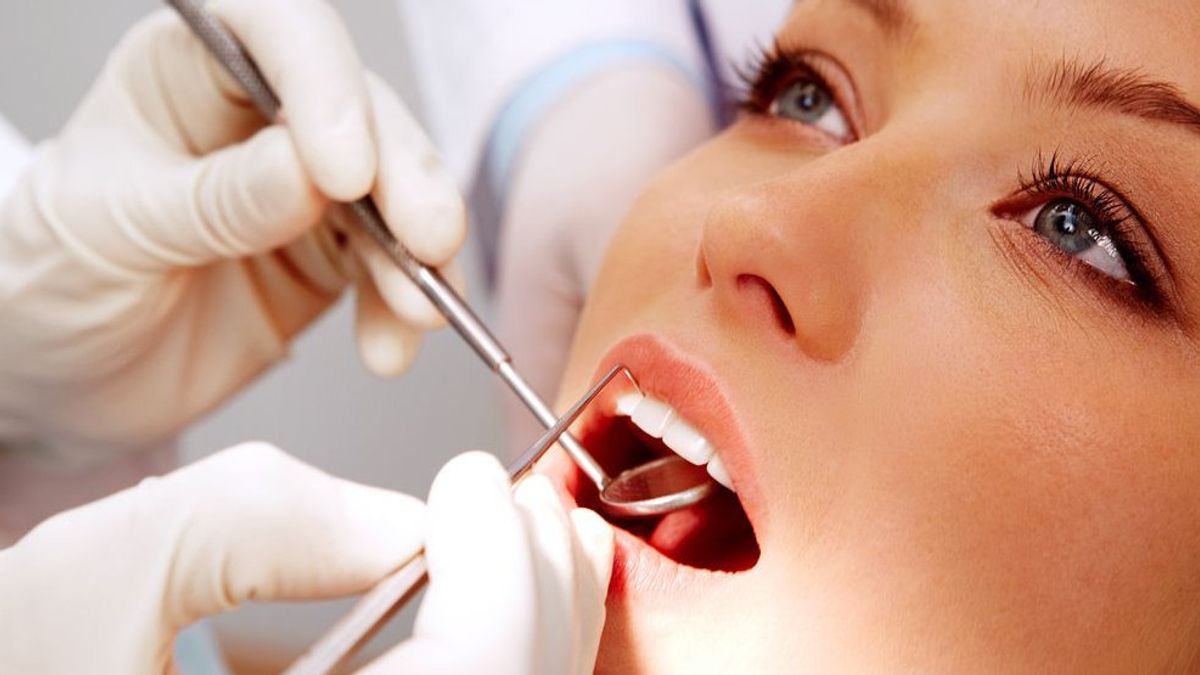


YOGYAKARTA - Can go back to normal as a question that arises when a person feels discomfort in his teeth. Shaggoted teeth certainly interfere with daily activities such as chewing food, speaking, and lowering self-confidence.
Basically, seesaw teeth can return to normal depending on the causes and how severe the conditions are. If the teeth are still strongly attached to the gums and jawbones, then medical treatment can help improve them. Here will be discussed the causes, symptoms, and medical steps to restore the seesaw teeth.
Shags can generally be known earlier by paying attention to certain symptoms. Some of the signs that often appear include gums looking redder, swollen, and bleeding easily. In addition, the gums are also seen to drop from their normal position, causing the roots of the teeth to appear clearer and feel pain when chewing or drinking.
These symptoms are a sign that the dental support network is weakening. If not treated immediately, the teeth will become increasingly shaky and have the potential to remove. Therefore, it is important to conduct an examination of a dentist in order to get the right diagnosis from an early age.
Shags cannot just happen for no reason. One of the main causes is injury, such as a hard impact from an accident or a fall that hits the mouth area. Although permanent teeth are classified as strong, heavy pressure can make them waver, break, and even free from the gums.
In addition to injury, gum disease (GGivitis) is also a common cause of seesaw teeth. The oars that are allowed to accumulate will cause gum inflammation, making the tissue attached to the teeth loose. If ignored, the risk of making the teeth no longer sturdy in place.
Another cause is dental and caries that damage the support structure of the teeth. Garth is formed from hard plaque and is difficult to clean without the help of a dentist. While dental caries cause drizzling and weaken the teeth' foundation to finally seesaw.
In addition, bruxism or the habit of grossing teeth during sleep can also cause teeth to waver. Excessive pressure due to bruxism makes teeth and jaw work harder than usual, causing damage to the dental support structure.
In addition, diabetes can also trigger rocking teeth because high blood sugar levels interfere with the health of gums and jawbones.
Then, can wobbling teeth return to normal? The answer can be, as long as proper treatment is carried out according to the cause. One of the most common ways is scaling, which is the procedure for cleaning tooth corals that accumulate in the gum area. After scaling, usually the teeth will slowly stick to the gums in a few weeks.
Another method that can be done is dental splinting, which is to tie teeth that shake with other teeth that are still strong using special thin wires. This technique is usually done if the teeth are shaky due to collisions or injuries, as long as the roots of the teeth are still attached to the jawbone.
SEE ALSO:
-
 | LIFESTYLE
Budaya Kerja Sehat yang Bikin Karyawan Betah dan Semakin Produktif
28 Agustus 2025, 19:35



If the gums are badly damaged due to inflammation, the doctor may suggest gum surgery. This procedure aims to remove damaged gum tissue and resurface healthy tissue so that the teeth can be strongly attached again. Doctors can also provide antibiotics to prevent bacterial infection in the gum area.
That's an explanation of whether seesaw teeth can return to normal. To prevent teeth from shaking again, it is important to carry out routine maintenance such as brushing teeth twice a day and checking dentists once every six months. In addition to maintaining cleanliness, this step also helps detect problems early on.
The English, Chinese, Japanese, Arabic, and French versions are automatically generated by the AI. So there may still be inaccuracies in translating, please always see Indonesian as our main language. (system supported by DigitalSiber.id)
Most Popular Tags
#Prabowo Subianto #donald trump #Febrie Adriansyah #8791 #giias 2026Popular


