
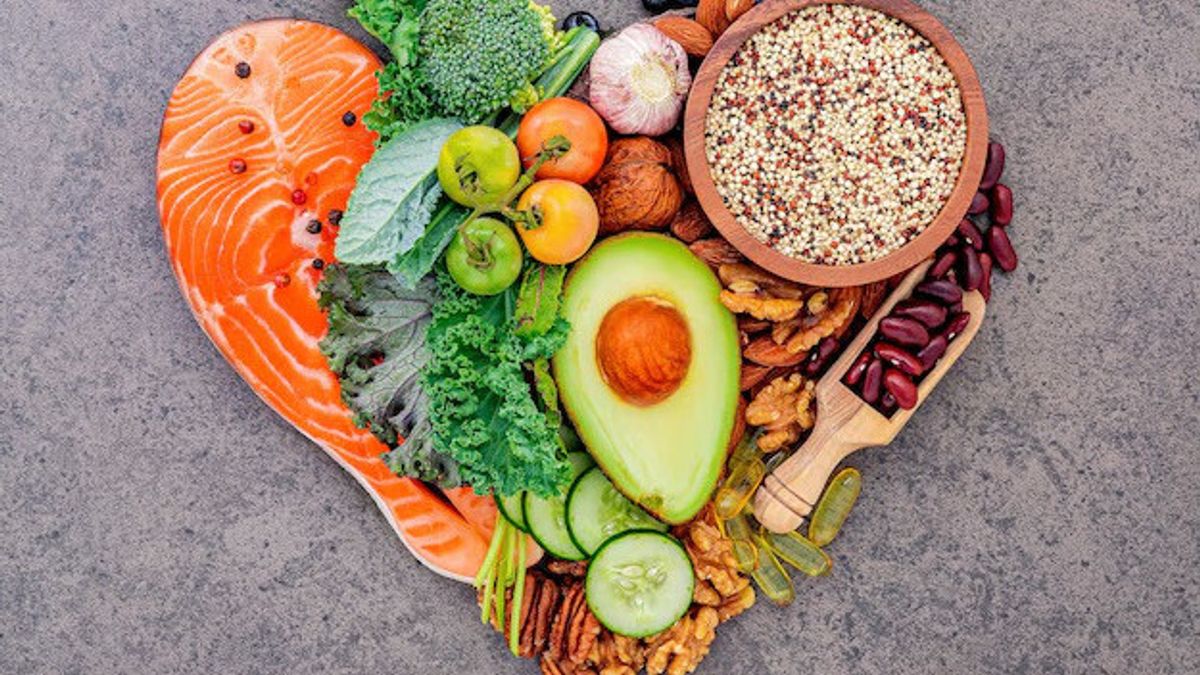


JAKARTA - In recent years, awareness of the importance of health has increased among the people of South Korea, especially in the younger generation. One of the latest trends of attracting attention is the Diet MIND (Meditranan-DASH Intervention for Neurodegenerative Delay), a diet that is claimed to slow down the aging process and improve brain function.
The diet is becoming popular thanks to Jung Hee-won, a medical professor and doctor at Seoul's Asan Medical Center Department of Geriatri. He introduced the concept of "slow aging", which is a holistic approach to healthy aging through a proper diet and a balanced lifestyle.
Reporting from The Korea Times page, MIND's diet combines a Mediterranean diet, which prioritizes natural foods, whole grains, and protein in balance with a DASH diet (Dietary Approaches to Stop Hypertension), which is designed to control high blood pressure.
In her book Slow Aging Diet, Jung offers MIND's Korean-style diet version with six main principles:
1. Get essential nutrients from whole grains, nuts, and other nuts.
2. Consume lots of vegetables and fruits.
3. Using olive oil as the main oil in cooking.
4. Prioritizing fish and poultry, as well as limiting consumption of red meat, processed meat, and cheese.
5. Reduce the intake of simple sugars and processed carbohydrates from fried foods, snacks, and soft drinks.
6. Limiting alcohol consumption to one glass of wine per day.
Since rice is staple food in Korea, Jung recommends mixing lentil, oat, red rice, and white rice in the 4:2:2:2 ratio so that blood sugar levels rise slower and increase protein intake from nuts.
To maintain hormonal balance, he also recommends limiting fried foods to less than once per week and snacks to 30 grams and not more than four times a week.
Despite the diet's advice, Jung emphasized that this diet is not just a matter of food, but about a balance of life.
"Menua itu bukan proses yang sederhana. Gaya hidup seperti olahraga dan nutrient hanya hasil dari cara kita menjalani hidup. Jika kita melihat ke root permasalahan, ada faktor seperti stres dan tidur yang juga sangat berpengaruh," katanya dalam wawancara dengan The Korea Times.
"When one of these three factors, namely sleep, stress, or eating patterns, they feel disturbed, the other two are also affected. For example, if I lack sleep, hormonal balance is disturbed, I become more sensitive to stress, and finally tend to look for sweet foods as an escape. This spoils my eating habits," he explained.
Jung explained that the younger generation is starting to realize the impact of modern lifestyles on their health.
"In the past there was an assumption that 'Everything was fine when they were young,' but now the younger generation is facing obesity and lifestyle disease from an early age. This creates concerns that they may age faster than their generation of parents," he said.
In addition, millennials and Gen Z strongly emphasize the balance of life and self-care, so that the slow aging concept becomes more relevant to them.
Although slow aging diet is growing in popularity, some experts question whether this will be a long-term lifestyle or just a temporary trend.
Choi Chul, professor of consumer economy at Sookmyung Women's University, stated that the interest of the younger generation in aging is a unique phenomenon.
"Usually, the issue of aging is more of a concern for older people. So, the fact that young people are interested in this from an early age is something special. However, this could be more of a temporary trend than something that lasts a long time," he said.
According to him, the consumption trend of the younger generation is often influenced by social media and the culture of sharing experiences. However, even though the term slow aging may not survive, interest in a healthy lifestyle will still exist.
SEE ALSO:
-
 | INFO SEHAT
Pertolongan Pertama untuk Masalah Cedera Kaki, Jangan Asal Diurut!
17 Februari 2025, 18:02 -
 | INFO SEHAT
10 Tips Ilmiah Menyimpan Bahan Makanan agar Tetap Segar Lebih Lama
17 Februari 2025, 16:46 -
 | INFO SEHAT
Diduga Penyebab Kematian Kim Sae Ron, Kenali Gejala Henti Jantung
17 Februari 2025, 15:25 -
 | INFO SEHAT
Dokter Tirta Beri Penjelasan soal Air Mineral Ada Manisnya, Bisa Bikin Diabetes?
17 Februari 2025, 13:25

"Both young and old, everyone wants to stay healthy and prevent aging. Demand for products that support health, beauty and well-being will continue to exist," he said.
The English, Chinese, Japanese, Arabic, and French versions are automatically generated by the AI. So there may still be inaccuracies in translating, please always see Indonesian as our main language. (system supported by DigitalSiber.id)


