

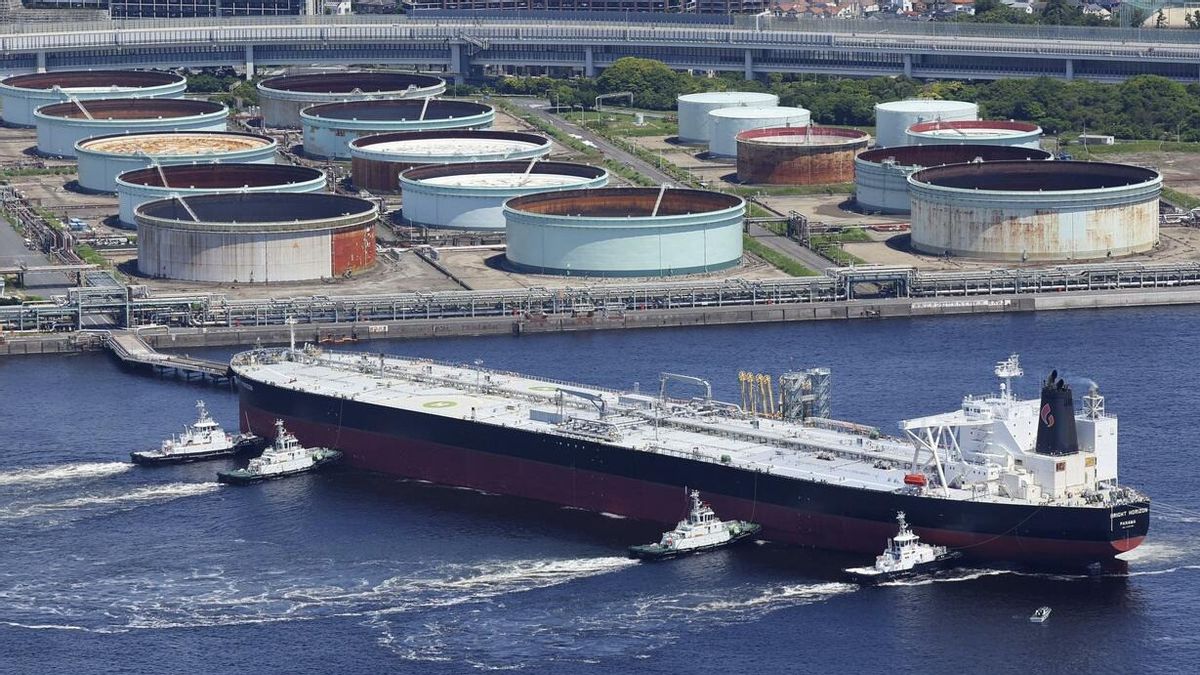


Japanese crude imports from the Middle East plunged more than 67 percent in April from the same period a year earlier. The volume was 3.84 million kiloliters, the lowest monthly level since comparable data became available in 1979.
As reported by Kyodo News, Thursday, May 21, the Japanese Ministry of Finance's preliminary data released Thursday showed that the sharp decline was triggered by supply disruptions after the Strait of Hormuz was practically closed due to the conflict in the Middle East.
For Japan, this is a serious blow. So far, more than 90 percent of the country's oil purchases have come from the Middle East. When the main line is disrupted, Japan immediately has to find another way.
Tokyo then accelerated the purchase of fuel from alternative sources, including the United States. Japan's oil imports from the US jumped 118.2 percent year-on-year.
However, the oil shock has not yet caused Japanese trade to fall into the red zone. In April, Japan still recorded a trade surplus of 301.9 billion yen or about 1.9 billion US dollars. This is the third consecutive surplus.
Exports are the main restraint. Japanese export value rose 14.8 percent to 10.51 trillion yen, supported by strong demand from Asia for semiconductors and other electronic devices.
Japanese imports also rose 9.7 percent to 10.21 trillion yen. This increase was mainly supported by imports of petroleum products from South Korea.
But Japan's trade with the Middle East was hit hard. The value of exports to the region fell 55.5 percent to 139.49 billion yen. The automotive sector was the biggest victim. Japanese passenger car exports to the Middle East fell 90.4 percent.
Since the conflict in the Middle East, Japan has accelerated the procurement of fuel from alternative sources, including the United States. Japan's oil imports from the US also jumped 118.2 percent compared to the previous year.
On the other hand, Japan's trade surplus is still supported by exports of semiconductors and electronic devices to the Asian region.
The English, Chinese, Japanese, Arabic, and French versions are automatically generated by the AI. So there may still be inaccuracies in translating, please always see Indonesian as our main language. (system supported by DigitalSiber.id)


