


JAKARTA Indonesia affirms its commitment to encouraging greener, inclusive, and sustainable trade in the Southeast Asia (ASEAN) region.
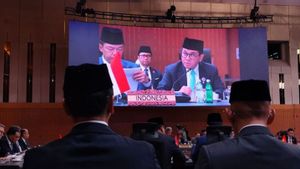
This commitment was realized through an active participation in the submission of the script for the Second Protocol to Amend the ASEAN Trade in Goods Agreement (ATIGA Upgrade) which was held in the 47th ASEAN Summit series in Kuala Lumpur, Sunday, October 26.
The handover procession was carried out by the Minister of Investment, Trade and Industry of Malaysia, Tengku Zafrul Abdul Aziz, as Chairman of the ASEAN Council Free Trade Area (AFTA) to the Secretary-General of ASEAN, Kao Kim Hourn, in Kuala Lumpur. This event was also witnessed by ASEAN heads of state and government, including Indonesia.
"The official submission of this agreement manuscript marks a joint commitment of ASEAN countries to build a modern, inclusive, and sustainable trading system, in order to strengthen regional economic integration," said Trade Minister Budi Santoso, in a statement Sunday, October 26.
The ATIGA Upgrade manuscript was previously signed by the Minister of Trade Budi on Saturday, October 26 with Brunei Darussalam, Malaysia, the Philippines, Singapore, and Thailand. Cambodia and Laos signed ad referendum, while Myanmar and Vietnam are scheduled to sign in November 2025.
"The implementation of this agreement will take effect 18 months after all member countries have completed the signing," he said.
Budi said that AtIGA Upgrade is a more responsive ASEAN goods trading agreement for regional and global economic dynamics.
SEE ALSO:
-
 | EKONOMI
Airlangga Bertemu Perwakilan AS, Bahas Investasi hingga Teknologi Nuklir Skala Kecil
26 Oktober 2025, 18:02 -
 | EKONOMI
Hadapi Dinamika Geoekonomi Global, Mendag Budi Dorong Koordinasi Lintas Pilar ASEAN
26 Oktober 2025, 17:30 -
 | EKONOMI
Dorong Produktivitas Petani, PTBA Bangun Dua PLTS Irigasi di Muara Enim
26 Oktober 2025, 16:41
The increase in this agreement also introduces a number of new elements, including provisions that encourage environmentally friendly trade; strengthening the role of micro, small and medium enterprises (MSMEs); increased connectivity of supply chains; as well as providing alternative mechanisms in dispute resolution.
This agreement reflects ASEAN's confidence to continue to move forward and remain relevant amid the dynamics of the global economy. This is not just a rule update, but a step to strengthen the market and create a conducive environment for growth and development of a strong and competitive supply chain," said Budi.
Budi said ASEAN is currently encouraging a more open, digital, and sustainable trading model, with the aim that the benefits can be directly felt by the community and business actors in all regions.
Meanwhile, the Director General of International Trade Negotiations, Djatmiko Bris Witjaksono, emphasized that Indonesia played an active role in maintaining national interests during the negotiation process.
Djatmiko said that one of the important achievements for Indonesia is to maintain special protocols for rice and sugar, which is the key in maintaining price stability and supply of two regional strategic commodities.
"For Indonesia, this agreement opens space for micro, small and medium enterprises (MSMEs) to contribute to the regional supply chain, strengthen industrial connectivity, and accelerate the transition to greener and competitive trade," said Djatmiko.
Intra-ASEAN trading itself is still the largest with a value of US$823.1 billion in 2024, or 21.4 percent of total regional trade. This figure shows the great potential of ASEAN in deepening regional economic integration as well as strengthening its position in the global trade scene.
The English, Chinese, Japanese, Arabic, and French versions are automatically generated by the AI. So there may still be inaccuracies in translating, please always see Indonesian as our main language. (system supported by DigitalSiber.id)


