


JAKARTA - The Free Nutrition Food Program (MBG) initiated by the government is often only seen as a social program. However, behind the school children's food plates, hidden economic potential that directly has an impact on the community.
Economist and Former Director of the FEB UI Management Master Program, Harryadin Mahardika, emphasized that the main goal of MBG is to trigger indirect impacts (multiplier effects) that change the economy at the regional level.
MBG is not just providing nutrition. What is even more essential is the economic turnover directly to the real sector, to villages. In addition, with a budget allocation of around Rp. 300 trillion a year, my prediction is that the indirect economic impact of MBG can reach three times, namely Rp. 900 trillion," said Harryadin, in his statement, quoted on Saturday, November 15.
The direct impact of this program is job creation. Of the 22.000 kitchens currently operating, there are at least 30 employees working in the kitchen. That way the absorption of the workforce reaches more than 600,000. To note 73.7 percent of the SPPG workers in Surakarta City are dominated by local residents, especially housewives around the location. In addition, the wages of SPPG employees are paid slightly higher than the local UMR, ensuring that local people's purchasing power increases.
"As far as I know, (wage) SPPG employees are set to be slightly larger than the regional UMR. Indeed, they are paid daily, but if calculated, SPPG employees in all regions are almost paid more than the regional UMR," said Harryadin.
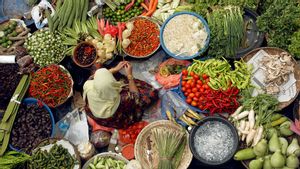
In addition to creating jobs, MBG is a blessing for local farmers and breeders. The ideal concept of this program requires SPPG to buy raw materials directly from local producers. By narrowing the distribution chain, farmers and breeders who usually sell cheaply to collectors or tengkulak, can now directly sell their products to SPPG at a better market price.
One SPPG that spends IDR 10,000 for 3,000 servings per day creates a local economic turnover of up to IDR 30 million per day, added Harryadin.
For illustration, in Surakarta City, Central Java, there are 19 SPPG operating. The economic turnaround circulating in the Surakarta City SPPG alone reaches Rp570 million every day.
Not only that, the economic impact of MBG can also be felt by the community. From the parents' side, school children's snacks can now be saved or allocated to other needs.
Then MBG also triggered the growth of local car repair services and electronic services, because there was a need for routine maintenance of SPPG kitchen utensils such as electronic goods and transport cars.
SEE ALSO:
-
 | EKONOMI
Ini Penyebab Dolar Perkasa di Negara Berkembang tapi Lemah di Negara Maju
23 Juni 2023, 19:02 -
 | EKONOMI
Paris Summit 2023 Ungkap Belum Ada Investasi Ideal dalam Transisi Energi
23 Juni 2023, 17:19
MBG also has an impact on the construction industry. With the development target of 30,000 SPPGs, this program will absorb large amounts of labor and construction materials. Finally, the utilization of SPPG kitchen waste such as food waste, becomes animal feed or compost. Of course, these two components create new added value for local farmers and breeders.
From the direct and indirect impact of MBG, macroeconomically, Harryadin estimates that MBG will be able to contribute 0.15-0.20 percent to national economic growth.
If last third quarter we grew 5.04 percent, with the additional economic effects of MBG, it is hoped that the country could grow to 5.1-5.2 percent by the end of this year. This program is revolutionary. This is our chance to supervise and work on it together. Don't be skeptical, because in reality no one is harmed here, everyone will benefit," he concluded.
The English, Chinese, Japanese, Arabic, and French versions are automatically generated by the AI. So there may still be inaccuracies in translating, please always see Indonesian as our main language. (system supported by DigitalSiber.id)


