
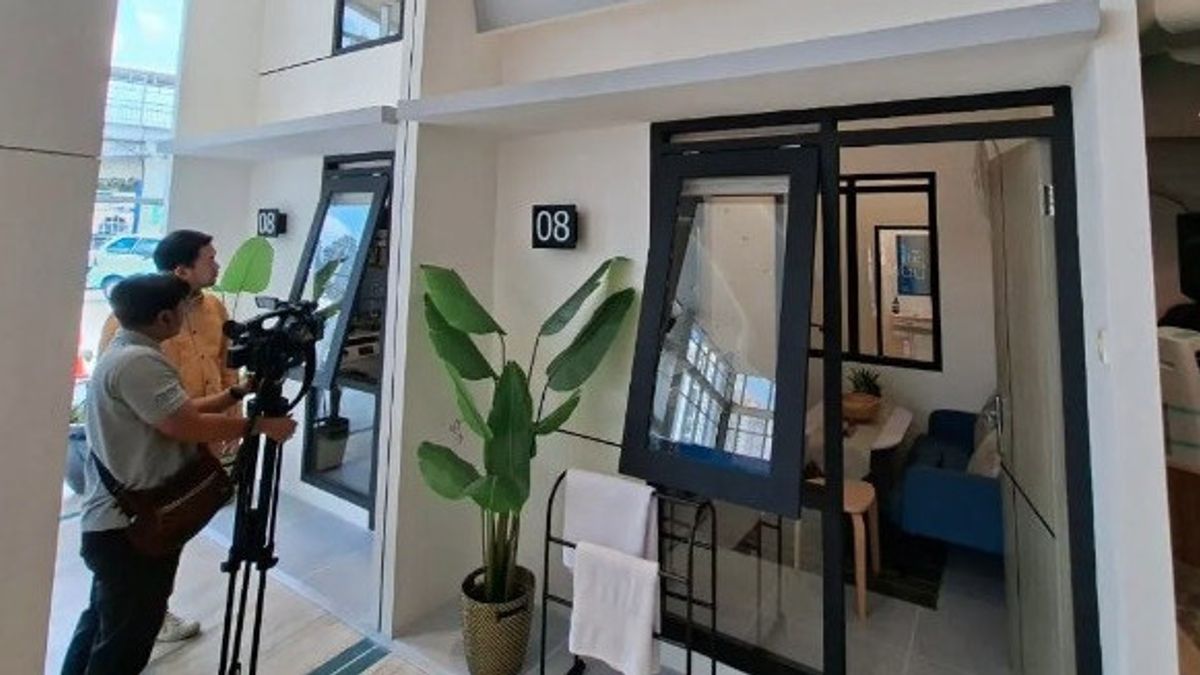


The plan of the Ministry of Housing and Settlement Areas (PKP) to release subsidized houses with a building area of 18 square meters has drawn criticism. Not only from the community, but also from other circles such as developers, observers, to architects.
The plan to change the limit rules for the minimum area of subsidized houses as stated in the draft Decree of the Minister of PKP Number / KPTS / M / 2025 concerning Land Area Limits, Floor Areas, and Limits on Selling Prices in the Implementation of Credit Housing / Financing of Home Liquidity Financing Facilities, as well as the Subsion of Housing Advances Assistance.
In the draft, it is stated that the area of subsidized houses was reduced to 18 square meters from the previous 21 square meters. Meanwhile, the minimum area of land is also reduced from 60 square meters to 25 square meters.
Adanya perubahan ini bertujuan memperluas dan menambah pilihan rumah subsidi bagi masyarakat penghasiburan rendah (MBR), terutama di kota dengan lahan terbatas. Harga rumah subsidi 18 meter persegi itu diperkirakan mulai dari Rp108 juta sampai Rp120 juta tergantung lokasi.
The plan to change the area of the subsidized house building is in the spotlight. Houses with a building area of 18 square meters are considered unfit to live in.
The 18 square meter subsidized house area has even become a parody of netizens on social media, calling it Subsi-DIE because the housing is considered inappropriate. In addition, social media user X also said that this subsidized house RSSS aka Subsidy House is Very Narrow once.
This subsidy house also received strong criticism from urban planning observer Yayat Supriatna. According to him, the government needs to consider psychological and social aspects, not merely an economic approach in determining the area of subsidized houses.
"If you want to build a house 18 or 24 meters, the approach should not only be economic. You must also think about psychology and how space forms human behavior," said Yayat.
According to Yayat, the policy of subsidized houses with a building area of 18 square meters and a land area of 25 square meters is far from standard human space needs. He also compared the policy of minimalist housing in China which was successful because it was accompanied by a restriction rule for one child.
In China it can be done because the number of family members is limited. In Indonesia there is no population policy that supports it. So the implementation of narrow houses will be very difficult," Yayat explained.
Furthermore, Yayat emphasized that houses are not just places to live, but also space to grow, educate, and shape the future of children. If it is too narrow, it will have a serious impact on psychology and social, ranging from stress, limited study space, to family conflicts.
"The room is part of life. Don't let us just build a house, but forget the quality of life of its residents," he said.
The area of the house is closely related to the space for its residents, such as sleeping, eating, cooking, and so on. In other words, the house is more than just a place to take shelter.
The area of residence will certainly affect the feasibility, comfort, and health of the residents in it. The more residents in a house, the more space needs to create a comfortable residence.
For this reason, the minimum area of the building is included in the indicators of livable houses.
In fact, there are regulations that can be used as a reference regarding the area of the ideal house in Indonesia. First, there is a Decree of the Minister of Settlement and Regional Infrastructure (Kepmen Kimpraswil) Number 403/KPTS/M/2002 concerning Technical Guidelines for the Development of Healthy Simple Homes (Rs Sehat).
SEE ALSO:
-
 | BERNAS
Mengungkap Alasan Israel Serang Iran, Selamatkan Karier Benjamin Netanyahu?
18 Juni 2025, 12:15 -
 | BERNAS
Hati-hati, Konsisten Memberikan Hadiah kepada Anak Bisa Menjadi Jebakan
15 Juni 2025, 08:45

In general, the minimum standard for space needs per person is 7.2 square meters. This means that if the house is inhabited by three people, the building area is at least 21.6 square meters.
Meanwhile, the World Health Organization (WHO) said the ideal area of the house was 12 square meters. So if the building is inhabited by three people, it takes an area of 36 square meters.
On the other hand, SNI 03-1733-2004 concerning Procedures for Environmental Planning for Housing in Urban areas states that the ideal area of the house is nine square meters per person. If one house is inhabited by a family of three people, then the area of the house should be 36 square meters. At that size, the carrying capacity and capacity of a house for the occupants in it have been calculated.
That's why the General Chair of the Indonesian Architects Association (IAI) Georgius Budi Yulianto questioned a number of basic things, both in terms of habitability and social implications. Georgius assessed that the size was indeed possible to fulfill the basic function of technical shelter.
When compared to the standard for the minimum need for space for movement in urban areas, which ranges from 4.5 square meters per person, the capacity of the space as regulated is very limited. Especially if it is inhabited by more than one person.
"The house is no longer a place to grow and develop, but only a place to survive," he said, citing Kompas.
This too narrow residential area has the potential to reduce the quality of social interactions in households, which can then expand to the surrounding environment.
"voltage in limited space tends to accumulate, without a healthy outlet room, creating a fragile and even aggressive social cohesion situation," Georgius said.
With such conditions, interactions between residents of the house can also turn into latent conflicts, especially in families with children or the elderly who need wider activities on a daily basis.
In terms of urban planning and architecture, homes with an area like this actually create long-term pressure on urban social ecosystems.
"Instead of solving affordability problems, this approach can plunge residents into a new cycle of poverty, namely space poverty and quality of life," he said.
The English, Chinese, Japanese, Arabic, and French versions are automatically generated by the AI. So there may still be inaccuracies in translating, please always see Indonesian as our main language. (system supported by DigitalSiber.id)
Most Popular Tags
#Prabowo Subianto #donald trump #firearm #8791 #giias 2026Popular


