
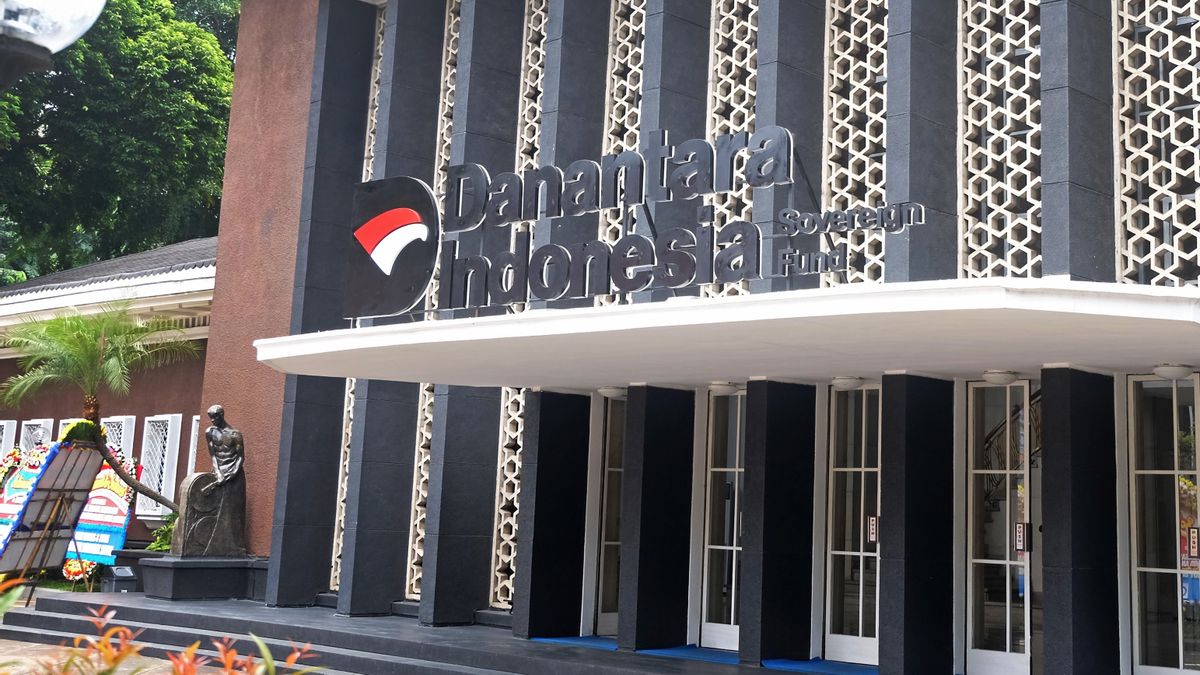


JAKARTA The corruption scandal of PT Pertamina Patra Niaga shows the weakness of financial governance in State-Owned Enterprises (BUMN). However, a greater threat is lurking in the management of extraordinary assets under the Investment Management Agency (BPI) Daya Anagata Nusantara (Dantara).
Recently, the public has been shocked by the corruption case of a subsidiary of PT Pertamina (Persero) related to crude oil management and refinery products in the 2018-2023 period.
According to the Attorney General's Office (AGO), this corruption case is estimated to cost the state up to Rp193.7 trillion. This fantastic figure is a state loss only for 2023. In total, losses due to corruption in the management of crude oil and products from the PT Pertamina refinery, sub-holding, and contractor cooperation contracts (KKKS) during that period are estimated at almost Rp1 quadrillion.
As of Wednesday (26/2/2025), nine suspects have been arrested by the AGO. Recently, the Director of Marketing and Commerce Maya Kusmaya and VP of Trading for Pertamina Patra Niaga, Edward Corne, were named suspects.
They followed seven other suspects who were previously named by the AGO earlier this week, including four state administrators, including the President Director of PT Pertamina Patra Niaga Patra Niaga, Riva Siahaan. In addition, three suspects from the private sector, one of whom is Muhammad Kerry Adrianto Riza as the beneficial owner of PT Navigator Khatulistiwa.
The fantastic numbers in PT Pertamina's corruption, according to legal observers and the construction of Hardjuno Wiwoho, confirmed the weakness of financial governance in BUMN. But Hardjuno said there was a bigger threat lurking from the management of BPI Danantara, which was officially launched on February 24.
As an institution that manages state assets worth tens of thousands of trillions of rupiah, BPI Danantara has a much greater potential for corruption than previous cases, including Bank Indonesia Liquidity Assistance (BLBI) and BLBI amalgabilization bonds whose value reaches more than Rp1,000 trillion.
"The keywords are the weakness in the governance of state assets that have the potential to become a field of systemic corruption that harms the people on a large scale. The precedents of corruption in the government and also in BUMN, it is difficult for us to just believe in Danantara," Hardjuno said in his statement.
SEE ALSO:
-
 | BERNAS
Sudah Dikadali BBM Oplosan, Mari Ajukan Gugatan Class Action ke Pertamina
28 Februari 2025, 13:00 -
 | BERNAS
Belajar dari INA, Danantara Perlu Bekerja Lebih Serius Gaet Investor
27 Februari 2025, 09:15 -
 | BERNAS
Ancaman Terhadap Wibawa Presiden Prabowo Selepas Instruksi Megawati Soal Penundaan Retret
24 Februari 2025, 13:50


The BLBI case and the BLBI amalgabilization bond, which totals more than Rp. 1000 trillion, still leaves a big question mark regarding the recovery of state assets. On the other hand, various mega corruption cases in SOEs in recent years have shown a recurring pattern.
For example, allegations of corruption in trading at PT Timah which caused potential state losses to reach Rp300 trillion. Another case is corruption in military pension funds at PT Asabri, a fraudulent investment scandal at PT Jiwasraya, and the procurement of aircraft for Garuda.
"All these cases show how weak supervision of state finances can lead to asset hijacking," added the Legal Doctorate and Development Candidate for Airlangga University.
Danantara has a mandate to manage very large amounts of state assets. As is known, Danantara in the early stages will consolidate Indonesia Investment Autority (INA) assets and assets of seven jumbo SOEs in its management, namely Bank Mandiri, Bank Rakyat Indonesia, State Electricity Company (PLN), Pertamina, Bank Negara Indonesia, Telkom Indonesia, and MIND ID.
With Danantara's initial total assets reaching Rp14,670 trillion, the lack of transparency and weakness of the audit system opens up opportunities for irregularities that can even exceed Pertamina's cases.
If BLBI and bonds alone leave financial black holes that are difficult to trace, then Danantara, with a wider asset portfolio, could become a more dangerous time bomb for state finances.
"Management of such large assets without strong supervision will only create new fields of corruption, where cases like the case in Pertamina can be repeated on a larger scale," said Hardjuno.
In addition, there are also other big challenges, namely the potential for conflicts of interest in the government and SOEs themselves. Without strong filters, politicians and interested parties can easily misuse Danantara's assets for personal or group gains.
Non-strict supervision, according to Hardjuno, makes misappropriation of funds increasingly difficult to uncover. For this reason, public involvement and transparency are the main keys to preventing this.
"We need an audit system that is monitored by the public, involves academics with high integrity, and media who are not afraid to reveal the truth. If allowed, Danantara can become one of the biggest financial disasters for this nation," he said again.
In addition, Hardjuno added, an independent audit conducted regularly by independent institutions is very important to avoid conflicts of interest.
The English, Chinese, Japanese, Arabic, and French versions are automatically generated by the AI. So there may still be inaccuracies in translating, please always see Indonesian as our main language. (system supported by DigitalSiber.id)


