
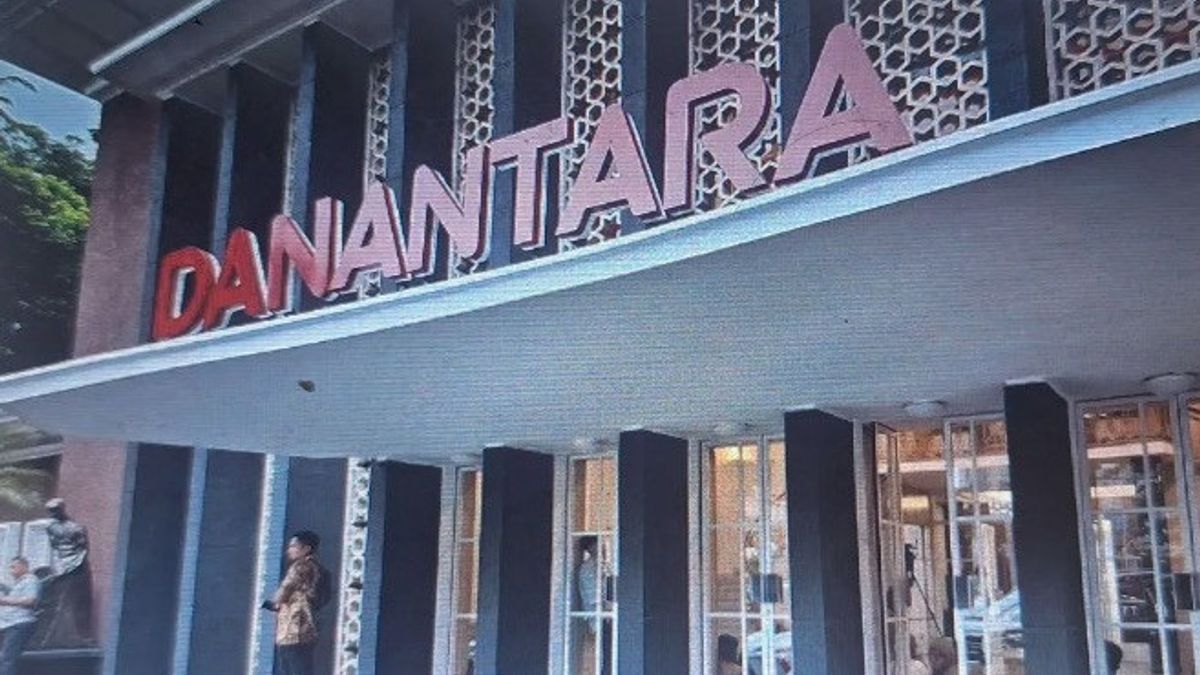


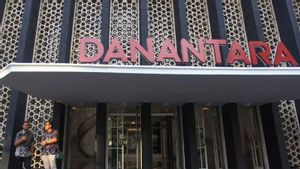
JAKARTA Invites to withdraw savings in bank accounts of State-Owned Enterprises (BUMN) or Association of State-Owned Banks (Himbara) when it becomes the attention of the wider community. This call is encouraged by the establishment of the Anagantara Resources Investment Management Agency or BPI Danantara.
Danantara is a state-owned investment management institution that will be launched on February 24, 2025. Quoting Kompas, Danantara will manage investments from dividends of 65 SOEs.
And, three of the dozens of SOEs are a giant state-owned company bank, namely Bank Mandiri, Bank Rakyat Indonesia (BRI), and Bank Nasional Indonesia (BNI).
Warganet called for immediate withdrawal of savings from state-owned banks to private banks. Among those who called for this admitted that they were worried that their savings at state-owned banks were worried that it would be unsafe. In addition, netizens also claim to sell shares in state-owned companies.
There are several reasons that encourage netizens to choose to withdraw their money from state-owned banks. Starting from their doubts about the success of the Danantara, to information related to the Danantara that cannot be audited directly by the Supreme Audit Agency (BPK) and the Corruption Eradication Commission (KPK) for law enforcement.
Although the call to withdraw money from state-owned banks is busy on social media, the Chief Executive of Banking Bank Supervision from the Financial Services Authority (OJK) Dian Ediana Rae admitted that he had not seen any real action of withdrawing money from state-owned banks.
"We certainly continue to monitor closely (close monitoring) the bank. Are there genuine (unusual) withdrawals to state-owned banks as a result of this irresponsible invitation, and so far there have been no such withdrawals," said Dian, who is also a member of the OJK Board of Commissioners.
Currently, according to Dian, the public is mature enough to address issues like this and know exactly the performance of very good state-owned banks.
Meanwhile, Chairman of the National Economic Council (DEN) Luhut Binsar Panjaitan responded to the call. He emphasized that BPI Danantara was formed with strategic goals by the government. According to him, the Danantara business is open to cooperation between two companies or more (joint ventures).
Withdrawing mass money or also known asrush money is a phenomenon that has the potential to have a negative impact on the economic stability and banking system of a country.
Rush money is often fueled by public fear of uncertain financial conditions, which could lead to bank bankruptcy and the loss of public trust in the banking system.
Massive withdrawing of funds can cause banks, which even in good health, to experience liquidity deficiency.
Institute for Development of Economics and Finance (INDEF) economist Esther Sri Astuti is worried that this call will expand and become real. She warned that a massive withdraw from the bank had occurred in 1997 and this contributed to the economic crisis.
One person is encouraged, it will stimulate other people. If it's massive, this is what makes the bank collapse," said Esther.
Esther continued, the call for withdrawing money from state-owned banks was actually a form of public dissatisfaction with the government, which recently made controversial policies including free nutritious food (MBG) and most recently, cutting the ministry/institution budget.
In this situation, the government needs to be encouraged to increase public trust, one of which is evaluating the MBG program.
"But the priority is first, stunting area first. Poor areas first. Don't want to be massive like that," he said.
Center of Economic and Law Studies (Celios) economist Nailul Huda did not deny the concerns that failed investment could harm Bank Himbara customers entering the Danantara.
"There is no official explanation from the government whether the customer's DPK in state-owned banking is an asset managed by the Danantara or not," said Huda when contacted by VOI.
SEE ALSO:
-
 | BERNAS
Tren Cancel Culture Seharusnya juga Berlaku untuk Pejabat Indonesia
20 Februari 2025, 08:15 -
 | BERNAS
Tak Ada Guna Bikin Partai Super Tbk Kalau Masih Berharap Kucuran Duit Negara
18 Februari 2025, 08:00 -
 | BERNAS
Percuma Presidential Threshold 20 Persen Dihapus jika Kita Setuju Koalisi Permanen
17 Februari 2025, 22:00

Meanwhile, banking observer Trioksa Siahaan asked the public not to panic in response to the teachings of withdrawing funds from state-owned banks that appear on social media.
He emphasized that until now state-owned banks are still running their business well and can still be trusted by the public.
According to Trioksa, public concerns about Danantara are speculative and have not been proven to have a negative impact. This issue, said Trioksa, is more about criticism so that Danantara's governance is more transparent and accountable so that its existence can be monitored properly.
The English, Chinese, Japanese, Arabic, and French versions are automatically generated by the AI. So there may still be inaccuracies in translating, please always see Indonesian as our main language. (system supported by DigitalSiber.id)
Most Popular Tags
#Prabowo Subianto #donald trump #Febrie Adriansyah #8791 #giias 2026Popular


