

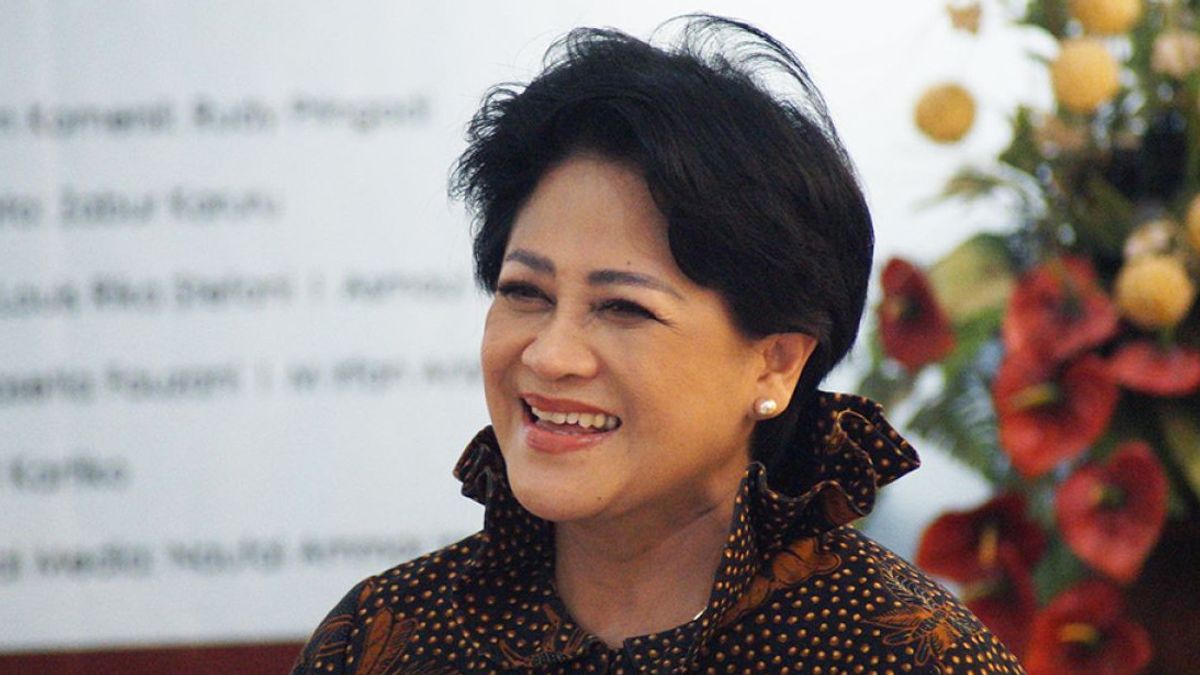


JAKARTA - International relations academic Connie Rahakundini Bakrie emphasized that air sovereignty is a fundamental principle that cannot be negotiated in international law, especially in the midst of discussions on granting foreign military access to Indonesian airspace.
In a public discussion held by the Indonesia Youth Congress in Central Jakarta, Wednesday, April 29, Connie referred to the 1944 Chicago Convention which confirms that every country has full and exclusive sovereignty over airspace above its territory.
"Unlike the sea, which knows the principle of mare liberum, the airspace is closed. There is no automatic right of peaceful passage for foreign military aircraft. Every access must be through the explicit permission of the sovereign state," he said.
He assessed that discussing foreign military access was not only about defense cooperation, but also had the potential to open up wider strategic interests.
According to Connie, the granting of blanket clearance without case-by-case evaluation risks a number of threats, ranging from the potential for intelligence gathering, mapping of strategic installations, to interference with national military operations.
"This is not just a defense cooperation. This can be a form of disguised strategic domination," he said.
He reminded that such practices could erode air sovereignty gradually, even if it did not happen explicitly.
In his presentation, Connie also alluded to an approach he called "Rahakundinisme", which emphasizes the importance of strict supervision, equal cooperation, and rejection of unilateral access that has the potential to weaken state sovereignty.
However, he emphasized that international cooperation was still needed as long as it did not sacrifice the basic principle of sovereignty.
"We can work together, but we must not surrender our sky," he said.
The discussion also featured a number of academics and practitioners, including Robi Nurhadi from the National University, Yuda Kurniawan from Bakrie University, and M. Reza Syarifuddin Zaki from Bina Nusantara University. This activity was attended by students, researchers, and the general public.
The English, Chinese, Japanese, Arabic, and French versions are automatically generated by the AI. So there may still be inaccuracies in translating, please always see Indonesian as our main language. (system supported by DigitalSiber.id)
Most Popular Tags
#Prabowo Subianto #donald trump #2026 World Cup #Febrie Adriansyah #8791Popular


