

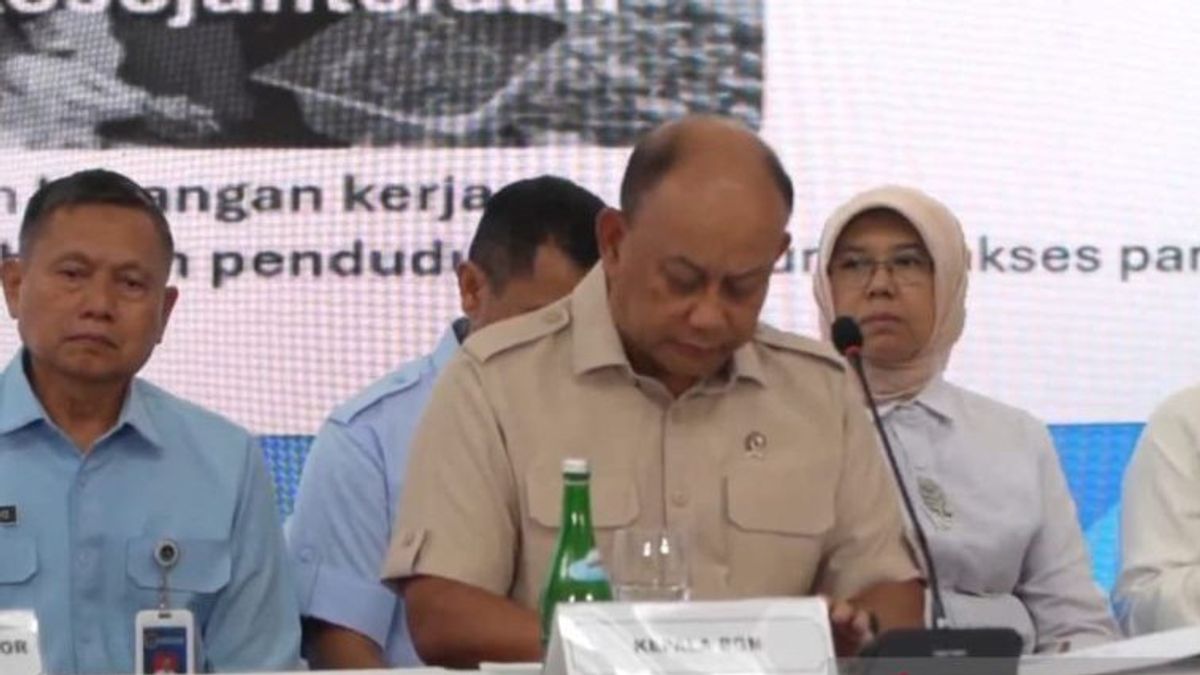


BANDUNG - The National Nutrition Agency (BGN) is preparing an acceleration scheme for the development of 8,200 Nutrition Fulfillment Service Units (SPPG) or MBG kitchens in the lagging, leading, and outermost (3T) regions by 2026.
Head of BGN, Dadan Hindayana, said this was to pursue the service target for 82.9 million beneficiaries nationwide. He emphasized that this acceleration was urgent to be carried out considering the realization of nutrition kitchen infrastructure in the 3T area until the end of 2025 is still far from ideal.
"In the 3T area, we plan 8,200, but it will probably only be completed at the end of this year with about 190 SPPG units," said Dadan after the MBG Implementation Meeting in West Java, Gedung Sate, Bandung, Wednesday, December 17, reported by ANTARA.
To close the infrastructure gap, Dadan emphasized the readiness of human resources (HR) as the key.
Therefore, he ensured that the selection process of employees, including through the PPPK/CPNS BGN channel which uses the Basic Academic Ability Test (TGAT), was being rushed to ensure the operation of the new units.
"TGAT in February must have been mostly completed," said Dadan.
Dadan detailed that the roadmap for BGN next year will focus on regional balance. In addition to 8,200 units in remote areas, BGN also aims to operate a minimum of 25,400 SPPG in agglomeration areas or densely populated urban areas.
"So, there are a total of 32,000 to 33,000 SPPGs serving 82.9 million people," said Dadan.
Meanwhile, for the short-term target at the end of 2025, BGN continues to strive to complete the establishment of 19,000 SPPGs throughout Indonesia.
Dadan acknowledged that the food safety aspect was also highlighted in the coordination meeting.
Dadan said that West Java Governor Dedi Mulyadi had urged the acceleration of the issuance of the Laik Hygiene Sanitation Certificate (SLHS) for kitchen providers.
"The Governor has emphasized that there should be another acceleration," he said.
Based on BGN data in West Java, out of 1,548 SPPGs that applied for certification, only around 900 kitchens were declared to pass and officially have SLHS to guarantee the health standards of the food distributed.
The English, Chinese, Japanese, Arabic, and French versions are automatically generated by the AI. So there may still be inaccuracies in translating, please always see Indonesian as our main language. (system supported by DigitalSiber.id)
Most Popular Tags
#Prabowo Subianto #donald trump #firearm #8791 #giias 2026Popular


