


BANDUNG The Free Nutrition Food Program (MBG) initiated by President Prabowo Subianto is considered a monumental step to improve the nutritional quality and health of Indonesian children. However, its implementation in the field has drawn serious problems that trigger evaluation pressure.
Deputy Chairman of the West Java DPRD, Iwan Suryawan, proposed the formation of a special evaluation team to follow up on problems that arose in the implementation of the MBG, especially in the West Java region.
We really appreciate President Prabowo's noble intentions through the MBG program. But the president's good intentions alone are not enough. If in the field poses a health risk, all his assistants need to intervene. This is about the safety of our children," Iwan said in his statement, Monday, September 22.
The proposal emerged after a series of cases of mass poisoning experienced by school students in a number of areas, including Garut, Tasikmalaya, Bogor, and Cianjur. The latest cases in Garut involved around 150 students with mild poisoning symptoms, while in Tasikmalaya dozens of students were reported to have nausea and vomiting.
According to the records of the education monitoring agency, until mid-September 2025 more than 5,360 students in various provinces from West Java, Central Java, East Java, to Sulawesi and Maluku experienced similar symptoms after eating MBG food.
Iwan assessed that the incident was not an ordinary incident, but a strong signal that the program needed to be thoroughly evaluated. He emphasized the importance of an independent team to go directly to the field and collect factual data, not just relying on administrative reports.
"Reports on paper are not enough. Evaluation must be objective and touch the root of the problem," said the PKS politician.
In addition to weak supervision, Iwan also highlighted the absorption of the MBG budget which had reached IDR 15.7 trillion as of early September. He assessed that success could not be measured only from the amount of absorbed funds.
"If the funds are absorbed but the quality of the food is dangerous, it is not a success. We must not be trapped in the achievement of numbers, but ignore the safety of children," he said.
Finance Minister Purbaya Yudhi Sadive previously opened the possibility of reallocating the MBG budget due to low absorption in a number of regions. However, Iwan asked the government to be careful in making decisions.
"If the problem is in technical and management, why is the budget that must be sacrificed? The solution is not necessarily a budget withdrawal, but fix the system. We should first think about the government to collaborate to fix it," he said.
Until now, the National Nutrition Agency (BGN) has recorded 8,344 units of active Nutrition Supply Centers (SPPG). The target is to reach 10 thousand units by the end of September and 20 thousand by October, with an estimated budget absorption of IDR 20 trillion in the next two months.
However, Iwan emphasized that increasing the number of SPPGs and budgets would be meaningless without strict quality supervision. He proposed the involvement of food and nutrition experts, as well as strengthening cross-sectoral cooperation with the regional health office.
"You can't just rely on vendors. There must be a quality control team that works regularly and independently. This is a matter of health standards, not just mass food supply," he said.
SEE ALSO:
-
 | TEKNOLOGI
Tak Perlu Tunggu 2 Pekan, Inovasi IPB Bisa Uji Mutu Pertanian Instan
22 September 2025, 03:04 -
 | LIFESTYLE
Alur Ceritanya Menarik, Ini 4 Rekomendasi Drama China Terbaik dengan Rating Tinggi
22 September 2025, 05:46
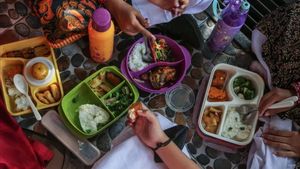
As a form of public supervision, Iwan also appealed to the public and parents of students to actively report if they found MBG foods that were not suitable for consumption.
"This is not a matter of politics or opposition. This is a matter of the lives of our children. All parties must be actively involved in the government, schools, parents, and the wider community," he concluded.
The English, Chinese, Japanese, Arabic, and French versions are automatically generated by the AI. So there may still be inaccuracies in translating, please always see Indonesian as our main language. (system supported by DigitalSiber.id)
Most Popular Tags
#Prabowo Subianto #donald trump #firearm #8791 #giias 2026Popular


