



JAKARTA - The Corruption Eradication Commission (KPK) suspects that there is an attempt to thwart the departure of pilgrims who actually queued up before 2024. The mode is by making a tight repayment period so that they do not leave.
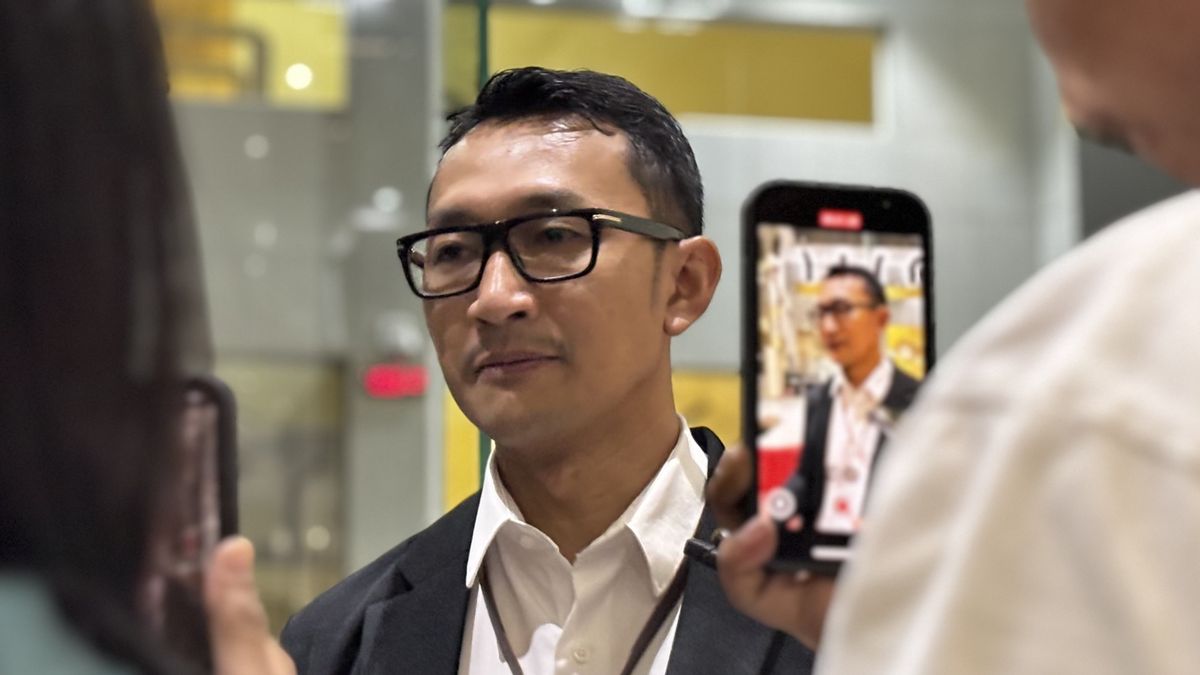
KPK spokesman Budi Prasetyo said the deepening of the mode was carried out by examining Moh. Hasan Afandi as Kapusdatin BP Haji 2024-present. He was summoned as a witness to alleged corruption in quotas and the implementation of Hajj in 2023-2024 at the Ministry of Religion.
"Investigators are also exploring the mode of regulating the repayment period which is made tight or tight for prospective pilgrims who have registered and queued before 2024, which is only given five working days," Budi told reporters in a written statement, Friday, September 12.
Investigators, continued Budi, suspect that this mode was systematically designed. Thus, the pilgrims who are already queuing cannot get an additional quota of Hajj from the Saudi Arabian government.
The Indonesian government received 20.000 additional quotas to break down the queues for Hajj pilgrims. However, the distribution has recently been problematic and has become a land for bancakan.
"Investigators suspect that this (mode, red) is systematically designed so that the remaining additional quota is not absorbed from prospective pilgrims who have queued before, and can finally be traded to special hajj organizers (PIHK) who are able to pay fees," he said.
In addition, the KPK is also exploring several other things from the Moh. Hasan examination. Including the departure of special pilgrims who have just registered and do not need to queue.
"The witness was investigated how technically special Hajj pilgrims who were at the latest or only paid in 2024 but could leave immediately," said Budi.
Previously reported, the KPK has issued a general investigation warrant (sprindik) for alleged corruption in the addition of quotas and the implementation of Hajj in 2023-2024. This institution reasoned that the issuance was carried out so that they could make forced efforts.
The general Sprindik uses Article 2 Paragraph 1 and/or Article 3 of Law Number 31 of 1999 concerning the Eradication of Criminal Acts of Corruption as amended by Law Number 20 of 2021 in conjunction with Article 55 paragraph 1 of the Criminal Code. This means that there are state losses that occur due to this corrupt practice.
State losses in the corruption case of quota and Hajj for the period 2023-2024 are said to have reached more than IDR 1 trillion. This amount is still increasing because it is only the initial calculation of the KPK which continues to coordinate with the Supreme Audit Agency (BPK).
This case began with the provision of 20,000 additional Hajj quotas from the Saudi Arabian government for Indonesia to reduce queues for pilgrims. However, the distribution turned out to be problematic because it was divided equally, namely 50 percent for regular Hajj and 50 percent for special Hajj.
BACA JUGA:
-
 | BERITA
BNPB: Korban Meninggal Banjir Bali Bertambah Jadi 16 Orang, Satu Masih Hilang
12 September 2025, 08:06 -
 | TEKNOLOGI
Samsung Sindir iPhone 17 “Zzz-note”, Padahal Galaxy S25 Juga Sama Saja
12 September 2025, 02:05 -
 | EKONOMI
Danantara Dapat Mandat Urus Pupuk Subsidi, Perannya Revitalisasi dan Investasi
12 September 2025, 06:03
In fact, based on the law, the distribution should be 92 percent for regular Hajj and 8 percent for special Hajj.
Later, the distribution of problems was allegedly due to money from the Hajj and Umrah travel parties as well as the associations that oversee the Ministry of Religion. After getting the allotment, they sold the additional quota to prospective pilgrims.
The English, Chinese, Japanese, Arabic, and French versions are automatically generated by the AI. So there may still be inaccuracies in translating, please always see Indonesian as our main language. (system supported by DigitalSiber.id)
Most Popular Tags
#Prabowo Subianto #donald trump #firearm #8791 #giias 2026Popular


