


JAKARTA - Electricity in Spain and Portugal is back on, after the worst outage ever, with authorities not yet providing an explanation of the cause, while Prime Minister Pedro Sanchez declined to rush into conclusions about the cause of the incident.
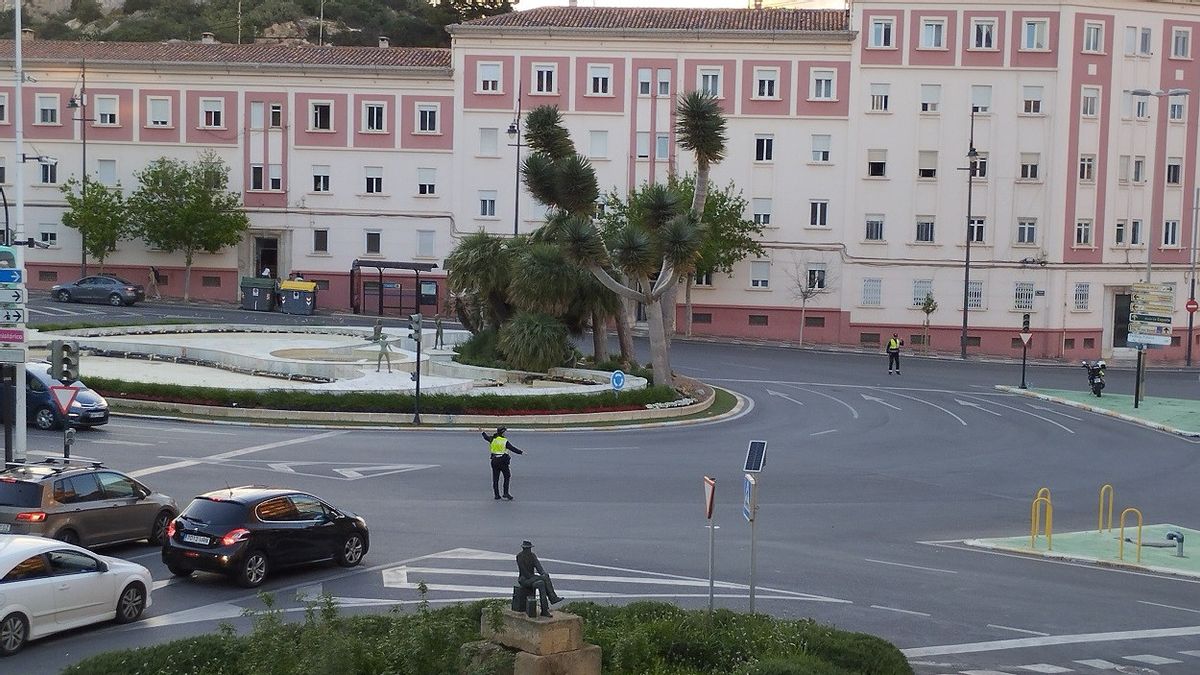
Traffic lights are back on, train and metro services are slowly recovering and schools are reopening. Passengers struggle with delays to return to work after a power outage that has left displaced people in the elevator and cut off from telephone contact with their families.
The sudden power outage had caused demand for electricity in Spain to drop by 60 percent in five seconds around noon on Monday.
While Spanish power grid operator REE on Tuesday ruled out cyberattacks as the cause, the Spanish High Court said it would investigate whether the country's energy infrastructure had experienced a terrorist attack.
Meanwhile, Spanish Prime Minister Pedro Sanchez said his government had not ruled out any hypotheses.
"We must not be in a hurry to take (conclusions) and (make) mistakes because they are in a hurry," PM Sanchez said on Tuesday.
"We will find out what happened in those five seconds," he continued.
REE said it had identified two incidents of power loss, possibly from a solar power plant, in southwestern Spain, which caused instability in the electrical system and caused a break in its interconnection with France.
Spain is one of the largest renewable energy producers in Europe, and the power outage sparked debate over whether the supply volatility of solar power or wind makes its electric power system more vulnerable.
In Portugal, the government said hospitals had resumed operations, the airport was operating despite delays in Lisbon, while the capital's metro began operating again and the trains resumed operations.
Earlier, a state of emergency was declared in many parts of Spain on Monday due to blackouts, with around 30,000 police deployed. At At Atochha station in Madrid, police and Red Cross workers distributed blankets and water bottles.
Three people died of suspected carbon monoxide poisoning in the northwestern region of Galicia after turning on the generator to power oxygen engines for one of the victims, regional emergency services said.
Carlos Cagigal, an energy expert, said power outages may have occurred as the Spanish nuclear power plant was not operating at the time, meaning all of its electricity came from renewable sources supplying saturated substations.
"When one of the substations failed and there were no adequate reserves, safety protocols came into effect and the system was cut off," he said.
"Given the imbalance in this system, there is little risk this is happening again," he said.
Last February, Redeia, which owns Red Electrica, warned in its annual report that it faces the risk of "decoupling due to high penetration of renewable energy without the technical capacity required for adequate responses in the face of disruption".
Alberto Nunez Feijoo, leader of the opposition's conservative People's Party, said the government should rethink its plans to shut down nuclear power plants.
SEE ALSO:
-
 | BERITA
Badan Pengungsi PBB Tutup Empat Kantor di Meksiko karena Krisis Pendanaan
30 April 2025, 09:00




However, PM Sanchez on Tuesday ruled out excess renewable energy as the cause of the collapse of the network.
He said the Spanish nuclear power plant had yet to resume operations on Tuesday, which he said showed the power plant was no more resilient than renewable energy.
He said demand at the time of power outages was relatively low and supply was sufficient.
"What happened yesterday (Monday) was an extraordinary event in everyday normal situations," said PM Sanchez.
The English, Chinese, Japanese, Arabic, and French versions are automatically generated by the AI. So there may still be inaccuracies in translating, please always see Indonesian as our main language. (system supported by DigitalSiber.id)


