

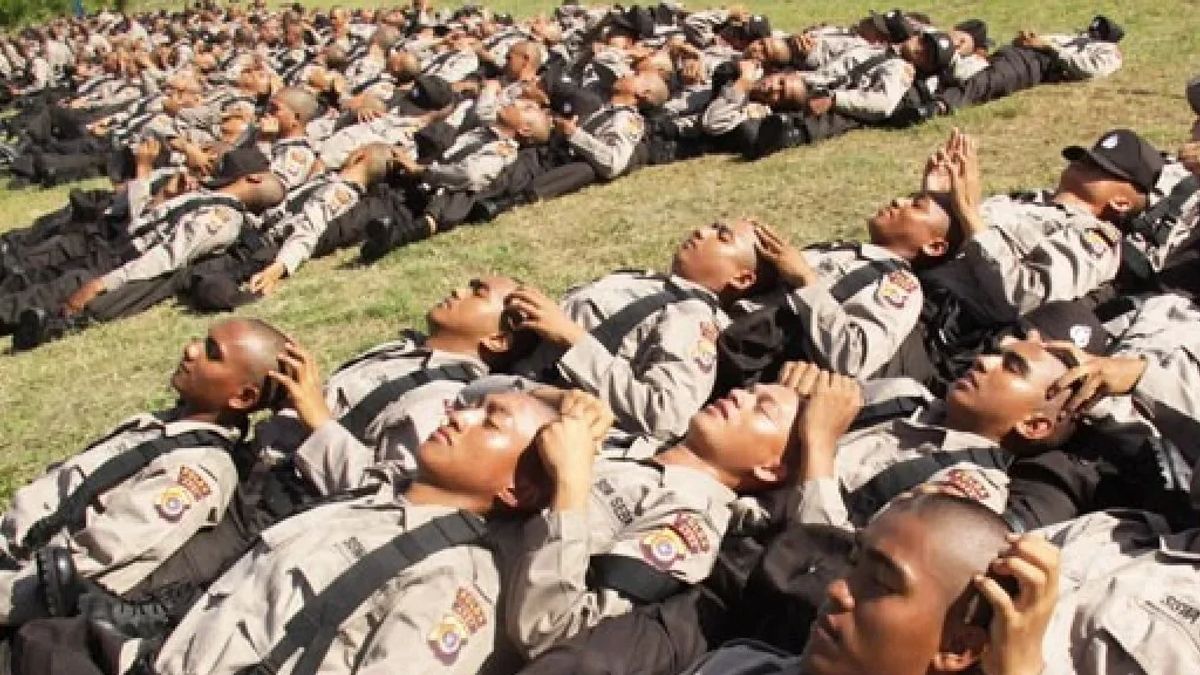


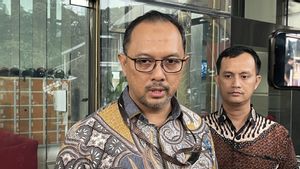
JAKARTA - The Inspector of General Supervision (Irwasum) of the National Police, Komjen Pol. Dedi Prasetyo ensured that the recruitment of the Police Academy (Akpol) cadets this year was transparent.
Transparency is because each participant can see firsthand the test results, both himself and other prospective cadets.
After the swimming test, the catar (cataker candidate) can see directly how many seconds, how much is the value. Run too, how many rounds, how long is the time. Other tests are the same: finished, the value goes straight out. The value is plastered on the screen, everyone can see," said Dedi in his statement, Sunday, February 2, quoted by Antara.
According to him, recruitment by prioritizing clean, transparent, accountable, and humanist principles has been carried out for years. The selection committee deliberately broadcasts scores or scores on each test so that prospective cadets can correct each other.
"Prospective cadets when they feel the value is not appropriate, are given the opportunity to correct them with the committee. They also already know what academic value, how much psychology, how much physical. The prospective cadets can calculate themselves with this open system," he said.
For this reason, Dedi appealed to the public not to trust brokers or anyone who promised to enter as a member of the police in exchange for money. He also emphasized the criminal threat for fraud perpetrators.
"There have been many cases of people being deceived, having given some money, their children failed (lolos Akpol)," he said.
SEE ALSO:
-
 | BERITA
Dirugikan Secara Langsung, Rakyat Harusnya Terima Kompensasi Akibat Korupsi Pertamax Oplosan
28 Februari 2025, 15:08 -
 | BERITA
Komisi I DPR Desak Pemerintah Bentuk Badan Perlindungan Data Pribadi
28 Februari 2025, 15:05 -
 | BERITA
Pria di India Perkosa Wanita di Dalam Bus, Sempat Ingin Bunuh Diri Akhirnya Dibekuk
28 Februari 2025, 17:32

Dedi explained that as of Friday, February 28, the number of online registrants of the Akpol cadets had reached 8,016 people. Overall, the number of registrants on the recruitment of Polri members, both Tamtama, NCO, Akpol, was 116,732 people.
As directed by the National Police Chief, General Pol. Listyo Sigit Prabowo, there is only one route to enter the Police Academy, namely the regular route. That way, recruitment is expected to produce cadets who are truly able to undergo the education and training process for a good time.
"According to the leadership's direction, this year is the same as last year, no more dichotomy is carried out, or the friction of the rekpro route, regular route, special quota route," said Dedi emphasizing.
On the other hand, the description of the process and selection method needs to be known to the public so that it is understood that the selection of members of the National Police only relies on their own abilities during the selection stage.
"To all ranks, we ask the public to continue educating the public that the selection of members of the National Police is the key to their own ability. Competitive preparation, serious training, that's the key," he added.
Furthermore, Dedi explained that the stages of the Akpol test at the level of the regional committee were as follows: a. Initial administrative examination with qualitative assessment. Phase I health examination with a qualitative assessment. Phase I psychological test of the test system provided computer or computer assisted test (CAT), quantitative and qualitative assessment. Stage I academic test, CAT system with quantitative assessment include: - General knowledge (including the Police Law)- National Insight (UUUD NRI Year 1945, NKRI, Bhinneka Tunggal Ika, Nusantara insight and citizenship)- Numerical reasoning test- Indonesian language. EKG test with qualitiff assessment. Physical ability test (A, B, and swimming) with quantitative and qualitative assessment, as well as an anthropometric examination with qualitative assessment.g. Determination trial to follow stage IIH health checks. Phase II health examination with qualitative assessment. PMK deepening and interview system psychological tests with qualitative assessment. Final administrative examination with qualitative assessment. Open hearing of regional level graduation
Meanwhile, the stages of the Akpol test at the central committee level are as follows: a. Administrative examination with qualitative assessments. Health checks stages I and II with qualitative assessments. Mental examination and ideological examination with CATd. Academic tests include an academic potential test (TPA) in English using CAT, quantitative assessment. Psychological tests interviews with qualitatitiff assessments. PMK deepening with qualitative assessments. Physical similarity tests (A, B and swimming) with quantitative and qualitative assessments, as well as anthropometric examinations with qualitative.h. Performance examination with qualitative assessments. Open hearing of central level graduation.
The English, Chinese, Japanese, Arabic, and French versions are automatically generated by the AI. So there may still be inaccuracies in translating, please always see Indonesian as our main language. (system supported by DigitalSiber.id)
Most Popular Tags
#Prabowo Subianto #donald trump #firearm #8791 #giias 2026Popular


