


JAKARTA - Waste management levies have not been implemented until now. Meanwhile, previously the collection of waste levies to the public began on January 1, 2025.
Member of Commission D of the DKI Jakarta DPRD, Bun Jhoi Phiau, assessed that the waste retribution policy was not yet time to be implemented. Because, according to him, there are still people who have not been educated on how to manage household waste.
In fact, there are still many residential areas that do not yet have a waste bank and temporary garbage collection (TPS).
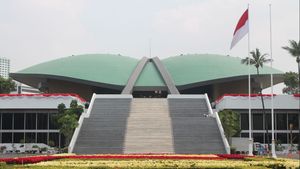
"So the socialization is very, very lacking," said Bun Jhoi at the DKI Jakarta DPRD Building, Thursday, February 13.
Continuing, Member of Commission D of the DKI Jakarta Provincial DPRD Neneng Hasanah asked the DKI Jakarta Environmental Service to be more proactive in socializing DKI Jakarta Governor Regulation (Pergub) Number 77 of 2020 concerning Environmental Waste Management.
According to Neneng, socialization and education to the public are considered important. People will be wiser in managing household waste.
Of course, this means more than the withdrawal of waste levies. So that people can get insight in how to sort and manage waste properly and correctly.
"We emphasize to implement it (manage waste) rather than we impose levies," said Neneng.
Head of the DKI Jakarta Environmental Agency, Asep Kuswanto, previously admitted that the retribution for cleaning services for transporting waste from households could not be implemented at this time.
Asep said that the application of waste retribution was likely to take effect after Pramono Anung-Rano Karno officially served as Governor-Deputy Governor of DKI Jakarta.
While waiting for the transitional leadership period in Jakarta, the DKI Provincial Government is still drafting a governor regulation (pergub) as a waste retribution technical rule from the legal umbrella of Regional Regulation Number 1 of 2024 concerning Regional Taxes and Regional Retribution.
"The governor's regulation is still in process. It looks like he will wait for the new governor (for the application of waste levies)," Asep said in a short message, Wednesday, February 5.
For information, the cleaning retribution system is one of the steps taken by the DKI Provincial Government to increase waste management more effectively and efficiently. This system is based on the principle of who produces waste, having to pay for its management.
SEE ALSO:
-
 | BERITA
Efisiensi Anggaran dari Pemerintah Tak Boleh Dilakukan Gegabah, Kasihan Rakyat
11 Februari 2025, 12:52
However, there are exceptions for residents who can sort waste from their respective homes. Retribution exemption for residents who can sort waste from the source and/or join the Waste Bank is an incentive to encourage Jakarta residents to be more concerned about waste management.
The amount of waste retribution rates for each household and business entity is imposed according to the use of electricity, with details:
- Households with an electric power of 450 to 900 VA: IDR 0 per month
- Households with an electric power of 1,300 to 2,200 VA: IDR 10,000 per month.
- Households with an electric power of 3,500 to 5,500 VA: IDR 30,000 per month.
- Household with an electric power of 6,600 VA and above: IDR 77,000 per month.
The English, Chinese, Japanese, Arabic, and French versions are automatically generated by the AI. So there may still be inaccuracies in translating, please always see Indonesian as our main language. (system supported by DigitalSiber.id)


