


JAKARTA - Until now, misinformation is still circulating related to the alleged gross Bisphenol-A (BPA) chemical compound in drinking water packaging gallons of polycarbonates (PC) exposed to sunlight. Responding to this, the University of North Sumatra Organic Chemical Study Group (USU) conducted independent research to examine the overflow of BPA on the four most popular local and national gallon water brands in Medan City, North Sumatra.
Today, Wednesday 12 February, USU's research team released the results of a study showing that BPA was not detected in all tested samples, including those exposed to sunlight.
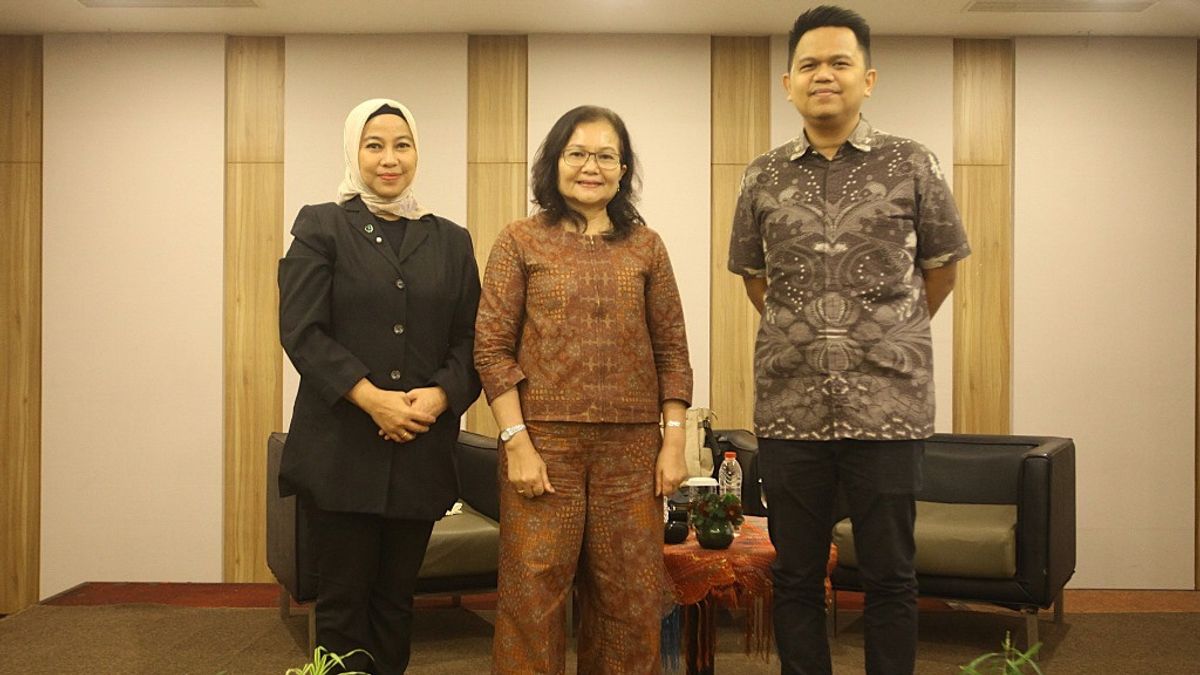
Prof. Dr. Juliati Tarigan, M.Si, Professor of Organic Chemicals, Faculty of Mathematics and Natural Sciences, University of North Sumatra (FMIPA USU) as the Head of the Research Team confirmed that in all water samples of gallons of polycarbonates examined, either exposed or not exposed to sunlight, there was no detection of lurusan or migration of BPA.
Thus, the public does not need to worry about consuming gallon bottled drinking water, because the most popular brands in the city of Medan have proven safe for consumption. This finding also refutes the assumption that the migration of BPA from gallons made from polycarbonates can occur if the packaging is exposed to sunlight.
Even though the gallon is distributed during the day, BPA migration into drinking water will not occur if the temperature does not reach 159 degrees Celsius. Meanwhile, the highest temperature recorded in Indonesia only reached 38.5 degrees Celsius, added Prof. Juliati.
Prof. Juliati explained that chemically, BPA has a melting point at 159 degrees Celsius. This shows that the BPA in polycarbonate packaging can only drop at very high temperatures, up to above 159 degrees Celsius. In addition, BPA has a very low solubility in water, so it is likely that it dissolves from a gallon packaging of polycarbonates into drinking water, which is very small.
Research and Sampling Method Prof. Juliati explained that the samples were collected from four gallon bottled drinking water brands for a return made from polycarbonates (PC) which are common and popular in Medan. The four samples consist of the two most popular national AMDK product brands, namely AQUA and Prima, as well as two local brand samples, namely Amoz and Himudo.
Each brand is taken three samples from different distribution points. The samples were taken at three storage conditions, namely normal or not exposed to direct sun, as well as conditions with direct sunlight exposure for 5 and 10 days.
"We carried out testing triplo or carried out using three samples or three tests. It is very important to do triplo testing on food samples so that the first data can be compared to the second or third data, so that the final results obtained will be more accurate," said Prof. Juliati.
The sample was tested using High-Performance Liquid Chromatography (HPLC) or High Performance Cromatography (KCKT) which is a very sophisticated instrument for detecting the content of deep water BPA up to the level of micrograms per liter (mong/L).
A Series of Research Has Proven that BPA Is Undetected in Galon Water In 2024, the Polymer Study Group of the Bandung Institute of Technology (ITB) has conducted independent research on the safety and quality of bottled drinking water (AMDK) on the four most popular gallon drinking water brands made from polycarbonates in West Java Province.
The results of the study also showed that no BPA lurus was detected in all samples of gallon drinking water tested. Meanwhile, there were two similar studies conducted in Makassar, South Sulawesi.
The first study was conducted by Endah Dwijayanti, S.S., M.Sc., Head of the Makassar Islamic University Chemical Study Study Program, entitled Analysis Bisphenol-A and Di-ethylhexyl Phthalates in the Water Galon Circulating in Makassar City. This research was published in Food Scientific, Journal of Food Science and Technology, Open University in June 2023.
SEE ALSO:
-
 | EKONOMI
Ini Penyebab Dolar Perkasa di Negara Berkembang tapi Lemah di Negara Maju
23 Juni 2023, 19:02 -
 | EKONOMI
Paris Summit 2023 Ungkap Belum Ada Investasi Ideal dalam Transisi Energi
23 Juni 2023, 17:19

The results showed that all samples of drinking water tested were free from harmful substances and no BPA compounds were detected.
The second study was conducted by Ir. Gusnawati, ST, MT., Lecturer of the Chemical Engineering Study Program, Faculty of Industrial Technology, Universitas Muslim Indonesia (UMI) with the title Magration Analysis of Cemaran Bisphenol-A (BPA) Plastic Packaging Policarbonates (PC) on Drinking Water Products in Galon Packaging in Makassar City Areas".
This study was published in Jambura, Journal of Chemistry, Gorontalo State University in 2023. The results showed that no BPA was found in the gallon of polycarbonates with code No.7 stored indoors or outdoors for 7 days.
Various studies that have been carried out in various regions in Indonesia have stated that there has been no detection of the lurusan BPA in drinking water in a gallon of polycarbonate. Thus, gallon bottled drinking water is proven safe for consumption by the public and does not pose a risk to health.
The English, Chinese, Japanese, Arabic, and French versions are automatically generated by the AI. So there may still be inaccuracies in translating, please always see Indonesian as our main language. (system supported by DigitalSiber.id)


