
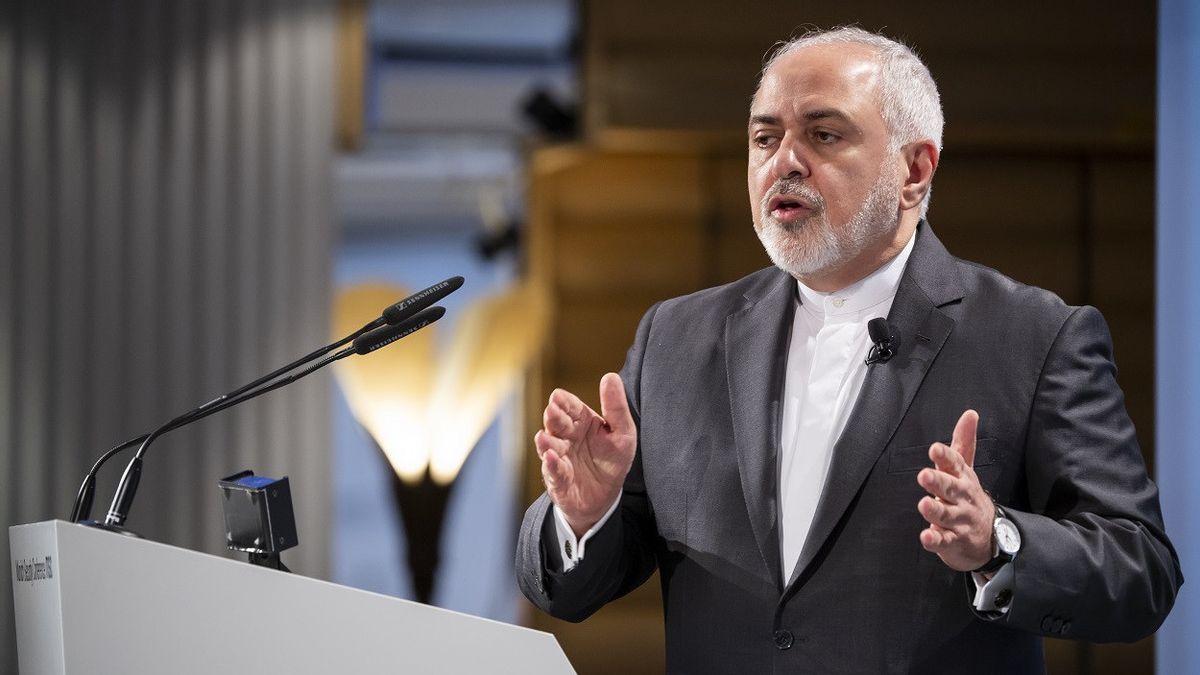


JAKARTA - Iranian Vice President for Strategic Affairs Mohammad Javad Zarif said the Iranian government had decided not to pressure women who did not cover their hair in public, describing the decision as a step in the right direction.
Vice President Zarif's comments about the hijab were delivered on Wednesday in an interview with CNN on the sidelines of the World Economic Forum in Davos, Switzerland.
"If you go to the streets of Tehran, you'll find women who don't cover their hair. It's against the law, but the government has decided not to put pressure on women," he explained, as reported by Mehr January 23.
"The decision is a campaign promise made by President Masoud Pezeshkian, which has now been fulfilled," said Vice President Zarif.
Vice President Zarif further explained that the president decided not to apply laws intended to punish women who refuse to cover their hair in public, a decision he said was taken with the approval of Iranian leaders, including the head of Parliament, the head of Justice and the National Security Council.
He added that the move not to pressure women was "not enough", but "step in the right direction."
Quoted from France 24, Iran approved "The Draft Law on Supporting Families through the Promotion of Holy Culture and Hijab" in September 2023.
The law imposes harsher penalties for women who refuse to wear mandatory hijabs, significant fines and prison sentences for those deemed to be promoting "unability" or "unintention".
The bill was originally due to be submitted in December to President Pezeshkian, who has expressed an "sensity" with the regulation taking into account the many "ambiguities".
Earlier this month, Government spokesman Fatemeh Mohajerani said the bill was "delayed" due to some of its provisions, which "could have serious social consequences".
In December, Iranian Vice President Shahram Dadari announced, "the regulation (will) be reviewed by political leadership and the National Security Council", the country's highest security agency.
"Based on the discussions that have been carried out, it has been decided that this law will not be referred to the government by the parliament for now," said the vice president of Dabira at the time, adding "at this time it is not possible to implement the law," as reported by DW.
The hardline group in Iran's parliament has passed the controversial law, proposing tougher penalties for women who oppose the hijab regulations.
The law also targets businesses that serve those who do not comply with the law. The law allows authorities to access private surveillance footage and encourages citizens to report non-compliance.
SEE ALSO:
-
 | BERITA
Mantan Menteri Pertahanan Korsel Klaim Bertanggung Jawab Atas Pengumuman Darurat Militer
23 Januari 2025, 19:00 -
 | BERITA
Presiden AS Tetapkan Kelompok Houthi Yaman Sebagai Organisasi Teroris
23 Januari 2025, 17:15 -
 | BERITA
Kebakaran Hutan Baru di Dekat Los Angeles Meluas hingga 9.400 Hektar
23 Januari 2025, 16:45

President Pezeshkian opposed the law, warning it could spark more protests as in 2022, following Mahsa Amini's death in police custody.
In September 2022, protests erupted in Iran after the death of Mahsa Amini in police custody due to her alleged lax hijab. The protests later turned into riots sparked by foreign-backed elements.
Masoud Pezeshkian is running for president with the country's social and economic reform platforms, as well as more constructive engagement with the world.
The English, Chinese, Japanese, Arabic, and French versions are automatically generated by the AI. So there may still be inaccuracies in translating, please always see Indonesian as our main language. (system supported by DigitalSiber.id)
Most Popular Tags
#Prabowo Subianto #donald trump #firearm #8791 #giias 2026Popular


