


JAKARTA - The prevalence of cases of violence and sexual harassment in Indonesia, including a number of cases that have become a public concern in various regions such as Pati, is very worrying. Moreover, currently the threat to women and children is increasingly complex, especially in the digital space through Electronic-Based Sexual Violence (KSBE).
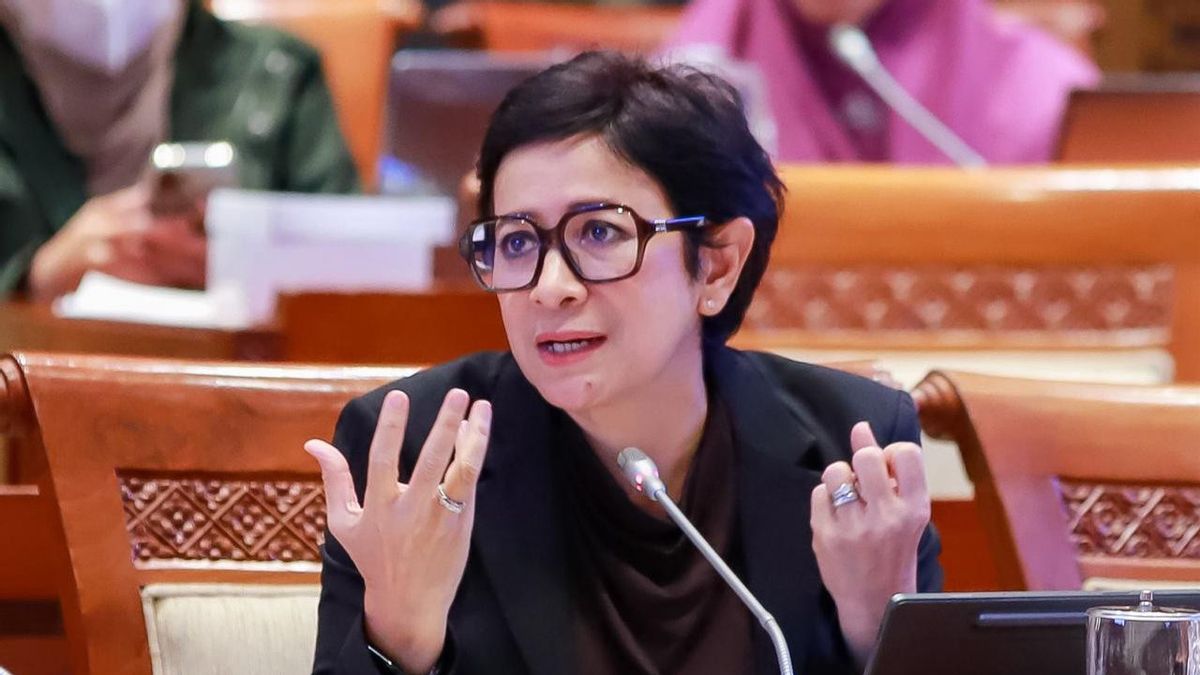
Member of Commission I of the Indonesian House of Representatives from the Golkar Party Faction, Nurul Arifin, said KSBE is now one of the most worrying forms of sexual violence because it uses social media, chat applications, and artificial intelligence technology or AI.
"Now the threat is not only in the real world. The spread of intimate content without permission, sextortion, cyber harassment, cyberstalking to sexual deepfakes is increasingly rampant and the victims are mostly young women," said Nurul Arifin, who is also the Head of the Media and Public Opinion Gathering (MPO) of the Golkar Party in Jakarta, Friday, May 8.
He explained that the most common patterns of KSBE include the spread of intimate photos or videos without the victim's consent, threats of sexual content for blackmail or sextortion, secret recording, to sexual harassment through digital messages and video calls. In addition, there is also a new modus such as manipulating photos using AI technology or deepfake porn that makes the victim's face attached to a naked body to be spread on the internet.
Based on data on Online Gender-Based Violence (KBGO) complaints, the case of KSBE increased sharply throughout 2024. It is recorded that there were around 480 complaints in the first quarter of 2024, an increase of almost four times compared to the same period last year which reached 118 cases. The majority of victims are women aged 18 to 25 years, with the most common location of the incident occurring on social media and chat applications.
Meanwhile, according to data from Catahu Komnas Perempuan, the number of sexual violence against women was reported to be 24,472 cases in 2025. Electronic or online-based sexual violence dominates.
Nurul assessed that the high number of cases showed that people's digital literacy was not able to keep up with the very rapid technological developments. "Victims often experience layered trauma because they are not only harassed, but also humiliated en masse on the internet. Once spread, its digital footprint is difficult to lose," said this member of the Indonesian House of Representatives from West Java District 1.
He added that many victims were reluctant to report because they were afraid of stigma and victim blaming from the surrounding environment. In terms of law, Nurul emphasized that Indonesia actually has a legal umbrella through the TPKS Law Number 12 of 2022.
Article 14 of the TPKS Law stipulates that anyone who records, takes pictures, disseminates, or makes accessible electronic documents containing sexual content without the consent of the victim can be sentenced to a maximum of four years in prison and/or a fine of up to IDR 200 million. In addition, if the action is carried out for extortion, threats, or sexual exploitation, the threat of imprisonment can be heavier.
Nurul encourages the strengthening of digital literacy from school age, acceleration of the removal of illegal sexual content on digital platforms, and the improvement of psychological support services for victims. "The digital space must be a safe space, not a place of sexual intimidation and exploitation. The state, digital platforms, schools, and families must be present together to protect the community," he said.
Follow VOI Whatsapp Channel
The English, Chinese, Japanese, Arabic, and French versions are automatically generated by the AI. So there may still be inaccuracies in translating, please always see Indonesian as our main language. (system supported by DigitalSiber.id)
Most Popular Tags
#Prabowo Subianto #donald trump #firearm #8791 #giias 2026Popular


