


JAKARTA - Efforts to limit children's access to social media in Europe have entered a new phase. The European Union through the European Commission confirmed that the age verification application for online platforms is now ready to be launched. This is part of a major push to protect children in the digital space.
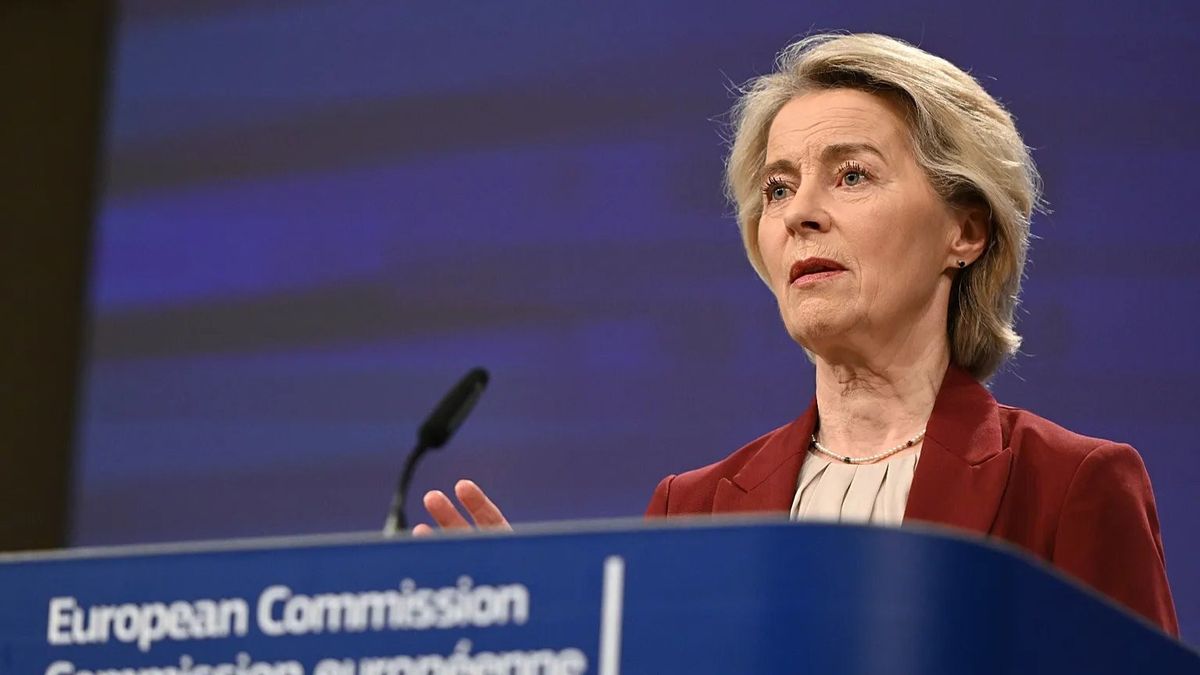
European Commission President Ursula von der Leyen said the system would be available soon and would be a key tool in ensuring digital platforms comply with child protection rules.
"We are moving at full speed to enforce European rules. We will hold platforms accountable who are not doing enough to protect children," he told a news conference in Brussels.
Age Verification Without Opening Identity
This application is designed to work on both mobile devices and computers. Users are asked to upload identity documents such as passports or identity cards, but the verification process is done anonymously.
The goal is to create a balance between child protection and user privacy - two issues that often collide in digital regulation.
Von der Leyen stressed that this application will be an important tool for parents, teachers, and caregivers to limit children's exposure to inappropriate content.
Global Momentum is Getting Stronger
This EU move follows a global trend of increasingly strict measures against children's use of social media. Australia has previously implemented a ban on social media for children, which has sparked a wave of similar policies in various countries.
In Europe alone, at least a dozen countries - including the United Kingdom and Norway - are considering or have implemented minimum age limits, generally between 13 and 16 years.
In fact, the European Parliament has pushed for a minimum age of 16 for access to social media across the region.
Technical Challenges and VPN Gaps
Although ambitious, this policy is not free from challenges. The use of VPNs is said to be a loophole to bypass the verification system.
European Commission officials acknowledged this, but stressed that the main purpose of the application was not to "monitor" users, but to create a barrier so that children do not accidentally access risky content.
In addition to the application, the European Union is also preparing a cross-country coordination mechanism so that the age verification system can be applied consistently throughout the region.
A final decision on the comprehensive regulation is expected to be taken after a special panel on child safety in the digital world releases recommendations this summer.
New Directions for the Internet for Young Generations
This move confirms a major shift in the way the government views the internet - from a free space to a more controlled space, especially for children.
If successful, the EU approach could become a global blueprint. But if it fails, it could also be a costly lesson about how difficult it is to regulate a borderless digital world.
Follow VOI Whatsapp Channel
The English, Chinese, Japanese, Arabic, and French versions are automatically generated by the AI. So there may still be inaccuracies in translating, please always see Indonesian as our main language. (system supported by DigitalSiber.id)
Most Popular Tags
#Prabowo Subianto #donald trump #firearm #8791 #giias 2026Popular


