

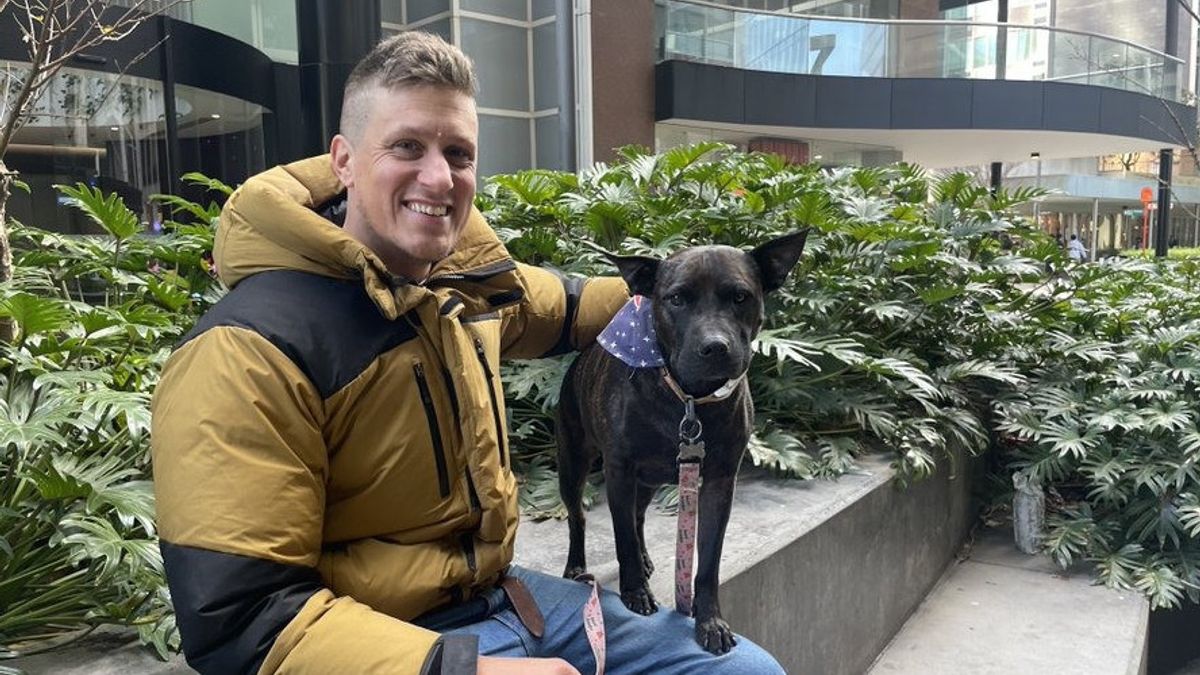


An Australian dog has become part of an unusual medical experiment. His owner used ChatGPT and other artificial intelligence tools to help develop a cancer vaccine made specifically for the dog. According to a report by The Independent, quoted on Friday, April 10, the initial results look promising, but researchers insist that this cannot yet be considered a cure.
The dog named Rosie, an eight-year-old Staffordshire bull terrier mix, has aggressive mast cell cancer, one of the most common types of skin cancer in dogs. Rosie had surgery and chemotherapy, but the cancer continued to recur until a large tumor appeared on his leg. Veterinarians at the time estimated that Rosie's life might have lasted a few months.
Rosie's owner, Paul Conyngham, who works in technology, then looked for another way. He asked the university laboratory to examine Rosie's tumor DNA. The goal is to look for mutations, namely changes in the biological "code" of cancer cells that distinguish them from healthy cells.
From the data, Conyngham used an AI chatbot to understand how scientists design personalized cancer vaccines. This type of vaccine is different from a regular vaccine. If a common vaccine is used to prevent infection, a cancer vaccine is given to a patient who is already sick so that the immune system learns to recognize specific signs in cancer cells, then attacks it.
The technology used is mRNA. Simply put, mRNA is a messenger that gives brief instructions to cells to make certain proteins. This technology has been widely known through the Covid-19 vaccine. In Rosie's case, researchers chose a small part of the protein that only appears in her tumor. This is the target so that the immune system can more easily recognize cancer.
With the help of AI, Conyngham screened Rosie's tumor mutations to select the targets most likely to be recognized by the immune system. He also used software to estimate the shape of the mutated protein. However, the vaccine was not made arbitrarily. After the target was selected, researchers at the University of New South Wales, including RNA technology experts, reviewed the data and designed an mRNA vaccine in the laboratory.
The vaccine was made specifically for Rosie and contained several mutations from her tumor. Rosie then received the experimental vaccine at the veterinary research center, accompanied by booster doses in the following months.
According to reports from veterinarians and owners, as reported by The Independent, some of Rosie's tumors shrank quite clearly. The total tumor load decreased, while her energy and behavior improved. However, one tumor that remained made the team reanalyze the data and prepare a follow-up vaccine with a different mutation target.
It needs to be emphasized, this is only one case in one dog, not a controlled study. Therefore, it is not yet possible to determine how much Rosie's improvement is really caused by the vaccine, how long the effect will last, or whether a similar method will work on other dogs, let alone humans.
The Independent also emphasized that AI does not "cure cancer" by itself. AI is more of a tool to help read data, explain concepts, and give direction. Important work is still done by scientists in the laboratory.
The Rosie case shows that when DNA sequencing, mRNA technology, and AI are used together, custom-made cancer vaccines are now beginning to be tried experimentally, even for one animal. The initial results are interesting, but the big conclusion is still waiting for stronger evidence.
The English, Chinese, Japanese, Arabic, and French versions are automatically generated by the AI. So there may still be inaccuracies in translating, please always see Indonesian as our main language. (system supported by DigitalSiber.id)
Most Popular Tags
#Prabowo Subianto #donald trump #firearm #8791 #giias 2026Popular


