
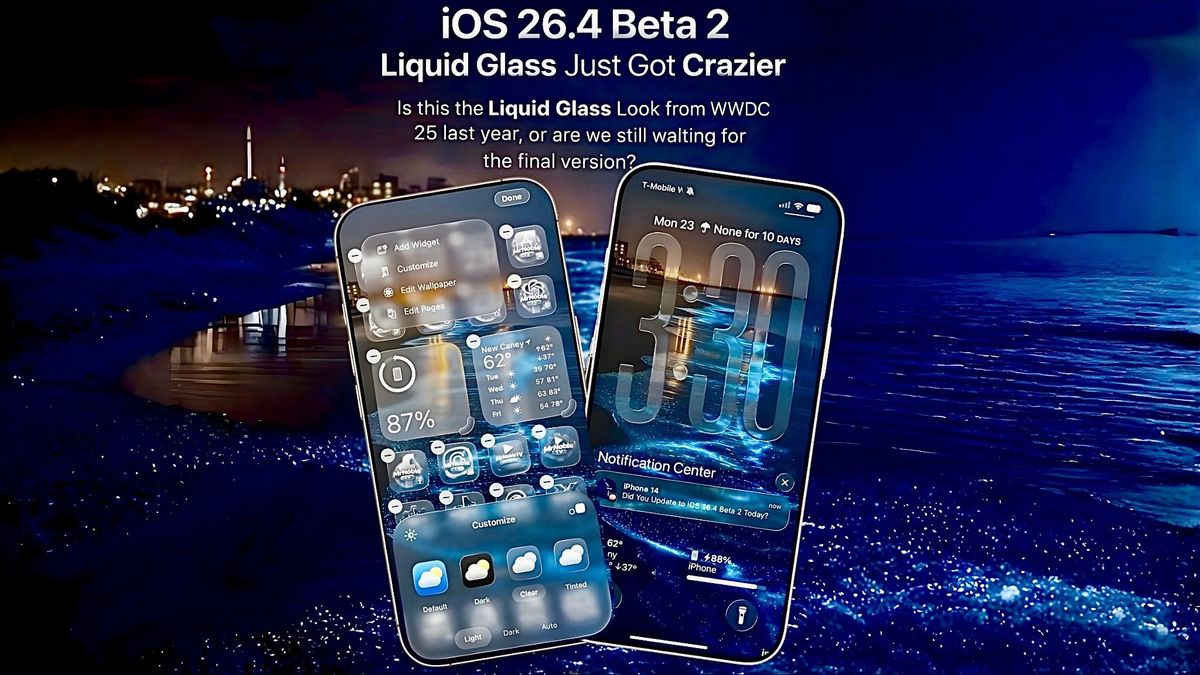


JAKARTA - For the first time, iPhone and Android users can send each other RCS messages with end-to-end encryption (E2EE) through iOS 26.4 beta 2. Apple is expanding this encryption support after in the first beta the feature only worked limitedly between iPhones with iMessage turned off.
Now, in the second iOS 26.4 beta developer, iPhones can send encrypted RCS messages directly to Android devices. But there is a condition: Android users must use the latest version of the Google Messages app.
If all criteria are met, the conversation will display a small padlock icon inside the chat as a marker that the message is protected by end-to-end encryption. The same icon also appears in iMessage-based threads - even though iMessage itself has supported E2EE since its launch in 2011.
This move marks a new chapter in the iOS and Android relationship. For years, cross-platform communication has often been considered less than optimal, especially in terms of security and user experience. With encrypted RCS, the gap is beginning to narrow.
RCS or Rich Communication Services is a new generation messaging standard designed to replace SMS and MMS. Unlike traditional SMS, RCS supports the delivery of high-resolution media, typing indicators, and other modern features. However, the issue of cross-platform encryption has been in the spotlight.
Apple confirmed that this feature is still in the testing phase in the iOS 26.4 beta version. The company also said that RCS encryption is not yet available for all devices or operators, without detailing a specific list of support.
This means that even though the trial has started, users don't have to expect this feature to be immediately available when iOS 26.4 is officially released in March. Apple states that E2EE for RCS will be available in the upcoming iOS 26 update, without mentioning a specific schedule.
Strategically, this is a significant move. For years, iMessage has been Apple's main differentiator with end-to-end encryption as its foundation. By opening up RCS encryption across platforms, Apple seems to be starting to recognize that communication security can no longer be exclusive in one closed garden.
In an era where privacy is both a commodity and a basic need, the little padlock on the screen is not just an icon. It is a symbol that the old war between the "blue bubble" and the "green bubble" is slowly shifting from a matter of color to a matter of security.
The English, Chinese, Japanese, Arabic, and French versions are automatically generated by the AI. So there may still be inaccuracies in translating, please always see Indonesian as our main language. (system supported by DigitalSiber.id)
Most Popular Tags
#Prabowo Subianto #donald trump #firearm #8791 #giias 2026Popular


